







How does coffee certified deforestation-free reach the EU?
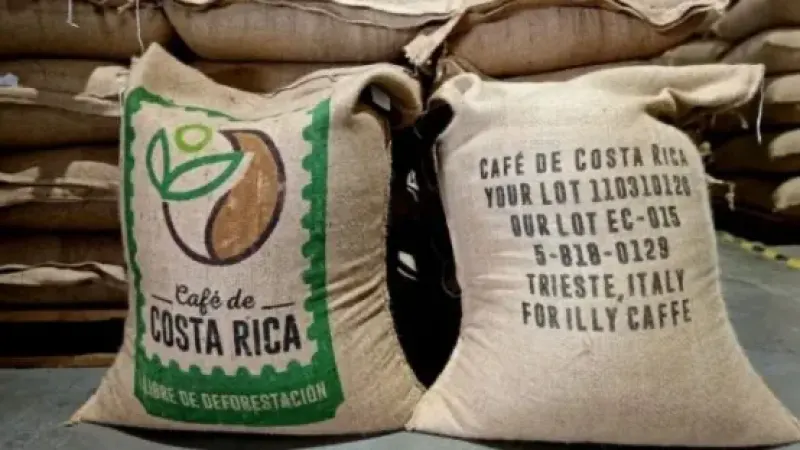
Costa Rica has exported its first batch of deforestation-free coffee, 275 bags of 60 kg each from the Tarrazú cooperative, sold and bound for Italy. The beans were harvested after December 2020 with no forest loss from cultivation, meeting the European Union Deforestation Regulation. The pilot was run by the UN Development Programme and the Coffee Institute of Costa Rica.
The EU regulation bans selling goods linked to deforestation and requires operators to trace origin and prove no forest degradation, or face fines, export limits or bans. For Costa Rica, one of the main coffee producers facing falling output and regional competition, green certification is a route to keep its European market and adapt to climate change.
After the EU Deforestation Regulation took effect, Costa Rica responded quickly and launched its first batch of coffee beans compliant with EUDR standards. This batch, totaling 275 bags of 60 kg each, comes from the Tarrazú cooperative, has been successfully sold, and will be shipped to Italy. This initiative, jointly promoted by the United Nations Development Programme and the Costa Rican Coffee Institute, is seen as a key step for the country to adapt to climate change and secure its European market. Facing the dual pressure of declining production and competition from neighboring Central American countries, Costa Rica is trying to enhance the competitiveness of its industry through green certification. Front Street Coffee continues to follow developments in global coffee-producing regions and bring first-hand information to enthusiasts.
According to a recent report by the Costa Rican media outlet elmundo, the country has completed the delivery of its first batch of "deforestation-free coffee." These coffee beans were all harvested after December 2020, and no forest land was destroyed during production due to expansion of cultivation, meeting the compliance requirements of the European Union Deforestation Regulation (EUDR). A buyer has now been found for this batch of coffee, and it is about to depart for Italy.
This pilot project was jointly initiated by the United Nations Development Programme (UNDP) and the Costa Rican Coffee Institute (ICAFE). The first batch totaled 275 bags, each weighing 60 kg, with all raw materials coming from growers under the Tarrazú cooperative.
In June of this year, the European Union officially introduced its first "zero deforestation" law, namely the European Union Deforestation Regulation (EUDR). This regulation explicitly prohibits any individual or company from selling goods linked to deforestation within the EU, and coffee, cocoa, and others have all been included in its scope of control. Operators must fulfill due diligence obligations, trace the origin of goods, and prove that they have not caused deforestation or forest degradation; otherwise, they will face penalties such as fines, export restrictions, and even bans.
Regarding Costa Rica's first export of deforestation-free coffee, the Deputy Minister of Strategic Management at the country's Ministry of Environment and Energy pointed out that this is a typical case of adapting to climate change. If Costa Rica does not invest resources in climate adaptation, it will gradually lose market competitiveness. After all, the country's coffee exports mainly depend on the United States and the European Union, with exports to the EU accounting for 38.4% of total exports.
The person in charge of the pilot project revealed that the reason for choosing to cooperate with the Los Santos region is that this area ranks first in the country in coffee production; and the reason for partnering with the Tarrazú cooperative is that it is Costa Rica's largest coffee grower cooperative, with more than 4,500 producers under it.
This cooperation has been listed as one of Costa Rica's key development projects. The country's coffee industry has recently encountered multiple challenges. According to an earlier forecast by the Costa Rican Coffee Institute (ICAFE), affected by severe weather and labor shortages, Costa Rica's coffee production in the 2023/24 season will decline by 13%, and export volume will shrink accordingly. At the same time, Central American countries such as Honduras, Guatemala, and Peru have strong supply momentum, and buyers can obtain coffee of the same quality at lower prices. To enhance the competitiveness of Costa Rican coffee, it is necessary to adapt to market changes, so this cooperation is of positive significance to the country's coffee industry.
The above content is compiled by CoffeeHunters, a coffee news website.


