







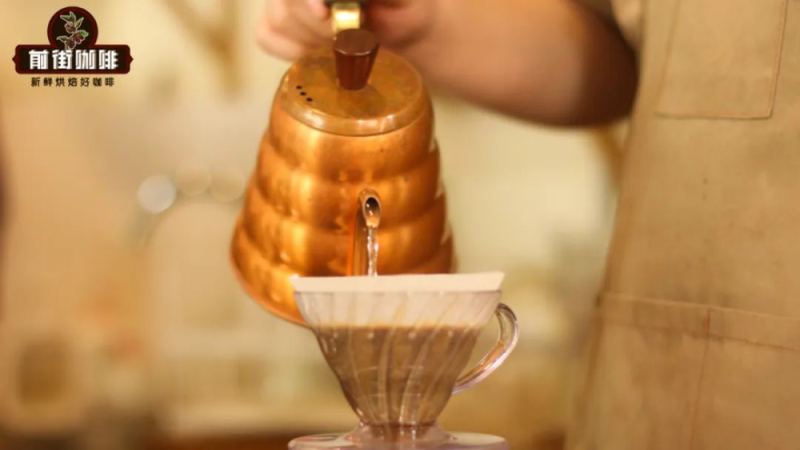
Making coffee in a coffee pot: how pour-over water height changes flavor
Pouring height affects three things: how hard the water column hits the coffee bed, how fast the water loses heat, and how vertical the stream stays. A high pour gives stronger penetration and faster extraction, while a low pour is gentler. Neither is wrong, but each changes agitation and the flavors drawn out.
Strong penetration stirs the grounds so more particles meet hot water, speeding extraction, yet too much impact over-stirs and pulls out bitterness. Heat loss grows with falling distance, and a slanted stream can miss parts of the bed, causing uneven extraction. Matching height to kettle type and brew method keeps results stable for the coffee enthusiast.
The pouring height in pour-over coffee may seem like a minor detail, but it directly affects the water column's penetration force, the rate at which hot water loses heat, and the verticality of the stream, ultimately determining extraction efficiency and the flavor in the cup. Some people prefer pouring from a high position, while others habitually keep the spout close to the water surface. Both approaches have their merits, but only by understanding the effects of different heights can you flexibly adjust according to your kettle type and brewing method. In this article, Front Street Coffee systematically sorts out the three core effects of pouring height and offers practical advice to help you avoid common problems like uneven extraction and over-stirring, so you can brew a more stable and better-tasting pour-over coffee.
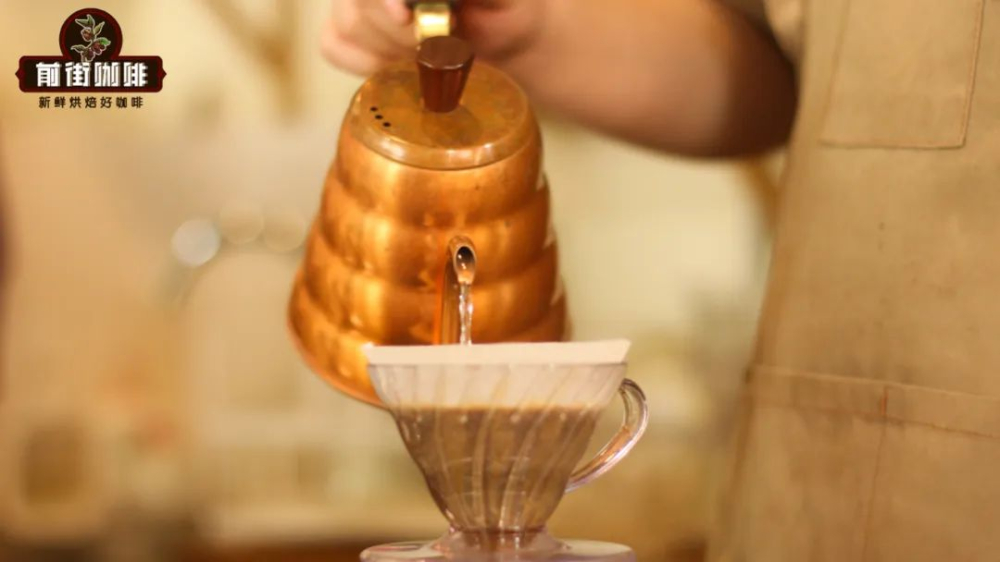
Some coffee enthusiasts habitually raise the spout so the stream falls vertically from a higher position; others like to bring the spout close to the surface of the coffee bed, pouring almost right against it. Neither approach is inherently wrong. What Front Street wants to discuss today is: what specific effects do different pouring heights actually have on brewing? Once this is clear, you can choose the right height in your daily brewing to make your results more stable and delicious.
The penetration force of the water column
During brewing, the height of the pouring point directly determines how forcefully the water column strikes downward. The higher the position, the fiercer the force of the falling stream; the lower the position, the gentler this impact feels.
The most critical role of penetration force is to agitate the coffee bed. When hot water crashes into the layer of coffee grounds, the particles are stirred and tumbled by the force of the stream, giving more particles a chance to contact the hot water, which in turn speeds up extraction.
There are two key points to note here. First, about penetration force itself: stronger is not always better. The greater the impact, the more violently the coffee bed is agitated, and the faster substances are released. If you keep using a highly penetrating stream against the coffee bed, over-stirring easily occurs, and bitterness and off-flavors that shouldn't appear in large amounts get drawn out as well. So Front Street's advice is to use a highly penetrating stream only according to the specific situation.

Now for the upper limit of pouring height. The stream we pour is actually not cylindrical, but cone-shaped—thick at the top and thin at the bottom. Once the spout is raised beyond a certain height, the flow is no longer a continuous column but turns into individual falling droplets, or even breaks into gaps.
Droplet-style pouring causes the coffee bed to receive water unevenly—some spots get dripped on while others get no water at all—making extraction prone to deviations. To avoid this unevenness, Front Street recommends keeping the highest pouring point within 7cm. Of course, some special brewing techniques are exceptions to this rule.
The rate at which hot water loses heat
Pop quiz! Let's see who hasn't read the article on "Matsuya-style Brewing" yet. If you haven't, that's fine—what Front Street wants to say is that the Matsuya-style method of steaming with a "lid" is one of those special techniques mentioned above. Its pouring height exceeds 7cm, even starting from 25cm, precisely in order to cool the hot water down.
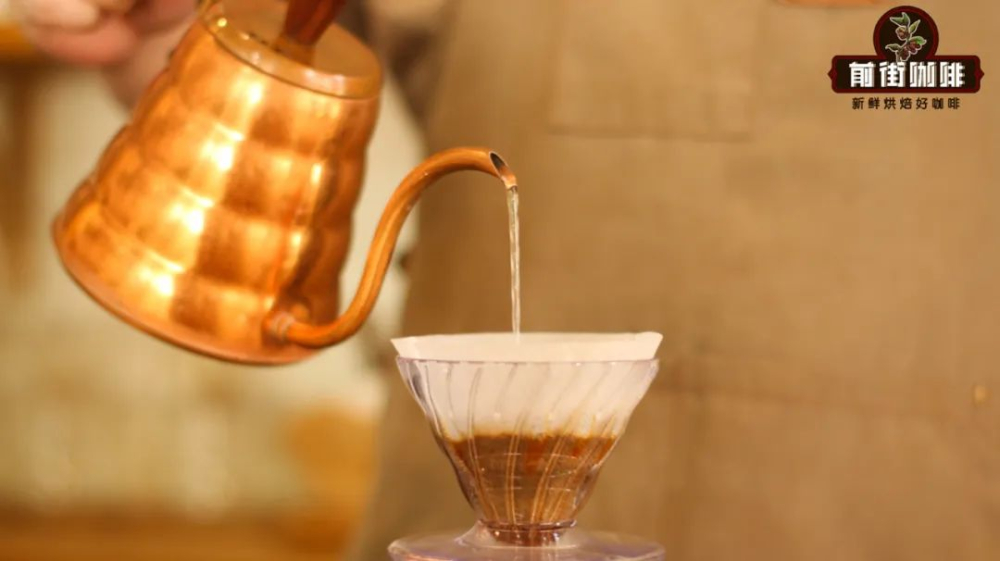
As soon as hot water leaves the spout, it immediately contacts a large amount of air, and the air carries heat away. The higher the height, the greater the surface area of the stream exposed to air, and the more heat is lost. As a result, the actual water temperature used to extract the coffee deviates from what you intended, and the strength changes accordingly. So Front Street recommends that if you habitually pour from a high position, especially in winter when the cold air is abundant, you'd best raise your brewing water temperature by 1–2°C to compensate for the heat carried away by the air and ensure the coffee is properly extracted.
The verticality of the water column
The spouts of most pour-over kettles are not vertical when water flows out. The spout's design causes hot water to first form an outward-tilting parabolic arc as it pours, and only as the pouring height increases does the stream gradually tend toward vertical. This means that when you pour close to the surface with this kind of spout, the hot water doesn't penetrate the coffee grounds vertically but instead pushes the coffee bed open at an angle, adding an unstable variable to extraction. Therefore, Front Street recommends keeping a certain distance from the water surface when pouring, to avoid deviations in where the hot water lands and prevent uneven extraction.
Overall, the aspect most affected by pouring height is extraction efficiency. Front Street's usual pouring height for daily brewing is 3–4cm. This doesn't mean coffee brewed at this position is necessarily the best-tasting, but rather that for the pour-over kettle Front Street uses, this height has the highest margin for error. So as long as you understand what effects different pouring heights bring and what results they produce, then combine that with your own kettle and brewing method, you can avoid negative factors to the greatest extent and get a delicious cup of pour-over coffee.
Front Street Coffee (FrontStreet Coffee)
No. 10 Baoqian Street, Yandun Road, Dongshankou, Yuexiu District, Guangzhou, Guangdong Province

The above content is compiled by CoffeeHunters, a coffee news website.


