








What Does Foam Color Tell You About Coffee Extraction?
During pour-over brewing, the foam on the coffee bed shifts from brownish-yellow toward white as the pour progresses. That white foam often signals that coffee extraction is nearing its end, and continuing to pour past that point makes over-extraction more likely and can push the cup toward harsh, dry flavors.
The foam shares its origin with espresso crema: carbon dioxide, coffee oils, fine coffee particles and larger grounds. Two things explain the shift to white, namely that the oils in the grounds have been fully released and that the fine particles floating on the surface have largely washed through. Foam abundance also reflects roast level and bean freshness, so it works as a rough gauge of brewing rhythm.
During the pour-over brewing process, the foam that rises to the surface of the coffee bed constantly changes over time—its color gradually shifts from brownish-yellow to white, and its quantity fluctuates. These seemingly ordinary bubbles actually hold hidden secrets; they share the same origin as the golden crema of espresso, composed of carbon dioxide, coffee oils, and fine particles. The color change of the foam can help us judge the extraction progress—the appearance of white foam often signals that extraction is nearing its end, and continuing to extract can easily lead to over-extraction; while the abundance of foam reflects the roast level and freshness of the coffee beans. This article will guide you through interpreting the key information these bubbles convey, helping you control the brewing rhythm more precisely and brew a more delicious pour-over coffee.

During brewing, the foam sometimes appears brownish-yellow, sometimes leaning toward white; at different brewing stages, its quantity also fluctuates. In short, it is always in a state of dynamic change. Did you know that these constantly changing bubbles actually reveal a lot of key information to us? Come on, take out your notebooks—Front Street Coffee's little classroom is officially starting!!!
What is the foam that appears during brewing?
The moment the bloomed coffee bed comes into contact with hot water, a large amount of foam immediately surges up. Generally, the foam that emerges at this point is brownish-yellow. Can you guess what this reminds us of?
That's right—it's the crema of espresso! It is essentially the uncompressed body of those oils. This layer of foam is composed of carbon dioxide, oils, a small amount of fine particles, and larger coffee grounds. When an espresso machine applies pressure during extraction, this layer of foam flows out from the bottom together with the coffee liquid, compressed into a rich golden crema!
So, what information does the color of the foam convey?
As brewing progresses, we notice that the foam gradually turns white, transitioning from its original brownish-yellow to white. Some suggest that white foam is a signal that over-extraction is about to occur—but is that really true?
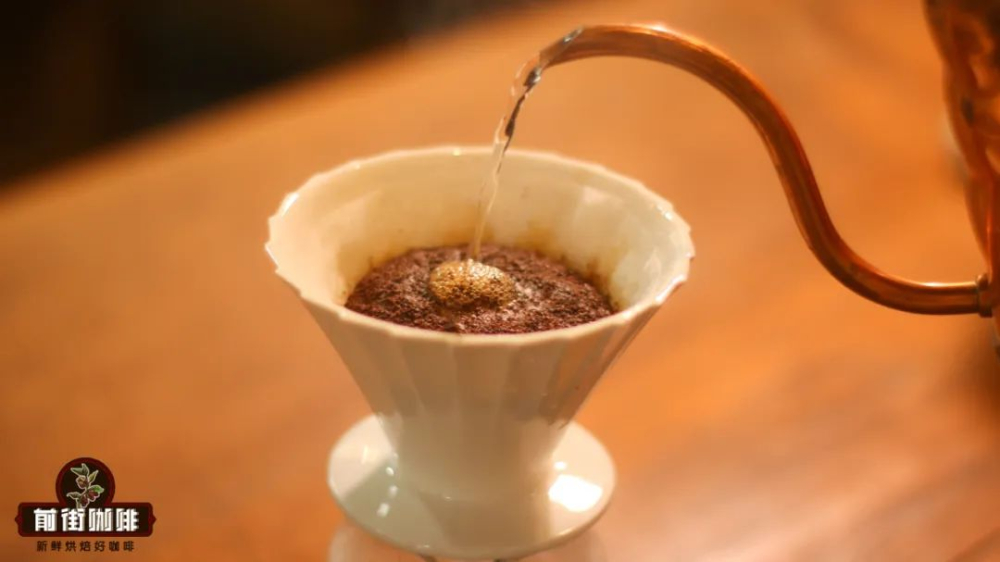
The appearance of white foam has two main causes. First, the oils in the coffee grounds have been fully released; second, the coffee particles originally floating on the surface begin to sink. Both of these are the "key pigments" that give the foam its color. Therefore, when brewing no longer releases oils and the coffee particles sink after absorbing enough water, the foam's color shifts from brownish-yellow to white.
Back to the earlier question: is it true that white foam is a warning sign before over-extraction? Based on the two points above, we can judge: indeed it is. The reason coffee particles can float on the surface is that they were not fully extracted in the early stage of brewing, leaving a large amount of carbon dioxide sealed inside the bean body, giving them the ability to float on the liquid surface. However, as extraction deepens, these particles are gradually penetrated by water. When hot water completely fills their interior, it means extraction is nearing its end.
If we continue to increase extraction efficiency at this point, over-extraction becomes very likely. So usually in the later stage of brewing, we reduce the amplitude and speed of our circling and increase the water flow, allowing hot water to pass through the coffee bed more quickly and avoid over-extraction. Observing the espresso extraction process confirms this as well: the coffee liquid starts out dark yellow, then turns yellow, then pale yellow—exactly the same principle.

Next, let's talk about the abundance of foam! The amount of foam is mainly influenced by two factors: first, the roast level; second, the freshness.
The influence of roast level
Different roast levels produce noticeable differences in the amount of foam. Dark-roasted beans, having undergone a longer roasting time, have a looser texture and more easily store large amounts of carbon dioxide. At the same time, they are also easier to extract. Therefore, at the moment of pouring water, the amount of foam that surges up is particularly large.
Light-roasted beans, on the other hand, have a harder texture, making it difficult for them to hold much carbon dioxide, and their hard outer shell also makes them harder to extract. So whether it's the degree of blooming or the amount of foam, both are far lower than with dark-roasted beans.
The influence of freshness
Front Street often says that from the moment roasting is completed, coffee beans enter a stage of continuous degassing. Apart from aromatic compounds, the main gas they release is carbon dioxide, which forms the foam. Therefore, when coffee beans are still in their fresh period, rich in carbon dioxide, we can brew very abundant foam. But once past the fresh period, with carbon dioxide almost fully released, very little foam can be produced.

From this we can see that the roast level, freshness, and extraction progress of coffee beans are exactly the information these bubbles can convey to us. We can judge the roast level and freshness by the state of the bloom combined with the amount and color of the foam; then, based on the color change of the foam, understand the current extraction progress. This helps deepen our understanding of coffee extraction, enabling us to brew a more excellent cup of delicious pour-over coffee!
Front Street Coffee
No. 10 Baoqian Street, Yandun Road, Dongshankou, Yuexiu District, Guangzhou, Guangdong Province
The above content is compiled by CoffeeHunters, a coffee news website.


