





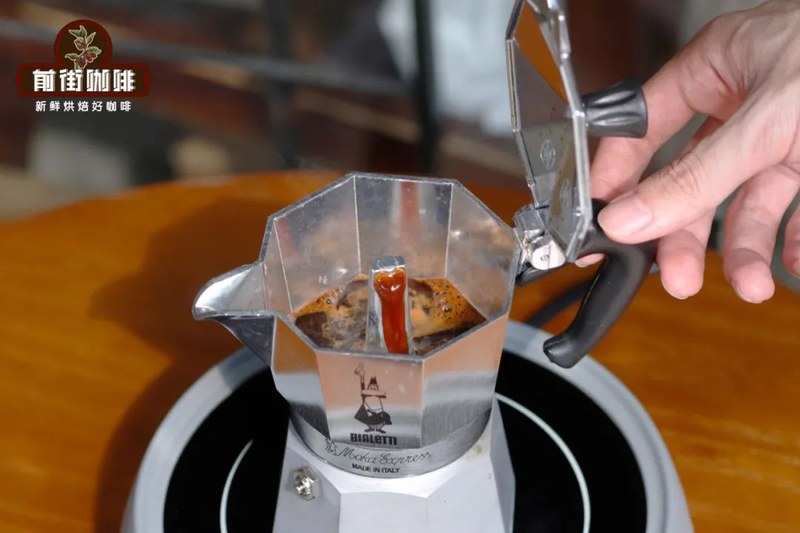


What grind setting does a moka pot need compared with other brewers?
Grind size decides how fast water pulls flavor from coffee, and each brewer needs its own setting. Ranked from coarsest to finest, the usual order is French press, pour-over, cold drip or cold brew, siphon, then moka pot and espresso machine. A moka pot sits at the fine end, close to espresso but slightly coarser, so the same beans behave very differently across devices.
Cupping provides the industry reference point: beans are ground to pass a standard sieve at a set rate, and other devices are calibrated against it. Roast level and water temperature shift the target too, so a darker roast or hotter water may call for a coarser grind. Front Street Coffee suggests adjusting sieve passing rates to match your own equipment.
Coffee beans must be ground to release their aromatic compounds, but the grind size required by different extraction methods varies enormously. Too coarse or too fine, and the flavor balance is thrown off—so is there a universally accepted reference standard? This article takes the industry's unified cupping grind parameters as its baseline, and analyzes one by one the suitable grind ranges for the French press, pour-over, cold drip/cold brew, siphon, espresso machine, and moka pot, while explaining how factors like roast level and water temperature affect the final choice. Drawing on everyday brewing experience, Front Street Coffee offers actionable sieve-passing-rate recommendations to help coffee lovers find a grind plan suited to their own equipment.

There are countless types of coffee equipment on the market, and the same bean can present a completely different flavor when brewed by a different extraction method. If you want a good cup of coffee, there really are plenty of paths to choose from. But no matter what equipment you use, the first step is always to grind the beans into powder before extraction—only then can the aromatic compounds inside the bean be released quickly.
Note, however, that each device has a different extraction principle, so grind sizes are not interchangeable. We cannot and should not force out every soluble substance in the coffee, because some of those compounds taste unpleasant. So finding a precisely matched grind size becomes the key. Today Front Street will talk about what grind size each different device should use.
The devices that most often appear on our counter are: siphon, cold drip/cold brew, French press, pour-over, espresso machine, and moka pot. If we rank them from coarsest to finest grind, the order is: French press > pour-over > cold drip/cold brew > siphon > moka pot ≥ espresso machine.
Although we roughly know which devices should be coarse and which should be fine, how coarse exactly, and how fine exactly? Compared to what does something count as coarse or fine? There is no clear numerical value. At this point we need a universally accepted reference standard to lay out clearly the grind size corresponding to each device.
The Standard for Grind Size
Although no extraction method has universally unified grind parameters, there happens to be one extraction method whose grind size is industry-recognized and agreed upon—that is cupping.
The industry-recognized grind parameter for cupping is a 70–75% passing rate through a No. 20 sieve. This value was determined through repeated experimentation and tasting (for how to use the No. 20 sieve, click "How to Use the No. 20 Sieve?" for a detailed explanation).
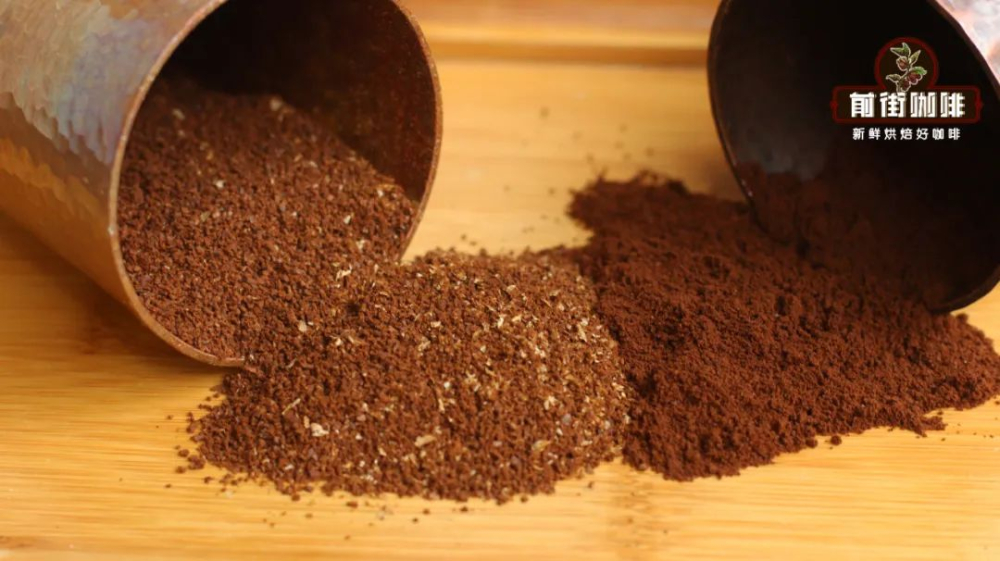
In other words, as long as we use the cupping grind parameter as the baseline, and then adjust according to each device's different extraction method and parameters, we can find the corresponding grind size and list it clearly with data.
Grind Size for the French Press
The French press and cupping both belong to immersion extraction, so their grind sizes overlap heavily. The difference is that cupping's water temperature is fixed at 94°C, which with this grind size is just right for a long immersion. The French press, however, is closer to everyday use, where hot water is often poured straight from a just-boiled kettle, giving higher extraction efficiency. When water temperature is hard to control, you need to coarsen the grind to weaken extraction efficiency and avoid over-extraction.
So after testing, Front Street recommends that the French press grind fall in the 68–75% passing rate range through a No. 20 sieve (coarse sugar size), then adjust according to the bean's roast level and hot water temperature. If the water is hot and the roast is dark, keep the grind in the coarser 68%–71% range; if the water is normal and the roast is light, keep it between 71–75%.
Grind Size for Pour-Over Coffee
Pour-over coffee uses a lower water temperature than the previous two, and its extraction time is also relatively shorter. So you need to grind finer to boost extraction efficiency and bring the coffee to a normal strength.
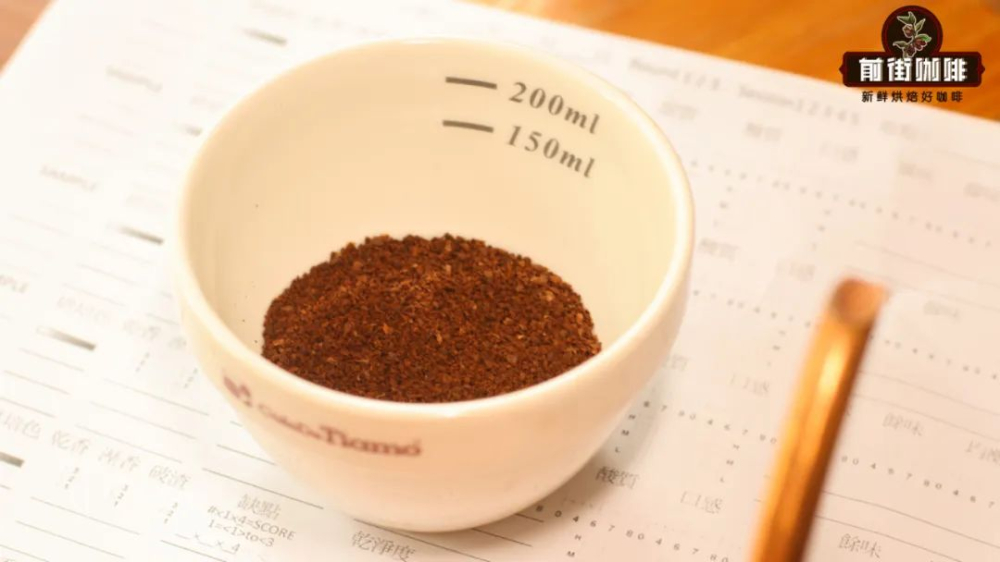
The grind size Front Street recommends is a 70–80% passing rate range through a No. 20 sieve (fine sugar size). Again, differentiate by roast level: use a finer grind for medium-light roasted beans (75%–80%), and a coarser grind for medium-dark roasted beans (70%–75%). If it's iced pour-over, add 5% to the passing rate on top of the original, i.e., grind one step finer.
Grind Size for Cold Drip/Cold Brew
Both methods extract with ice water, and their efficiency is very low. So should we use a finer grind than pour-over to extract?
No, no, no! Although ice water extraction efficiency is low, the extraction time is very long,
which fully compensates for the shortcomings of ice water. So we don't need to make big changes from pour-over; just like iced pour-over, add 5% to the passing rate on top of the pour-over grind and go one step finer. If you don't like it too strong, you can also just use the same grind size as pour-over.
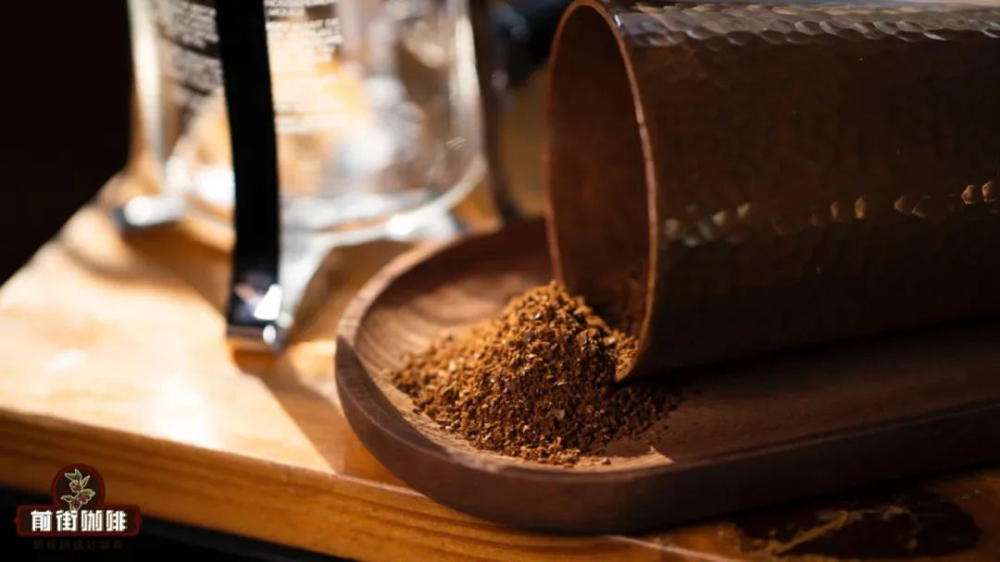
Don't grind too fine just because extraction efficiency is low—first, fine particles easily clog the filter holes and prolong filtration time; second, many extremely fine particles pass through the holes into the coffee, reducing cleanliness.
Grind Size for the Siphon
What are the characteristics of siphon extraction? High water temperature and stirring mean extraction efficiency should be on the high side. But its extraction time is only a short minute or less, which forces us to grind finer to raise the extraction yield. So the parameter Front Street recommends is: 85–90% through a No. 20 sieve.
Grind Size for the Espresso Machine
The espresso machine's grind is close to flour-like fine particles and cannot be measured with a sieve. Moreover, the machine's extraction is so precise that even a 0.1g difference in dose will change the flavor extracted.
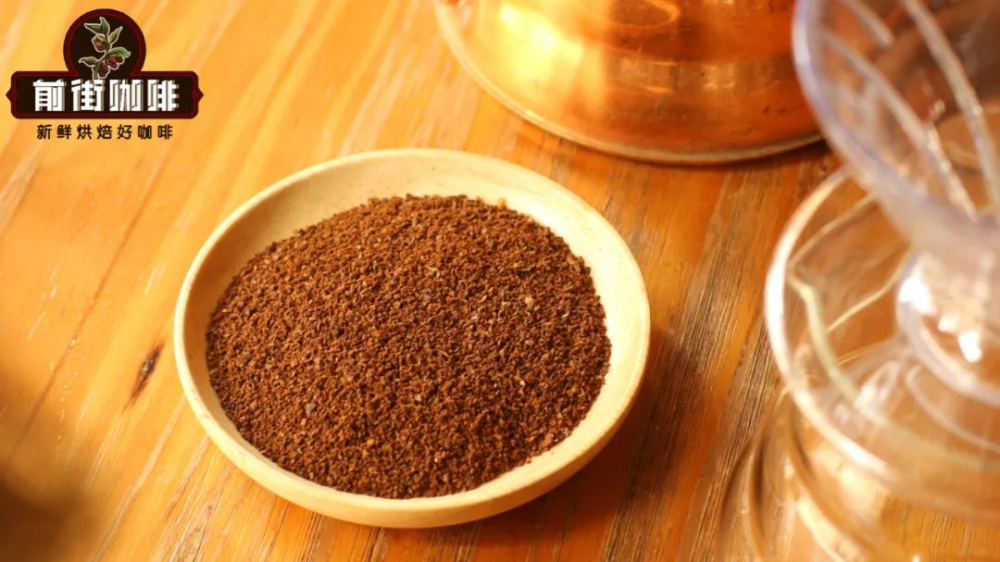
So its grind size can only be obtained directly from the extraction result. Front Street recommends first setting a stable extraction plan—for example, use "20g of coffee grounds extracting 40ml of coffee liquid within 28±1 seconds" as the daily benchmark, then adjust parameters around this data. If 20g of grounds cannot extract 40ml of coffee liquid within 28±1 seconds, adjust the grind to make the data match the plan, and afterward let taste decide whether to fine-tune the dose or yield.
Grind Size for the Moka Pot
The grind size used for the moka pot is rather special: the finest particles from a pour-over grinder can be used, and the grind size of an espresso grinder can also be applied directly—either works. The finer the coffee particles, the richer the crema extracted.
Note that the moka pot's grind is already extremely fine and likewise cannot be measured with a sieve. So it can only be judged by tasting the flavor.
- END - Front Street Coffee (FrontStreet Coffee)
No. 10 Baoqian Street, Yandun Road, Dongshankou, Yuexiu District, Guangzhou, Guangdong Province

The above content is compiled by CoffeeHunters, a coffee news website.


