







Why did olive oil coffee from Starbucks arrive in China so late?
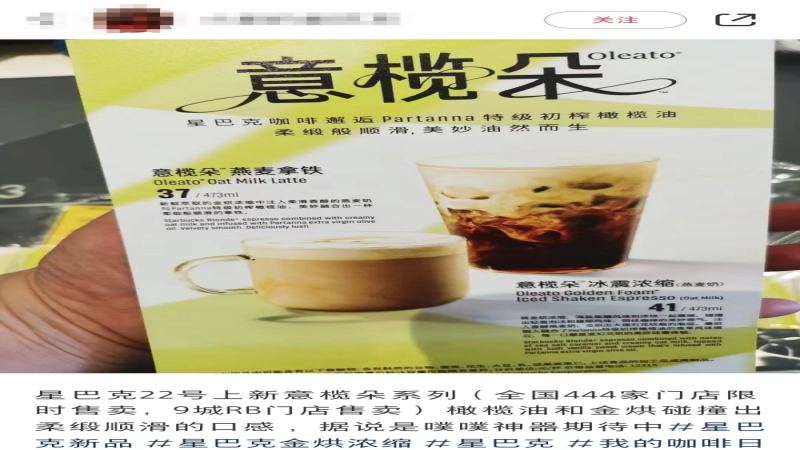
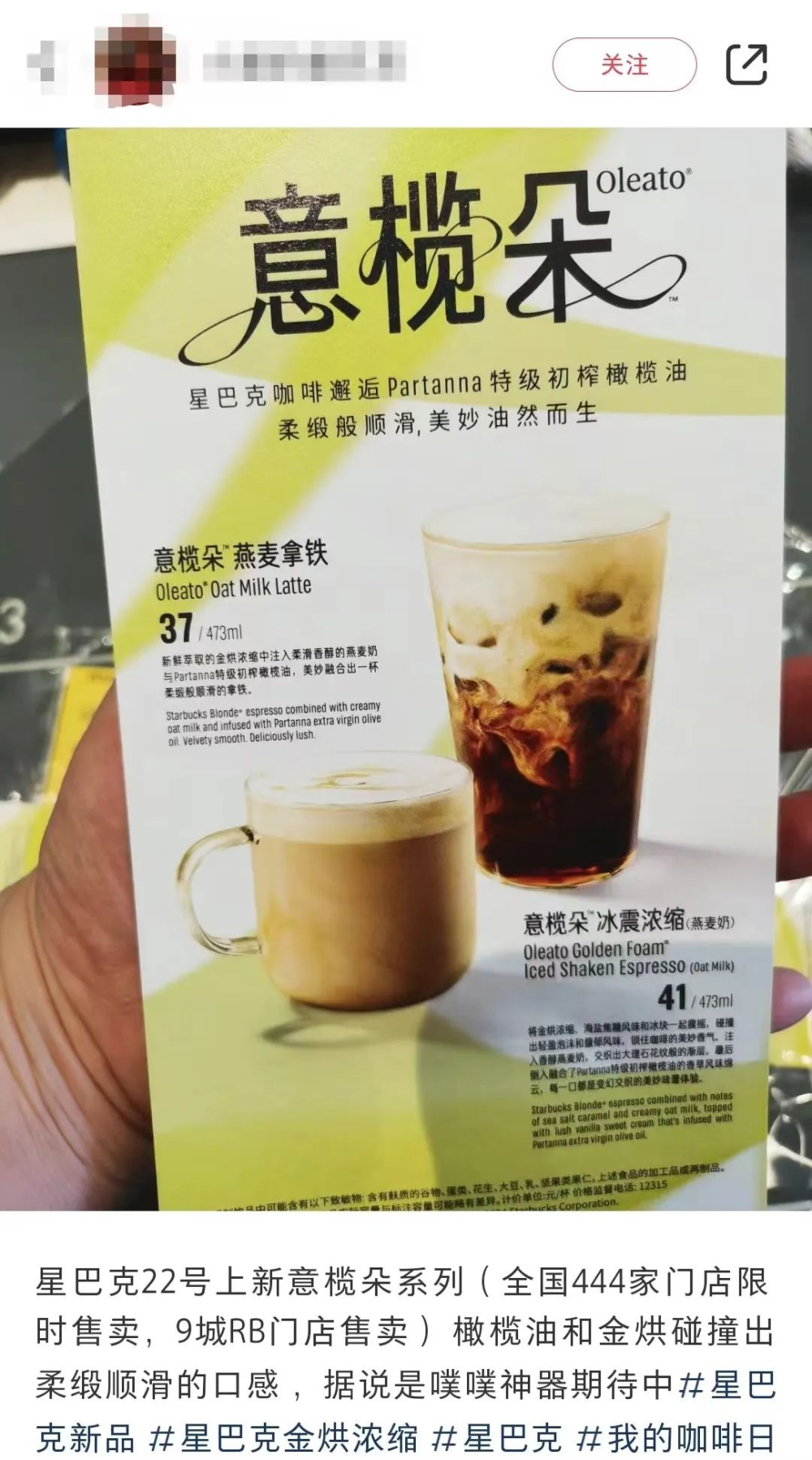
Starbucks has announced that its Oleato olive oil coffee series will launch in selected stores across China, roughly a year after the line first appeared in Italy. The range covers two olive oil drinks. Former CEO Howard Schultz had promoted Oleato as a signature innovation and said he intended to bring it to China, but the rollout stalled and reactions remain divided.
Oleato started in Italy, where the olive oil and coffee combination was conceived, then spread to the United States and Japan. Opinion has stayed polarized: some consumers dismiss the taste as bizarre, while others praise it, and a few report a laxative effect. The launch follows other unusual Starbucks releases in China, including a Dongpo pork latte.
Starbucks recently announced that it will launch the Oleato series in some stores nationwide, including two olive oil coffee drinks. This series is actually Oleato, which arrived in China a year late—the "epoch-making" work once strongly promoted by former Starbucks CEO Howard Schultz. From Dongpo pork latte to olive oil coffee, Starbucks has launched frequent new products this year but has also faced constant controversy. Some people have put olive oil coffee on the "dark coffee" list, others have been conquered by its peculiar taste, and even more consumers have become fans because of its laxative effect. This discussion about coffee innovation reflects the various dilemmas Starbucks faces in product development and localization strategy.
▲
Click to follow | Daily specialty coffee culture magazine Coffee Workshop
Looking back at the various drinks Starbucks has launched this year, that jaw-dropping "Dongpo pork latte" must still be fresh in the minds of many Starbucks fans. After pork jerky, Starbucks has now blended another common kitchen item—olive oil—into coffee drinks. The company has officially announced that it will launch the Oleato series in some stores nationwide on the 22nd, covering two olive oil coffees.
While some netizens joked, "Is Starbucks hooked on kitchen coffee?", fans who have long followed Starbucks' movements also noticed that this Oleato series is actually Oleato, which entered the Chinese market only after a year's delay.
In May last year, former Starbucks CEO Howard Schultz was asked in a media interview which coffee product could represent the Coffee 3.0 era. Howard immediately recommended his proud creation Oleato and said he planned to bring it to the Chinese market.
At the time, after learning the news, domestic Starbucks users mostly complained, but some were quite looking forward to this "epoch-making" innovative drink. They just did not expect to wait a full year for substantive progress on olive oil coffee.
This olive oil coffee, described as "betting Starbucks' future," first appeared in Italy, its source of inspiration, and then gradually landed in the United States, Japan, and other places. After nearly a year of promotion by Starbucks, public opinion still has not shifted, and the polarized situation remains obvious.
Some people find the combination of olive oil and coffee simply bizarre, put it on their coffee blacklist, and classify it as a member of the "dark coffee series." Some have summoned the courage to try it and were greatly amazed after drinking it, captured by that unique rich and mellow taste, and became loyal fans of olive oil coffee.
Of course, some people favor this drink for a very down-to-earth reason—it helps with bowel movements after drinking. It is understood that after olive oil coffee was launched, netizens nicknamed it the "enema of the coffee world." People troubled by constipation felt as if a door to a new world had opened after trying it, and have since become firm supporters of the series.
Netizens who had long heard of olive oil coffee are eager to try it after learning the news, claiming they are fully prepared to take on this coffee. But some netizens were quite dissatisfied after seeing Starbucks' new launch plan, believing that Starbucks "could actually just not launch anything if it cannot come up with new products."
From the beginning of the year to now, Starbucks has basically moved from one new product ending sales directly to the next one, launching various new drinks almost without interruption to maintain consumers' sense of freshness toward the brand. But this undoubtedly puts considerable pressure on Starbucks' R&D team. In the past, new products were carefully polished before being released, allowing people to feel the sincerity of the R&D staff; today's new products, however, are regarded by many longtime Starbucks customers as random mixtures of various syrups, lacking sincerity.
As for this Oleato series, in the eyes of some Starbucks users, it is merely a drink that has been sold overseas for nearly a year being brought directly into China for sale. They therefore worry whether Starbucks' new product R&D has run out of ideas and can only use overseas limited-edition products to cope with the fast pace of domestic product updates.
However, some netizens hold a different view, believing that Starbucks should have introduced its highly popular overseas products to China long ago. That way, fans who cannot travel abroad could taste limited-edition drinks from overseas Starbucks without leaving home, and no longer have to envy their friends abroad.
Image source: Internet
Disclaimer: Some images in this article are from the Internet. For some content on the website, such as images, we will respect the original author's copyright and indicate the source. However, due to the large volume, some images and texts may not have been credited in time. Please understand. If the original author has any dispute, they may contact the website for handling. Once verified, we will correct it immediately. Compiled and edited by "Coffee Workshop." Please indicate the source when reprinting. If there is infringement, please inform us for deletion. Thank you~!
The above content is compiled by CoffeeHunters, a coffee news website.


