








Can Pouring Technique Really Change How Coffee Tastes?
Coffee beans set the ceiling of a cup; pouring technique only adjusts how much of that potential is reached. During coffee extraction, flavor compounds dissolve in order: acids first, then sweet substances, and bitter compounds last. Brewers influence this sequence through water temperature, grind size, extraction time, pouring method and dripper type rather than through motion alone.
Tutorials comparing the three-pour method with the one-pour method show that alternating washing and soaking changes extraction efficiency and shifts sweetness. Front Street blind tests reached a similar conclusion: fine coffee particles, agitation and flow rate can polish a cup, but no pouring pattern turns mediocre beans into a complex one.
In an era where self-media tutorials are everywhere, beginners often blame their brewing technique when coffee doesn't taste good. But can technique really turn something mediocre into something magical? This article starts from the dissolution patterns of flavor compounds, analyzing how the alternation of washing and soaking during pouring affects extraction efficiency, and uses the comparison between the three-pour method and the one-pour method as an example to reveal the source of differences in sweetness. At the same time, Front Street uses blind testing experiments to show that what ultimately determines the ceiling of a cup of coffee is still the beans themselves. Technique can only add polish; choosing the right beans is the key.

The flourishing of self-media has made learning brewing more convenient than ever before, with tutorials in all kinds of written and video formats flooding in, giving coffee lovers just starting out a rich set of learning channels. However, as these quick-fix teaching methods multiply, many beginners instead fall into a cognitive bias: when the coffee flavor is off, their first reaction is to adjust the pouring motion.
Fine-particle agitation for fast extraction, Japanese-style drip, high-fineness fast large-flow, champion brewing recipes, one-pour tornado... It is not hard to see that although these methods differ in technique, their core idea is the same—placing the focus of flavor presentation on the pouring stage, hoping to amplify a certain pleasing taste through changes in motion, such as sweetness, body, or fruity character.
In the end, these approaches that use pouring to create flavor differences are essentially an extraction framework summarized by the brewer based on their understanding of parameters and a specific coffee bean.
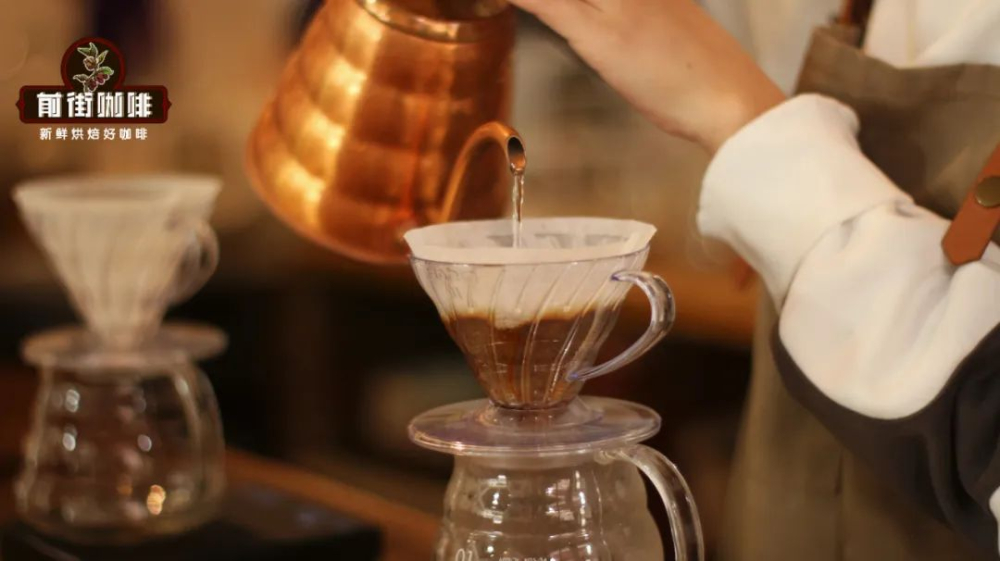
During coffee extraction, flavor compounds are released in a certain order: acidic components dissolve first, followed by sweet substances, and only lastly bitter substances.
In order to control the desired flavor more precisely, experienced brewers indirectly influence the release of these substances by adjusting water temperature, grind size, extraction time, and even changing the pouring method and dripper type, thereby allowing the same bean to present a completely different taste profile.
In the pouring stage of pour-over brewing, when water passes through the coffee bed it mainly performs washing extraction. Once pouring stops, the liquid level slowly drops under gravity, and the water remains in contact with the coffee particles; at this point, soaking extraction takes place. Generally speaking, the more pours there are, the more times washing occurs, and extraction efficiency rises accordingly; at the same time, the frequency of alternation between washing and soaking is also higher, and the overall extraction time is naturally extended.
Taking three-pour brewing as an example, it can be understood as a cycle that, after blooming, goes through washing, soaking, washing again, and soaking again in sequence. Compared with the one-pour method, which has only two stages—washing plus soaking—the three-pour method makes the coffee bed tumble repeatedly more times and takes longer, giving middle-stage flavor compounds higher extraction efficiency, so the sweetness has richer layers than with the one-pour method.
Take the Santa Vini coffee beans that Front Street has produced most in recent times as an example. With all other parameters unchanged, the coffee brewed with the one-pour method showed a bright and clean citrus acidity, while after switching back to the three-pour method used daily, the cup gained a fuller sweetness reminiscent of ripe berries and dried apricots.
Front Street knows well that the flavor of a cup of coffee is deeply influenced by origin, variety, processing method, roast level, and extraction method, and this is exactly what makes single-origin coffee so fascinating. Brewing sits at the very end of the coffee industry chain, and the room for adjustment is actually quite limited. Changes in technique, parameters, and equipment can at most create relative differences in body, sweetness, cleanliness, and aftertaste.
On one occasion, without disclosing the bean information, Front Street gave the above two pots of coffee to the baristas usually responsible for copywriting for a blind guess. Everyone did indeed taste subtle differences in flavor, but in the end they still recognized that they came from the same ingredient. This precisely shows that although pouring technique certainly has an influence on why coffee can display distinct flavor characteristics, what truly plays the decisive role is still the bean itself.
To use another analogy, if Front Street brews a less appealing dark roast, whose aroma inherently lacks room for extension and whose taste is dominated by caramelized characteristics, then no matter how fancy the technique and parameters are, they cannot make it several times tastier. In short, brewing technique can add polish to coffee, but it cannot work miracles on something mediocre.
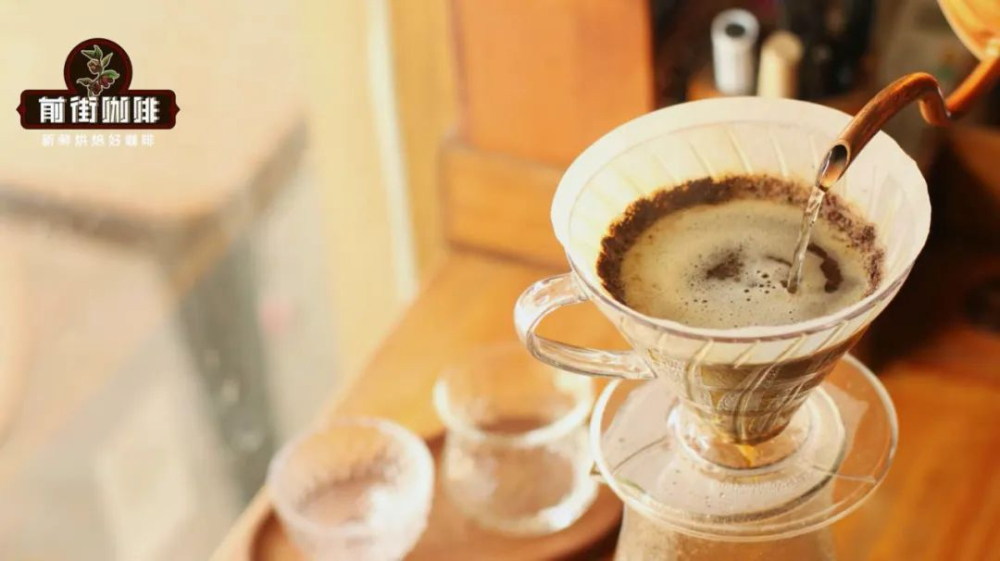
For this reason, when Front Street does brewing education, it usually tends to recommend a conservative extraction framework—using the simplest, most stable method and parameters with the fewest variables to present the flavor of the beans. If you want coffee with more prominent sweetness, brighter acidity, or a more distinctive aroma, you might as well start with bean selection, because the flavor differences between beans are far greater than the changes brought by different brewing methods.
- END - Front Street Coffee (FrontStreet Coffee)
No. 10, Baoqian Street, Yandun Road, Dongshankou, Yuexiu District, Guangzhou, Guangdong Province
The above content is compiled by CoffeeHunters, a coffee news website.


