








Where Do Fruity Notes in Coffee Actually Come From?
Fruity flavors in pour-over coffee begin in the green coffee bean, not in the brewing. Green beans hold aromatic compounds similar to fruit aromas, mainly esters, ketones and alcohols, alongside fatty acids, terpenes and amino acids. About 60 percent of a green bean is carbohydrates, with roughly 10 percent protein, 10 to 15 percent fats, plus chlorogenic acid, caffeine and trigonelline.
These precursors are stored in a stable form and only develop during a short maturation period, then transform through the Maillard reaction and caramelization during roasting. Because fruity character is not innate at harvest, many farmers now pick only fully ripe red cherries. Medium-light roasted pour-over coffee shows the most distinct floral and fruity character in the cup.
Citrus, passion fruit, strawberry, grape… we have been familiar with the flavors of these fruits since childhood, and even with our eyes closed we can identify the specific variety by taste alone. Coffee itself is also a fruit, and its fruit contains a large number of aromatic substances similar to fruit aromas, but the fruity notes are not fully formed from the start; rather, they are gradually transformed during a very short maturation period. From esters, ketones, alcohols, and other components in green beans, to catalysis by the Maillard reaction and caramelization during roasting, and finally to the ultimate expression during brewing, every step influences the flavor in the cup. This article systematically sorts out the sources and transformation pathways of coffee's fruity notes, helping enthusiasts understand why medium-light roasted pour-over coffee can display such distinct floral and fruity character.
Citrus, passion fruit, strawberry, grape… we have known the taste of these fruits since childhood, and even with our eyes closed, one sip is enough to tell what kind of fruit it is; combined with the tactile sensation when chewing, we can even narrow it down to a more specific variety. For example, when tasting citrus, we can distinguish whether it is a sugar orange, a Wogan, or a navel orange.
Coffee is essentially a fruit, and growing origin, variety, and climatic conditions all affect its quality and flavor expression. Many friends already know this. But it should be pointed out that most fruity notes are not innate, but gradually transformed and formed during a short maturation period. For this reason, more and more farmers are now required to harvest only fully red cherries, with the aim of allowing the coffee to present fuller sweet aromas .

Among the components of green coffee beans, about 60% are carbohydrates, 10% are proteins, and 10% to 15% are fats; they also contain chlorogenic acid, caffeine, trigonelline, and other substances. The fundamental reason coffee tastes "fruity" is that it contains a large number of aromatic compounds similar to fruit aromas, mainly esters, ketones, and alcohols. For example, fatty acids, terpenes, amino acids, and other components are all sources of fruity aroma already stored in green beans.
In fact, the coffee aromatic substances mentioned earlier by Front Street are stored in green beans in a stable form, in a "dormant" state, and roasting is the key step that truly releases them as volatile aromas, mainly thanks to the Maillard reaction and caramelization reaction.
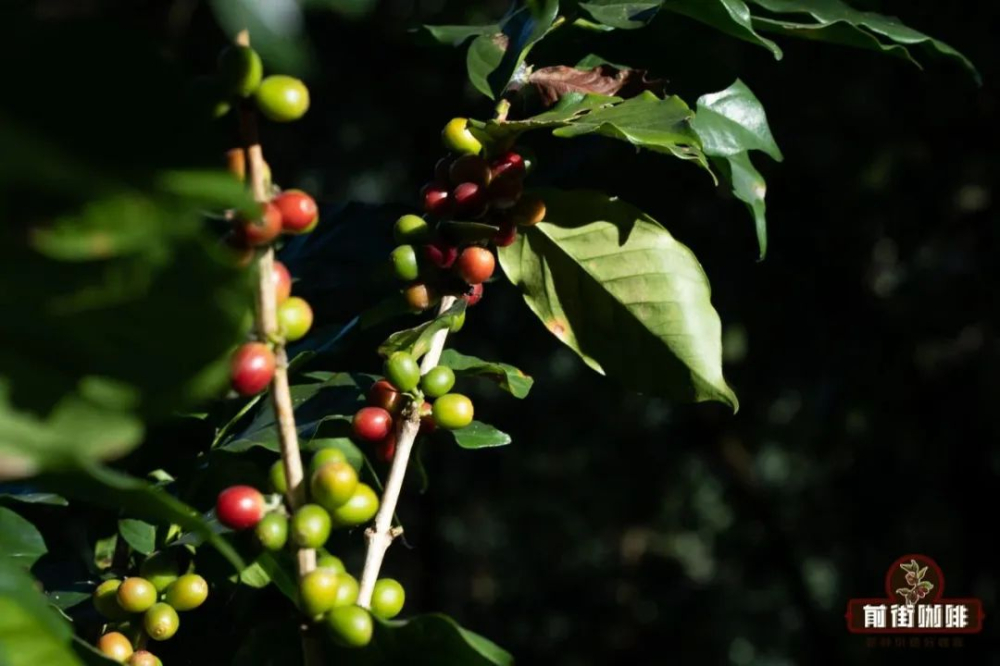
As the reaction time progresses, coffee first presents fresh floral and fruity notes, then transitions to a rounded, deeper floral-fruity character, followed by a substantial nutty and fermented note, and finally forms caramel-like compounds, but at this point the floral and fruity aromas produced earlier are also gradually fading. This also explains why it is difficult to taste floral and fruity flavor types in dark-roasted coffee beans; if you want to pursue floral and fruity notes, it is best to choose coffee with a medium or lighter roast level.
Brewing is the final link in flavor presentation. From variety selection, cultivation, processing, and roasting to brewing, the closer a step is to the upstream, the greater its influence on flavor, while by the downstream brewing stage, the influence on coffee flavor is relatively minimal. Under the olfactory and acidity perceptions brought by various fruity or floral compounds, our brain connects this experience with the moment in memory when we tasted a certain fruit.
Front Street Coffee (FrontStreet Coffee)
No. 10, Bao'an Front Street, Yandun Road, Dongshankou, Yuexiu District, Guangzhou, Guangdong Province
The above content is compiled by CoffeeHunters, a coffee news website.


