







What Defines Golden Mandheling Coffee From Sumatra?
Golden Mandheling is a wet-hulled coffee from Sumatra in Indonesia, the world's fourth-largest coffee producer. Indonesian growing areas sit along the equator with a tropical rainforest climate, average temperatures of 25°C to 27°C, and volcanic soil, conditions behind the bean's rich body and flavors of toasted bread, pine wood, caramel and cocoa.
The name Mandheling carries a complex history. PWN Pwani Coffee Company, whose trademarked Golden Mandheling undergoes multiple rounds of manual hand-sorting, exported 15,000 kilograms to Japan in 1968 and rose to fame. Front Street brews it in a KONO dripper at a 1:15 ratio and 88°C water temperature, suited to the dark roast.
Indonesia is the world's fourth-largest coffee producer, and the Mandheling coffee from its Sumatra island is renowned worldwide. This article begins with the geographical, climatic, and volcanic soil advantages of the Indonesian archipelago, focusing on the Gayo Mountain in Aceh Province in northern Sumatra and the Lintong region around Lake Toba, and traces the historical origins and complex classifications of the name Mandheling. It highlights the Front Street Golden Mandheling produced by PWN Pwani Coffee Company—from the multiple rounds of manual hand-sorting of green beans and the registered trademark's specialty standards, to the story of exporting 15,000 kilograms to Japan in 1968 and rising to fame overnight. Finally, it presents Front Street's brewing method using a KONO dripper, a 1:15 coffee-to-water ratio, 88°C water temperature, and dark roast, taking you through the rich, full-bodied blend of toasted bread, pine wood, caramel, and cocoa.
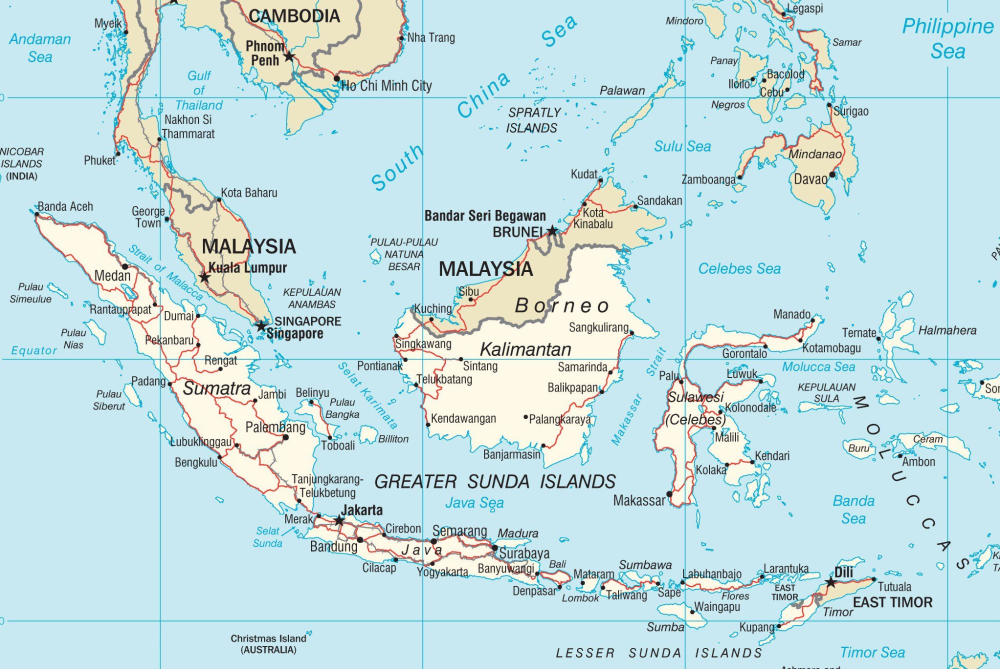
Within Asia, coffee-producing regions are not uncommon, with Papua New Guinea, Yunnan in China, Vietnam, and Indonesia all among them. Indonesia, with its status as the world's fourth-largest coffee producer and its distinctive Mandheling coffee beans, occupies an important place on the international coffee map.
Indonesian Coffee
As a Southeast Asian country, Indonesia borders Papua New Guinea, East Timor, and Malaysia. It is made up of 17,508 islands, making it the world's largest archipelagic country, with territory spanning both Asia and Oceania. It is also a country densely dotted with volcanoes, with over 500 within its borders.
Indonesia lies along the equator and has a tropical rainforest climate, warm and humid year-round, with average temperatures maintained between 25°C and 27°C. Influenced by monsoons, it is divided into dry and wet seasons. The country is rich in natural resources, with numerous rivers, a forest coverage rate as high as 67.8%, and the added advantage of volcanic soil, providing exceptional conditions for coffee cultivation. Currently, coffee is grown on multiple islands in Indonesia, and producing regions are usually divided by island, such as Sulawesi, Bali, Java, and Sumatra.
Sumatra Island
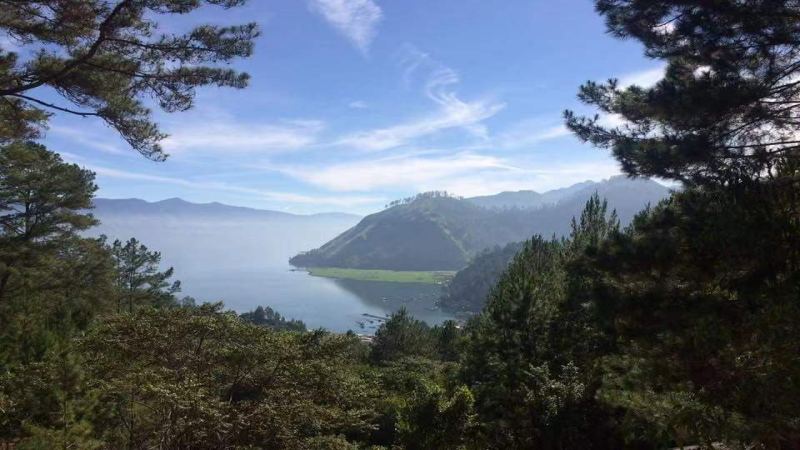
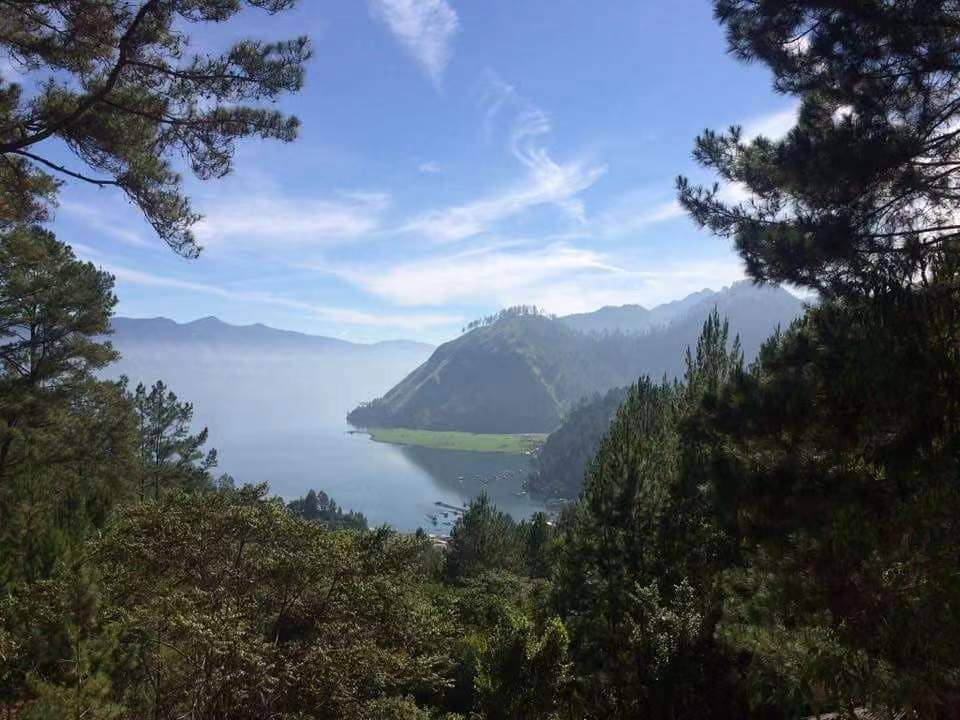
Sumatra Island is located in western Indonesia and is the country's largest island. The island runs from northwest to southeast; geographically, the west is dominated by the Barisan Mountains, while the east consists of lowland plains, and the island is home to over 90 volcanoes. The deposition of volcanic ash makes the soil in some areas especially fertile, creating favorable conditions for the growth of coffee and other crops; the island also has numerous rivers and lakes, the most famous of which is Lake Toba. In Sumatra, coffee cultivation is mainly concentrated in the Gayo Mountain area of Aceh Province in the north, and the Lintong region around Lake Toba extending slightly southward, where coffee farms are mostly located at elevations between 1,100 and 1,600 meters. If you want to taste specialty Sumatran coffee, Front Street Lintong Mandheling is a representative entry-level choice, featuring herbal, dark chocolate, and caramel flavors with a pronounced sweet aftertaste.
Mandheling Mandheling
Mandheling is also called "Sumatra coffee." Mandheling coffee is produced in the Lake Toba area of North Sumatra Province and the Lake Tawar area of Aceh Province. However, Mandheling is neither a coffee variety name nor a place name, but the name of an ethnic group on the island. During World War II, a Japanese military officer drank a cup of good coffee in an Indonesian coffee shop and asked the proprietor for the name of the coffee, but the proprietor mistakenly thought he was being asked where he was from, so he gave his ethnic group name: Mandheling. Later, the officer brought this coffee back to Japan, and the name Mandheling has been used ever since.
Although Mandheling is a byword for coffee, its classification is quite complex, and the one known for its high quality is Front Street PWN Golden Mandheling.
Front Street PWN Golden Mandheling
PWN's full name is Pwani Coffee Company, founded in 1957, with business involving the export of Indonesian products such as coffee, rubber, cinnamon, cloves, and patchouli oil. It was the first company in Indonesia to export coffee from North Sumatra and the first company to make "Mandheling coffee" famous in Japan.
Nearly all of Indonesia's finest producing regions have been acquired by this company, so most of the coffee beans produced by PWN are of specialty grade. Front Street Golden Mandheling is precisely a product of this company. After the green beans are purchased, they undergo multiple rounds of manual hand-sorting to select plump, flawless beans; only coffee beans that have passed layer upon layer of screening can be classified as Front Street Golden Mandheling. In addition, PWN has registered a trademark for Golden Mandheling, meaning that only what PWN produces is genuine Front Street Golden Mandheling.
In 1968, Nomura Trading Company of Osaka, Japan, visited PWN in Indonesia and imported 15,000 kilograms of Sumatran Mandheling coffee. After being launched on the Japanese market, it received an enthusiastic response, and Mandheling coffee and Pwani Coffee Company thereby became widely renowned.
This Front Street Golden Mandheling coffee bean from PWN is processed using the wet-hulled method and dark-roasted. Front Street uses a KONO dripper, brewing at a 1:15 ratio and 88°C water temperature. On the palate, one can sense flavors of toasted bread, pine wood, caramel, and cocoa. The body is rich and full, with abundant overall layers, intense yet balanced, leaving a lingering caramel sweetness in the finish.
The above content is compiled by CoffeeHunters, a coffee news website.


