







Why Is Papua New Guinea Arabica Called Little Blue Mountain?
Papua New Guinea coffee is nicknamed "Little Blue Mountain" because its island climate, high altitude, and volcanic soil closely resemble Jamaica's growing conditions, where Typica was first planted. Coffee reached the island in the late eighteenth century, commercial estates appeared in 1926, and today about 95% of producers are smallholders and roughly 95% of the crop is Arabica.
The Sigri Estate in the Western Highlands Province serves as a benchmark for the country's industry. Grown from Typica stock introduced from Jamaica, the beans carry a comparable body but slightly brighter fruity acidity. Coffee cultivation in Papua New Guinea survived market downturns because smallholder farming dominated, leaving the country less exposed to estate collapses than larger exporting nations.
Coffee from Papua New Guinea has long been known as "Little Blue Mountain," and among its regions, the Sigri Estate in the Western Highlands Province stands out as a benchmark for the local coffee industry. This article begins with the country's coffee-growing history, tracing the origins shaped by its island climate, volcanic soil, and Typica varieties, then focuses on the Western Highlands growing region and the cultivation and processing system of Sigri Estate, and finally introduces the flavor profile and brewing suggestions for Front Street Coffee's Bird of Paradise beans, offering a comprehensive look at this island coffee that balances richness with fruity acidity.
When coffee comes up, Blue Mountain is often mentioned for its limited production and high price. Yet in Oceania, there is a country whose coffee beans have earned the title "Little Blue Mountain"—that country is Papua New Guinea.
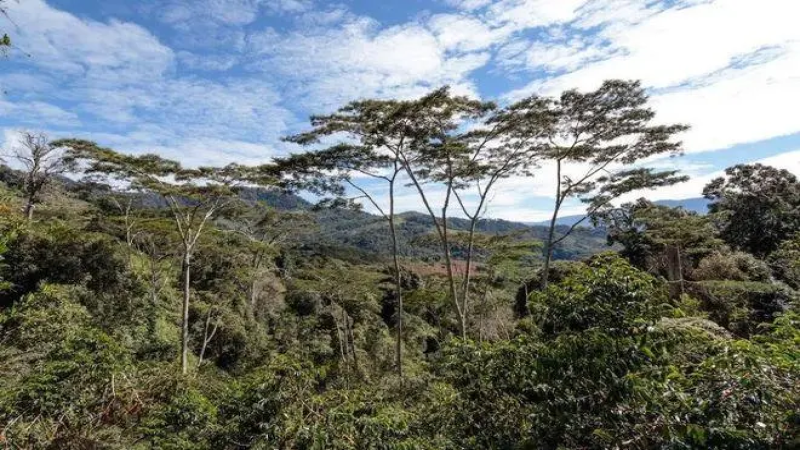
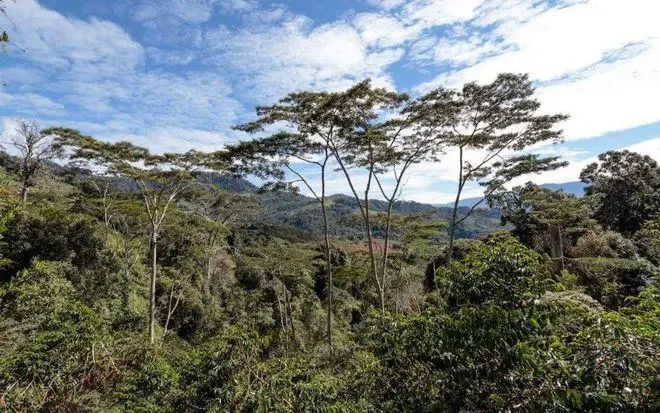
Papua New Guinea lies east of Indonesia in the southwestern Pacific, part of the Melanesian archipelago, and is made up of more than six hundred islands. The country has a typical island climate: areas above 1,000 meters enjoy a mountain climate, while the rest is tropical. Its landscape of rainforests, volcanic rock, and highlands makes it an ideal environment for growing coffee.
Papua New Guinea's Coffee-Growing History
Coffee was introduced by Dutch sailors in the late eighteenth century. Local coffee cultivation officially began in the 1890s, though it was not initially treated as a commercial product. In 1926, eighteen estates were established, and the Typica variety was introduced from Jamaica, driving an increase in commercial coffee production. Because Papua New Guinea shares Jamaica's island climate, high altitude, and volcanic soil, its Typica beans have a similar flavor and comparable body, but with slightly more fruity acidity—hence the nickname "Little Blue Mountain."
In the 1970s, the government introduced several programs encouraging small farms to shift toward a cooperative model. Coffee prices later fell, and many estates ran into financial trouble, but since Papua New Guinea is dominated by smallholder farmers, it was relatively less affected by market fluctuations, allowing coffee production to continue. Today, 95% of the country's producers are smallholders, and 95% of the coffee grown is Arabica.
Western Highlands Growing Region Western Highlands
Papua New Guinea's coffee is currently grown in five highland provinces: Western Highlands, Eastern Highlands, Chimbu, Morobe, and East Sepik. Eastern Highlands and Western Highlands are the main Typica-producing areas, with small amounts of Catuai and Bourbon also planted; beans from other regions are generally of lower quality and are mostly Robusta.
Western Highlands Province is Papua New Guinea's most important and largest coffee-producing province, ranging from 1,000 to 1,800 meters in altitude and home to an ancient dormant volcano. The high altitude combined with volcanic soil provides excellent natural conditions for coffee growing. The renowned Sigri Estate is located in this region.
Sigri Estate Sigir Estate
Founded in 1950, Sigri Estate is a pioneer of the local coffee industry. The estate sits in the Wahgi Valley of Western Highlands Province, at an altitude of 1,500 meters. Along with its favorable natural environment, Sigri Estate has long adhered to high standards of cultivation and processing and places great emphasis on ecological protection, using no pesticides or insecticides. The estate is equally strict about its green beans, hand-picking only ripe red cherries and completing processing on the same day as harvest.
The green beans exported by Sigri Estate are packaged in burlap sacks printed with a bird of paradise. The bird of paradise, also known as the paradisaeid, is a bird unique to Papua New Guinea and the country's national bird. Because the green bean sacks are printed with a bird of paradise, the coffee is known domestically as Bird of Paradise.
Front Street Coffee Papua New Guinea Sigri Estate Bird of Paradise Coffee Beans Region: Western Highlands Estate: Sigri Estate Altitude: 1,500m+ Variety: Typica Processing: Washed Flavor: Caramel, cocoa, almond, balanced, citrus acidity when cool
This Bird of Paradise coffee from Front Street Coffee is washed and medium-dark roasted. Front Street brews it using a KONO dripper at a 1:15 ratio and 91℃ . On the palate, it offers caramel, cocoa, and almond flavors with a rich, silky body, and when cool it shows citrus-like acidity, overall soft and balanced.
The above content is compiled by CoffeeHunters, a coffee news website.


