







What Sets Panama Geisha Coffee Beans Apart in Volcán?
Panama Geisha coffee beans are grown in a country whose east-west mountain layout creates distinct microclimates. Cold air collects above roughly 6,500 feet, giving the Boquete and Volcán Candela areas conditions that suit the variety. Hacienda La Esmeralda in Boquete is the estate most associated with Geisha, and its lots helped establish Panama's reputation for the bean.
The Volcán region west of Volcán Baru has gained ground in recent BOP competitions, with Hacienda Hartmann as a pioneer there. Front Street's Panama geisha selection also covers estates such as Ninety Plus and Hacienda Hartmann. Fertile volcanic soil and altitudes of 1,200 to 1,600 meters support coffee trees, though rainfall is lower than in Boquete.
Panama, with its unique geography and microclimates, has become synonymous with top-tier Geisha coffee. In addition to the well-known Boquete region, the Volcan region west of Volcan Baru has also been making frequent appearances in BOP competitions in recent years, and Hacienda Hartmann is a coffee-growing pioneer on this land. This article will guide you through Panama's coffee terroir, the heritage of the Hartmann family, and the detailed flavor profile and brewing performance of Front Street Coffee's Hacienda Hartmann Geisha coffee beans, providing coffee enthusiasts with a complete reference on the region and tasting.
Panama coffee beans have long been renowned worldwide for the Geisha variety, and the Panama Geisha coffee beans currently offered by Front Street cover several well-known estates, including Hacienda Esmeralda, Ninety Plus, and Hacienda Hartmann.
Panama Coffee
Panama is located at the southernmost tip of Central America, bordered by the Caribbean Sea to the east and the Pacific Ocean to the west, with Costa Rica to the north and Colombia to the south, forming a key isthmus connecting North and South America. Influenced by this geographic layout, Panama has developed complex and diverse microclimates. The east-west orientation of the terrain causes cold air to flow along the central mountain range and accumulate at altitudes above 6,500 feet, creating a unique microclimate in the Boquete and Volcán Candela areas, which has made this region the core coffee-producing area of Panama. The surrounding land is rich in nutrients, and the fertile soil provides an ideal growing environment for coffee.
Volcan Region
The coffee-producing regions are mainly divided into Boquete, Volcan-Candela, and Renacimiento. These regions are all distributed around three volcanoes in the country: Volcán Baru, El Valle, and Le Yeguada.
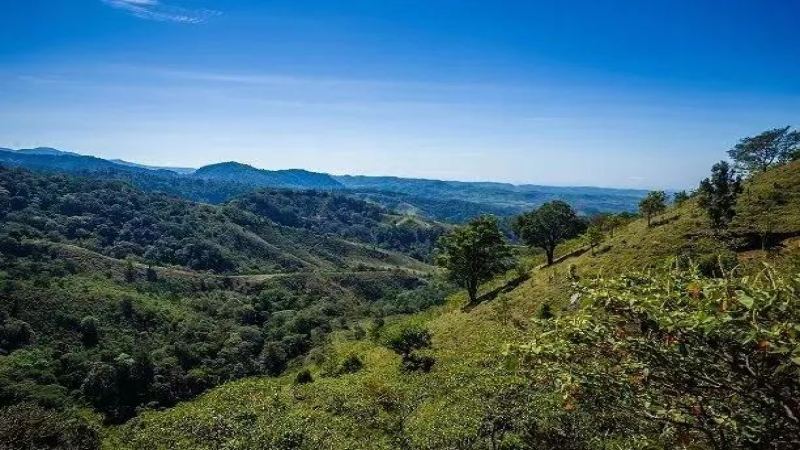
When it comes to coffee cultivation in Panama, most people first think of the Boquete region. However, in recent years, the Volcan region has also produced many outstanding estates that frequently appear in BOP competitions and have even taken top honors. The Volcan region sits at an altitude of 1,200 to 1,600 meters, with average rainfall lower than Boquete, but thanks to its location on the western side of Volcan Baru, the volcanic soil and high-altitude conditions also create a favorable growing environment for coffee trees. In the early days, the Volcan area mainly grew fruits, vegetables, and other cash crops, with only a handful of farmers engaged in coffee cultivation, and the Hartmann family was precisely the pioneer of coffee growing in the Volcan region.
Hacienda Hartmann
Alois Strasil Hartmann (ancestor of the Hartmann family) was born in what was then the Austro-Hungarian Empire (now the Czech Republic). Later, due to political turmoil in his country, he decided to travel far from home in search of a new life. Alois initially settled in New York, USA, and then made his way to Panama. After living there for several months, however, he found it difficult to adapt to the urban pace of Panama City, so he traveled along the mountains and eventually settled in the Volcan region, where he married and had Hartmann Troetsch. Starting in 1940, Troetsch inherited his father's farmland and began clearing and cultivating the land, thus beginning the history of Hacienda Hartmann that continues to this day.
In the early stages of development, the elder Hartmann decided to preserve most of the original forest on the estate, and this philosophy of protecting native forest deeply influenced the third-generation estate owner who later took charge of management. Today, Hacienda Hartmann still continues this tradition, with coffee cultivation covering only about 20% of the entire estate. Thanks to the effective forest conservation efforts, the estate is home to a large number of native birds, among which the locally most famous toucan has become the estate's iconic logo. At present, the estate is jointly managed by five children, each responsible for coffee growth management, harvesting and processing, and estate tour reception. In 2013, the family also purchased Guarumo Coffee Farm north of Hacienda Hartmann. Currently, Hacienda Hartmann cultivates a rich variety of coffee varieties, including Typica, Caturra, Catuai, Bourbón, Pacamara, Maragogipe, and Geisha.
FrontStreet Coffee Panama Hacienda Hartmann Geisha Coffee Beans Region: Volcan Region Estate/Processing Plant: Hacienda Hartmann Altitude: 1,500-2,300 meters Variety: Geisha Processing Method: Anaerobic Natural Flavor: White floral, bergamot, pineapple, blueberry, Earl Grey tea FrontStreet Coffee has also acquired this Hacienda Hartmann Geisha, which uses anaerobic natural processing and a medium-light roast. Front Street uses a V60 at a 1:15 ratio and 92℃ for brewing. You will smell white floral notes, and on the palate there will be layered and ever-changing fruit acidity, with flavors of bergamot, pineapple, and blueberry. The mouthfeel is silky and soft like Earl Grey tea, with a long-lasting sweet finish.
The above content is compiled by CoffeeHunters, a coffee news website.


