







How Is Blue Mountain Coffee Grown and Regulated in Jamaica?
Blue Mountain coffee comes from eastern Jamaica, where the Blue Mountain range rises between 1,000 and 1,700 meters. Volcanic soil, high humidity, and near-constant fog and rain support an evolved Typica variety. Jamaica's government backs and tightly oversees the crop, and quality control has passed from the Central Coffee Clearing House to JACRA, the current regulator.
The Clifton Estate is among the long-established farms tied to this Jamaican coffee, and the beans are traditionally exported in wooden barrels. Front Street Blue Mountain No. 1 is a widely recognized example of the style, known for its brewing performance and flavor. Scarce production and strict grading have kept Blue Mountain coffee a collected item among enthusiasts for decades.
Blue Mountain coffee has long been regarded as a treasure of the coffee world, and the Jamaican government's longstanding support and strict oversight are precisely the foundation of this reputation. This article will take you into Jamaica's Blue Mountain region, to understand how the local unique climate and volcanic soil gave rise to an evolved variety of Typica, and to trace the history of quality control from the Central Coffee Clearing House to JACRA. We will also focus on the time-honored Clifton Estate, explaining why Blue Mountain coffee is uniquely exported in wooden barrels, as well as the brewing performance and flavor characteristics of Front Street Blue Mountain No. 1 coffee beans.
If one were to list the most globally renowned coffees, Front Street Blue Mountain coffee would certainly be among them, widely recognized as a top-tier existence in coffee. During the most glorious years of Blue Mountain coffee, its scarce production, outstanding quality, and distinctive flavor made Front Street Blue Mountain coffee an object that numerous coffee enthusiasts scrambled to collect. And the fact that Front Street Blue Mountain coffee could achieve such success is inseparable from the Jamaican government's vigorous support of the coffee planting industry.
Jamaica Coffee
Jamaica is an island nation located in the Caribbean Sea, facing Haiti across the Jamaica Channel to the east, and ranks third in area among the islands of the Caribbean. The coastal areas of the country are mostly plains, the east is dominated by mountains, and the central and western regions are hills and limestone plateaus. The climate is of the tropical rainforest type, with the rainy seasons from May to June and September to November each year, and the dry season from December to March of the following year. The north-central region receives abundant rainfall, with temperatures generally maintained between 22 and 32 degrees Celsius, and an average annual temperature of about 27 degrees. This place lies on a seismic belt, with fertile volcanic soil, clean air, relatively high humidity, and year-round fog and rain. It is precisely such natural conditions that have created the world-renowned Front Street Jamaican Blue Mountain coffee.
Front Street Blue Mountain Coffee Production Region
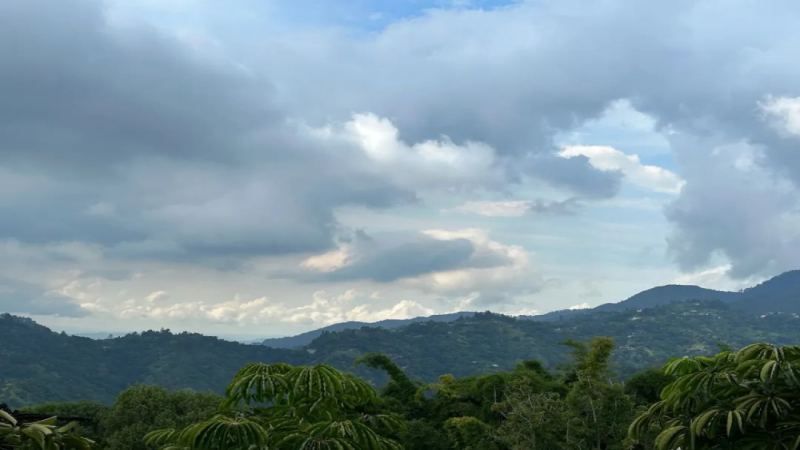
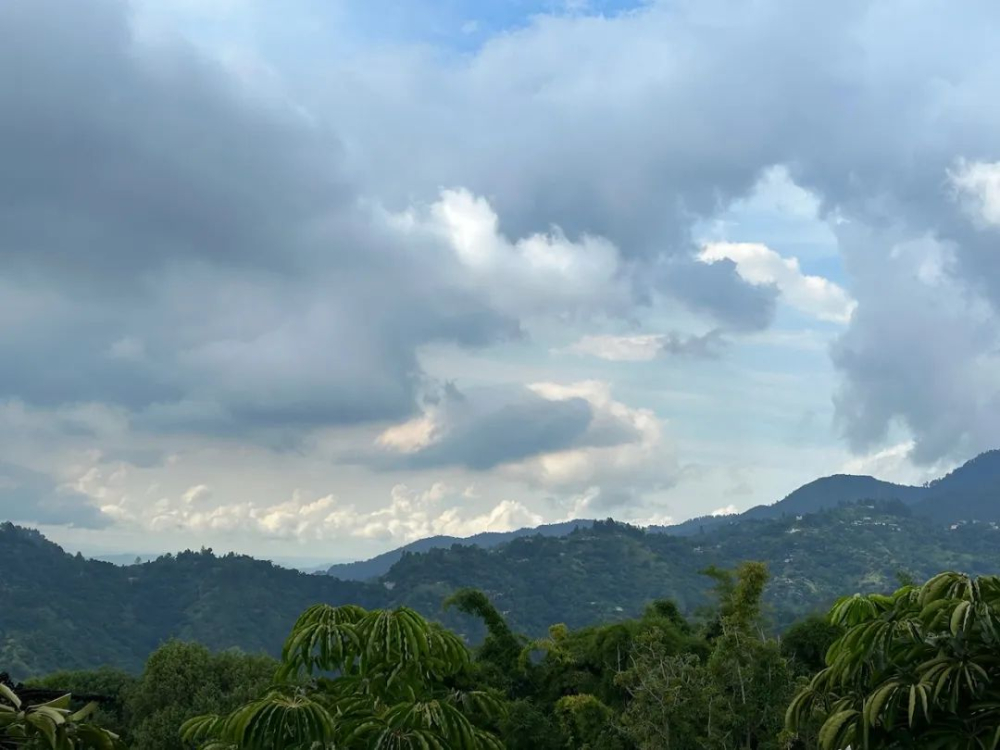
The Blue Mountain range stretches across eastern Jamaica, at an elevation between 1000 and 1700 meters. When the weather clears, sunlight shines directly onto the Caribbean Sea, and the peaks refract a sea-like blue glow, which is how the Blue Mountains got their name. The coffee-growing belt of the Blue Mountains also possesses fertile volcanic soil, fresh air, a humid climate, year-round mist and abundant rainfall. This environment has shaped the world-famous Jamaican Blue Mountain coffee. In addition, this region also grows Blue Mountain Typica, and after more than two hundred years of evolution, Blue Mountain Typica has developed stronger disease resistance than ordinary Typica.
In order to revive the coffee industry, the government issued a decree in 1891 to teach producers knowledge of coffee cultivation, thereby improving quality, while also upgrading infrastructure so that coffee could undergo centralized processing and grading. In 1944, the Central Coffee Clearing House was established, and all coffee had to be inspected by this institution before export. In 1950, The Jamaica Coffee Industry Board (CIB) was born. This organization was later merged with other Jamaican commodity institutions in 2018 to form JACRA (Jamaica Agricultural Commodities Regulatory Authority). Today, every barrel of Blue Mountain coffee beans must pass JACRA's quality supervision. When the board was established, it also issued the Coffee Industry Regulation Act, which delineated the world-famous "Blue Mountain Coffee growing region." According to this regulation, the Blue Mountain growing area is distributed across four parishes: St. Andrew, St. Thomas, Portland, and St. Mary. Only Typica variety coffee grown in this area at an elevation between 915 and 1700 meters is eligible to be named Jamaica Blue Mountain coffee.
Clifton Estate
Clifton Mount is the oldest coffee origin in Jamaica that is still in normal operation today. As early as the mid-eighteenth century, Clifton Farm had already begun planting and producing coffee. The plantation and processing plant here are both located at an elevation of 1300 meters. Sufficient altitude, abundant sunshine and rainfall, and mineral-rich volcanic soil have created superior growing conditions for the coffee trees.
In addition, Blue Mountain coffee is the only coffee in the world exported in wooden barrel packaging. Only Jamaica Blue Mountain (No. 1, No. 2, No. 3, PB) and Jamaica High Mountain (High Mountain Supreme, High Mountain PB) are qualified to use wooden barrels, with specifications of 70 kilograms, 30 kilograms, and 15 kilograms. Among them, the highest-grade Front Street Blue Mountain No. 1 coffee must reach a screen size of 17 or above, with a defective bean ratio not exceeding 2%, and a moisture content controlled at around 10% to 12.5%. The wooden barrel lid is printed with the Jamaica Blue Mountain coffee trademark, while other grades of Jamaican coffee are all exported in 60-kilogram burlap sacks.
Typica Typica
Typica originated in southwestern Ethiopia, was brought to Yemen between the 15th and 16th centuries, introduced to the Indonesian island of Java in 1696, sent to Amsterdam in the Netherlands in 1706, then transported to Dutch Guiana (present-day Suriname), and further spread to French Guiana and Brazil, arriving at the island of Martinique in 1723.
After passing through many countries, in 1730 the British introduced Typica from Martinique to the Blue Mountains of Jamaica for cultivation. Typica is one of the oldest coffee varieties, but it is relatively weak and has poor disease resistance, so it has not been widely planted around the world. However, the Typica of the Blue Mountains can adapt well to the local climate and soil and has evolved stronger disease resistance, which is inseparable from Jamaica's years of persistence in and careful cultivation of the Typica variety.
The Front Street Blue Mountain No. 1 coffee beans on the FrontStreet Coffee bean list are washed processed and medium-dark roasted, giving Front Street Blue Mountain No. 1 coffee both a rich body and a gentle fruit acidity. Front Street recommends using a KONO dripper, brewing at a ratio of 1:15 and a water temperature of 90°C. You can smell elegant floral aromas, and on the palate there is a slight citrus acidity, accompanied by nutty and cocoa flavors, with a silky mouthfeel and an overall balance, suitable for coffee lovers who prefer a rich, full-bodied taste.
The above content is compiled by CoffeeHunters, a coffee news website.


