








How Do Grinder Burrs Affect Coffee Particles and Flavor?
Choosing between a manual and an electric grinder comes down to burr structure, grind uniformity, portability, and budget. The grinder affects flavor more directly than a dripper or kettle, because the size of the coffee particles determines how evenly the grounds extract. Prices on shopping platforms run from about twenty yuan to tens of thousands, so the gap reflects real differences in burrs and motors.
Electric grinders generally reach finer settings and rely on their burr type for consistency; hand grinders trade motor power for portability and lower cost. Front Street's buying logic compares the two across uniformity, convenience, and price, then splits recommendations into two scenarios: under a thousand yuan and with a generous budget. Matching the grinder to the brewing method matters more than chasing the highest price.
As more and more people start brewing coffee at home, the grinder has become an indispensable key piece of equipment. It is not like a dripper or a pour-over kettle that merely plays a supporting role; the quality of the grind directly influences the flavor in the cup. However, when you open a shopping platform, grinder prices range from just over twenty yuan all the way to tens of thousands of yuan, and this stark price gap leaves many beginners at a loss. This article will start from Front Street's purchasing experience, comparing hand grinders and electric grinders in terms of burr structure, grind uniformity, portability, and price range, and will offer specific recommendations for two scenarios: under a thousand yuan and with a generous budget, to help you find the one that truly suits you among the countless options.

Coffee is gradually becoming part of many people's daily lives, and more and more friends are brewing it themselves. Before brewing coffee, choosing suitable equipment is an essential step, and the quality of the equipment will be genuinely reflected in the final coffee flavor. Among all the equipment, the one that has the most direct impact on taste is the grinder.
Like other coffee equipment, grinders come in a wide variety of styles on major e-commerce platforms. But it is more worth putting thought into choosing than other equipment: first, as just mentioned, grind quality affects the flavor direction; second, its price... is really not cheap.
A casual search on a shopping platform reveals that grinder prices span an astonishing range. The cheap ones can be had for twenty or thirty yuan, while the expensive ones cost tens of thousands of yuan, a price difference of thousands of times. Faced with such a gap, people preparing to buy a grinder often get stuck right away: how exactly should they choose? To help everyone unload this psychological burden, Front Street's article will discuss the logic of buying a grinder, hoping to help you pick a satisfying one.
Hand grinder or electric, how to decide?
The trade-off between hand grinders and electric grinders has always been the most agonizing part of choosing a grinder, because each has one standout advantage. For example, the strength of an electric grinder lies in its ability to achieve finer grinding.
The difference between the two in grinding fineness comes down to the burrs they use. Electric grinders are basically equipped with ghost burrs or flat burrs, with flat burrs being the most common. A flat burr's structure consists of two parallel burrs, one fixed and the other connected to the motor, which spins as soon as the motor starts.
After the coffee beans are crushed, they are flung out through the gaps on both sides by the centrifugal force generated by the rotation of the lower burr. Since the entire process is motor-driven, there is almost no deviation caused by human factors, so the resulting coffee particles are more uniform and there are relatively fewer fines.
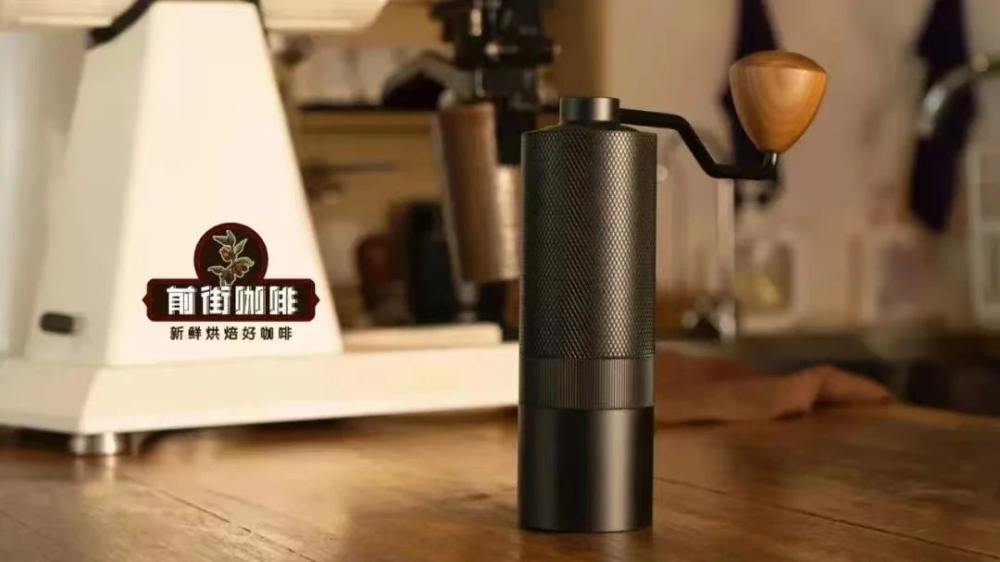
Hand grinders mostly use conical burrs. This type of burr is composed of a ring-shaped static burr and a conical moving burr.
As can be seen from the diagram, the gap through which coffee beans pass is a channel that is wide at the top and narrow at the bottom, which means the beans undergo quite a lot of crushing; in addition, the speed of manual turning is not constant, so the uniformity of the ground particles is naturally poorer, and fines are more likely to appear.
Judging purely by fineness, electric grinders have a clear upper hand. However, hand grinders also have their very appealing points: friendly price, easy portability, and no dependence on power. For friends who are often not at a fixed residence, this is especially practical—you can take it anywhere. So, how exactly should you choose between hand and electric?
Front Street's view is: decide based on budget and actual needs. If your budget is under a thousand yuan, or you travel frequently and can't do without coffee on your daily commute, then a hand grinder is more suitable than an electric one. For hand grinders, Front Street recommends choosing models above two hundred yuan. Although products under two hundred yuan do exist on the market, this price range is mixed with quite a few "bean choppers" masquerading as grinders, which produce extremely uneven particles, and the probability of falling into a trap is too high. To be safe, simply pick a hand grinder you like between two hundred and a thousand yuan.
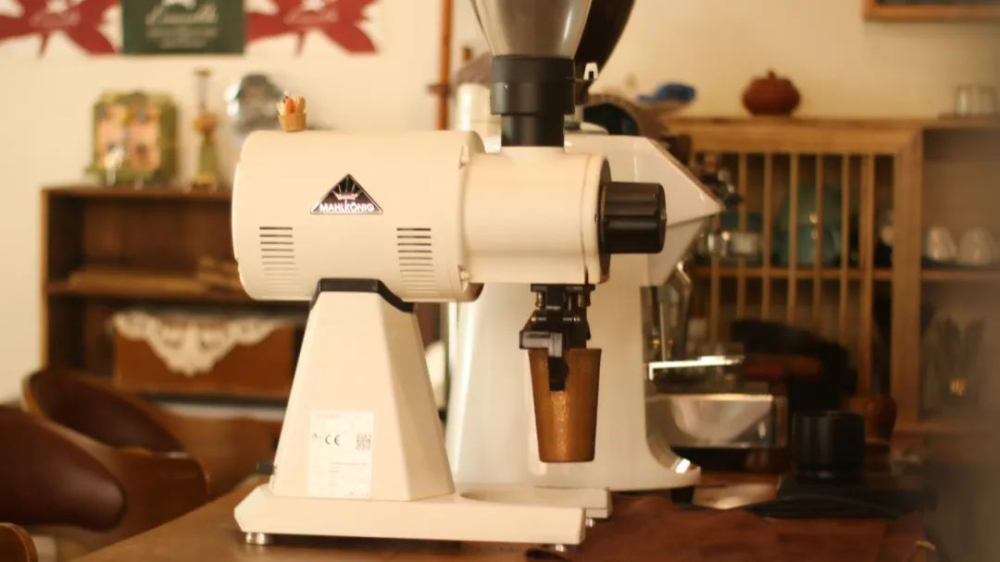
If your budget is more generous (with no upper limit), you also have plenty of space, and you want to get it done in one step, then Front Street recommends an electric grinder even more. When buying an electric grinder, you likewise need to guard against "bean choppers," but compared with hand grinders, the chance of being fooled is much lower. The only thing to watch out for is whether it is an espresso grinder or a single-origin grinder.
Espresso grinders and single-origin grinders differ greatly in appearance and grinding range, and the two are not interchangeable (except for a few extremely expensive models). So when purchasing, be sure to first distinguish the type before placing an order, otherwise subsequent returns and exchanges will be quite a hassle.
The above content is compiled by CoffeeHunters, a coffee news website.


