







Why Are the Main Coffee Producing Countries Under Pressure?
Coffee bean prices have swung noticeably as the main coffee producing countries face supply shocks. Brazil's growing areas have suffered persistent drought, with temperatures above 40°C in some regions and rainfall below historical averages, while Vietnam's robusta supply has tightened and February exports fell 20% year on year to 160,000 tons.
Some signals point the other way. Somar Meteorologia reported rainfall of 59.5 mm in Minas Gerais within a week, 131% of the historical average, and StoneX forecasts Brazil's 2024/25 coffee production will rise 4.2% on expanded planted area. Vietnam's production cut forecast remains, but El Niño is expected to end around April, and shipping alternatives have emerged in the Red Sea.
Recently, the global coffee market has experienced a round of noticeable price fluctuations, mainly driven by supply changes in two major producing regions—Brazil and Vietnam. Some coffee-producing areas in Brazil have suffered from persistent drought and erratic weather, while Vietnam has further intensified market uncertainty due to tightening robusta coffee supply and a sharp drop in February exports. However, there are also some positive signals: StoneX expects Brazil's new-crop production to increase, and although Vietnam's production reduction forecast remains, the El Niño phenomenon is expected to end around April, while attempts to resume shipping and alternative solutions have also emerged in the Red Sea. This article will focus on these key developments to sort out the causes of unstable coffee bean prices and follow Front Street brand's continued tracking of market trends.
Recently, according to Nasdaq, international coffee bean prices have fluctuated noticeably because several major coffee-producing and exporting countries have been hit by adverse shocks to varying degrees. Brazil's coffee production has been damaged by abnormal weather, while Vietnam is facing tight coffee supply, with its February coffee exports falling 20% year on year to 160,000 tons.
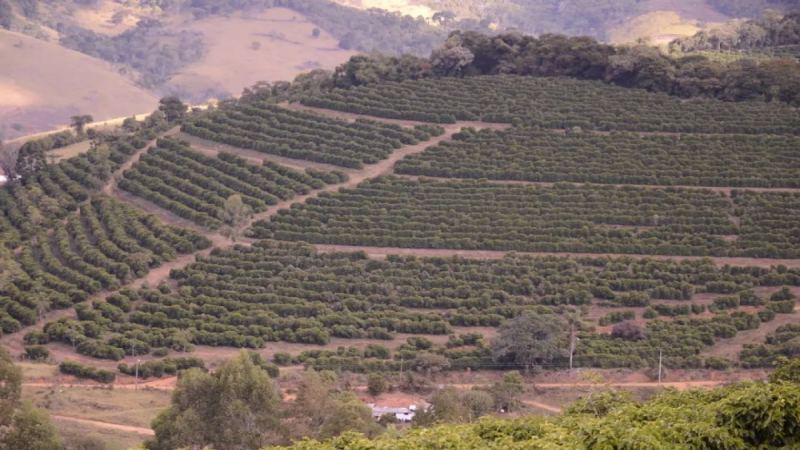
In Brazil, some coffee-growing areas are currently suffering from drought. Temperatures in some producing regions have even exceeded 40°C, cumulative rainfall has also been below the historical average, and the weather is highly changeable and difficult to predict accurately. However, conditions in the Minas Gerais region have improved slightly. Data from Somar Meteorologia show that rainfall in the region reached 59.5 mm within a week, equivalent to 131% of the historical average.
One positive signal worth noting is that, after field research in Brazil's main coffee-producing areas, investment bank StoneX forecasts that Brazil's 2024/25 coffee production will increase by 4.2% compared with the previous year. Although weather factors caused production declines in some individual producing areas, the expansion of planted area ultimately drove an increase in total production.
Turning to Vietnam, tight robusta coffee supply has pushed up its prices and also affected Vietnam's coffee exports. A report from Vietnam's General Statistics Office shows that although total coffee exports from January to February rose 16.2% year on year to 398,000 metric tons, exports in February alone fell sharply by 32.8% from January and were also down 20.1% from the same period last year, at only 160,000 metric tons. However, Vietnam said the Lunar New Year holiday was the main reason for the decline in February coffee exports. In addition, Vietnam's coffee exports in 2023/24 are currently about 12 million bags per month, still up 3.96% from the same period last year.
But Vietnam's Ministry of Agriculture had previously forecast that, affected by drought caused by El Niño, Vietnam's 2023/24 coffee production could fall by 10% to 1.656 million metric tons. Due to expectations of lower output, domestic coffee prices in Vietnam remain high, and recently coffee prices in the Central Highlands have stayed at 79 to 81 million Vietnamese dong/ton. It is also understood that the El Niño phenomenon is expected to end around April this year, when production is expected to improve.
In addition, although tensions in the Red Sea region continue, major shipping companies are actively seeking solutions to reduce operating costs. Shipping giant CMA CGM said that after reassessing the situation in the southern Red Sea, conditions now allow for resuming transit, though because the situation is still constantly changing, CMA CGM cannot guarantee that the resumption will proceed smoothly. The good news is that one of CMA CGM's container ships has already successfully transited the Red Sea under the escort of the French Navy. On the other hand, shipping company Hapag-Lloyd has launched an inland freight solution that allows ships to bypass the Red Sea region while saving time on diversion. Through these measures, coffee prices may decline somewhat.
The above content is compiled by CoffeeHunters, a coffee news website.


