







What Makes Yellow Bourbon Coffee From Mogiana Distinct?
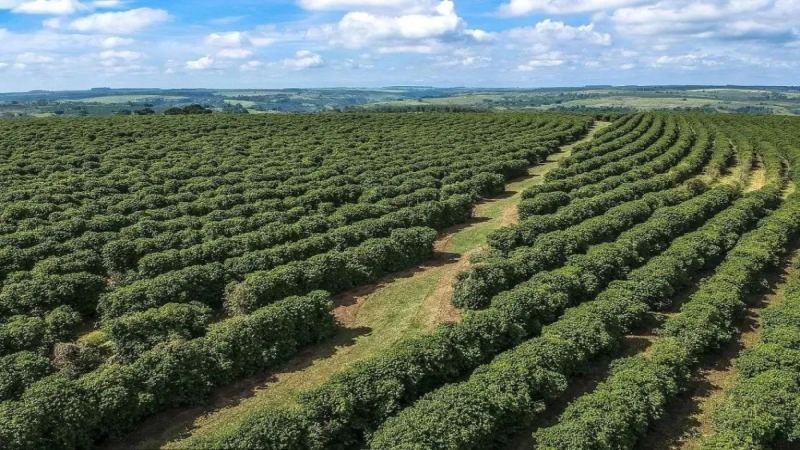
Yellow Bourbon is a low-yield, high-sweetness mutation of the Bourbon variety, and the Mogiana region of São Paulo state is one of the places where it is grown. The beans analyzed here come from Fazenda Rainha, a farm in Mogiana's high-altitude sub-region within Brazil, the world's largest coffee-producing and exporting country.
Brazil accounts for roughly thirty percent of global coffee exports, growing mostly arabica plus robusta, known locally as Conilon. Coffee trees are planted mainly in the south, where average annual temperatures sit between 16 and 19°C, and soils include sedimentary debris, red-yellow, and brown clayey types. Brazil's pulped natural processing balances sweetness and body in the cup.
Brazil, as the center of gravity in the global coffee landscape, ranks first in both production and export volume. This article focuses on the high-altitude sub-region of the Mogiana region in São Paulo State, providing an in-depth analysis of the yellow Bourbon coffee beans produced by Fazenda Rainha. The content covers Brazil's overall growing environment, soil and climate advantages, compares the differences between Bourbon and Typica heirloom varieties, and explains the low-yield and high-sweetness characteristics of yellow Bourbon as a locally unique mutation. It also introduces Brazil's original pulped natural processing method and how it balances sweetness and body. Finally, it presents the specific parameters and brewing flavor performance of this bean from Front Street Coffee, offering enthusiasts a complete understanding from origin to cup.
Brazil holds a prominent position in global coffee trade, as it is the world's largest coffee-producing and exporting country, with export volumes reaching thirty percent of total global exports. Local cultivation is mainly based on two major species: Arabica and Robusta (known domestically in Brazil as Conilon).
Brazilian Coffee Cultivation
As the largest country in South America by area, Brazil borders ten countries including Colombia, Peru, Bolivia, and Uruguay. Its ability to hold the position of largest producer is due to its superior natural geographical and meteorological conditions: the national base is a tropical climate, with local characteristics of tropical rainforest and tropical savanna. Coffee trees are mostly planted in the southern regions, where the average annual temperature remains between 16 and 19 degrees Celsius.
The soil types within the country can be classified into three categories: sedimentary debris soil, red-yellow soil, and brown clayey soil. These soil types not only contain abundant organic matter and mineral elements but also have excellent permeability; supplemented by abundant rainfall, fertile soil, and dense water systems, the overall environment is extremely favorable for coffee tree growth.
Mogiana Region
Brazil's administrative divisions include 26 states, with coffee production covering 17 of them. Among the aforementioned 17 states, Paraná, São Paulo, Minas Gerais, and Espírito Santo together contribute eighty percent of the national output, with Minas Gerais being the most prominent, accounting for 30%. Arabica accounts for 80% of total production, with the remaining 20% being Robusta. The main cultivated varieties include Bourbon, Catuai, Typica, and Mundo Novo, with the harvest season concentrated from May to September each year.
Within the aforementioned producing states, there are also many well-known sub-regions, such as the Cerrado region under Minas Gerais. Front Street Coffee's entry-level selection series includes Brazilian beans from this area. Mogiana belongs to São Paulo State and is a relatively high-altitude zone, rich in specialty-grade Brazilian coffee. The area is dotted with family-style farms, where modern agricultural techniques blend with traditional mountain farming culture, nurturing high-quality green beans.
Yellow Bourbon
Bourbon and Typica are both the oldest existing coffee varieties. The Bourbon plant has distinctive morphological characteristics: short internodal distances on the leaves, and fruits that are rounder and slightly shorter than Typica, with ripe fruits showing yellow or orange (pink) colors depending on the variety. Its green beans are nearly perfectly round, slightly smaller than Typica, with a later maturation period, though its yield per plant is higher than the latter. Bourbon beans grown at high altitudes have greater density, with more pronounced sweetness and bright acidity. Although both are traditional fine varieties, Bourbon has stronger resistance to leaf rust than Typica.
During the process from flowering to fruit ripening, ordinary Bourbon's skin transitions from green to pale yellow, then to red, and finally to dark red; such fresh fruit is commonly known as red Bourbon. Yellow Bourbon is a Bourbon mutation unique to São Paulo State, characterized by turning orange-yellow rather than red when ripe, hence its name; its drawback is extremely low yield and susceptibility to wind and rain, which has prevented large-scale promotion. However, yellow Bourbon grown in high mountains contains abundant fructose, resulting in a honey-sweet and juicy cup profile.
Pulped Natural
This technique was originally developed in Brazil. In earlier times, the local practice was full natural drying, but due to frequent rainfall, the two-to-three-week drying period often suffered rain exposure leading to mold, so pulped natural was developed to compress the cycle.
This process is essentially between natural and washed: the outer skin, pulp, and part of the mucilage are removed before drying, leaving a small amount of pectin before sun exposure, thereby greatly reducing drying time. The beans obtained this way have enhanced sweetness, amplified aroma, and fuller body.
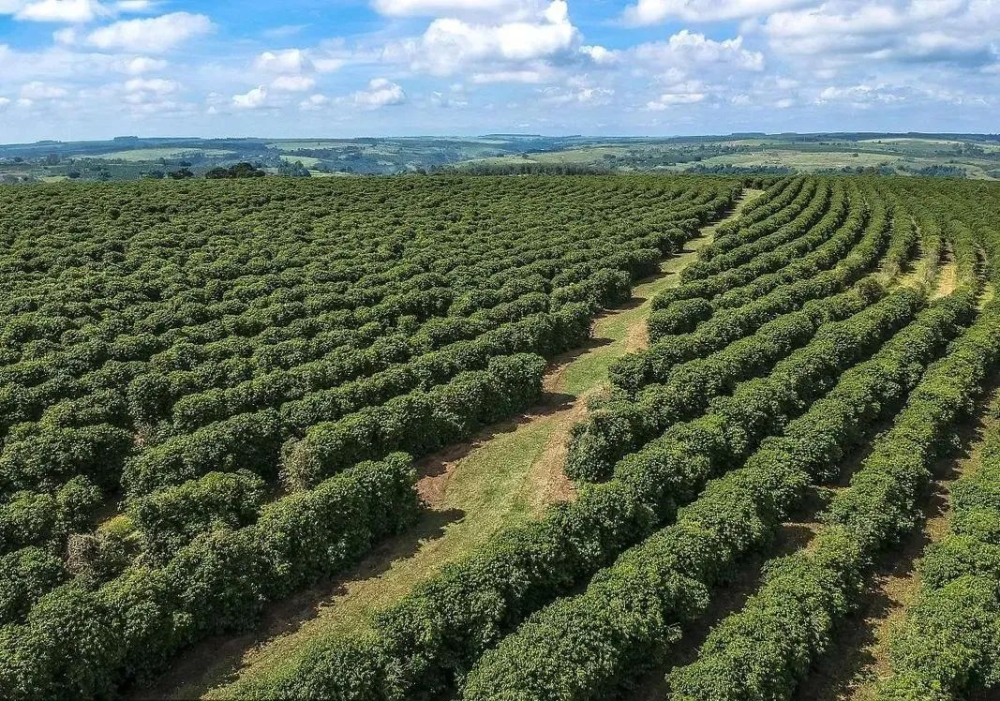
Brazil Fazenda Rainha Yellow Bourbon coffee beans sold by Front Street Coffee Region: Mogiana Region Farm/Processing Station: Fazenda Rainha Altitude: 1400-1950 meters Variety: Yellow Bourbon Processing Method: Pulped Natural Flavor: Sugarcane, Black Tea, Nuts, Chocolate
Front Street Coffee has also introduced this Fazenda Rainha Yellow Bourbon from Mogiana, São Paulo State. For brewing, the brand recommends using a KONO dripper with a coffee-to-water ratio of 1:15. The resulting beverage carries fruity sweetness, expressing notes of sugarcane, black tea, chocolate, and nuts, with a weak and clean bitterness in the finish and a silky, smooth mouthfeel.
The above content is compiled by CoffeeHunters, a coffee news website.


