







Where Are Arabica Beans From and Why Does Guji Matter?
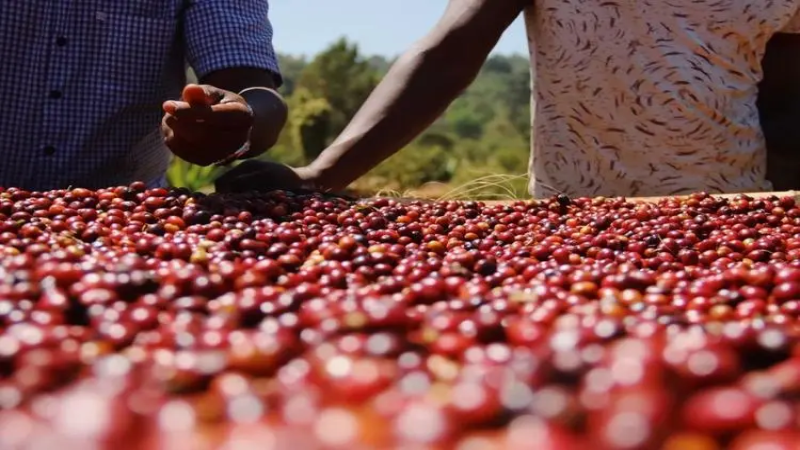
Arabica beans trace back to Ethiopia, coffee's birthplace and home to an estimated 10,000 to 15,000 local varieties, most never formally identified. Within Ethiopia, the Guji region became an independent zone in 2010, and the Hambela sub-region's Buku Abel processing station is where the Huakui coffee was born, winning the TOH competition in 2017.
Ethiopia's high plateaus, with the East African Rift Valley running north to south and average elevations near 3,000 meters, give arabica coffee the altitude and climate it needs, making the country Africa's largest arabica producer. Most coffee is grown by smallholders alongside other crops, then sold to middlemen or delivered to nearby processing stations such as Buku Abel, which handles the natural-process Huakui lots.
Ethiopia, as the birthplace of coffee, has nurtured tens of thousands of coffee varieties, and its Guji region became an independent zone in 2010 thanks to its unique flavors. The Buku Abel processing plant in the Hambella sub-region is precisely where the famous Huakui coffee was born. From winning the TOH competition in 2017 to the launch of Huakui 7.0 today, this natural-process bean has undergone years of evolution. This article will walk you through the terroir characteristics of Guji and Hambella, the story of Huakui's rise to fame, as well as specific information and brewing suggestions for Huakui 7.0 recommended by Front Street Coffee, suitable for every lover of African coffee.
When coffee is mentioned, Ethiopia is an unavoidable name, widely recognized as the birthplace of coffee. This country not only has a deep coffee history but also possesses the world's largest coffee gene pool, with extremely rich varieties. It is estimated that the number of local coffee varieties ranges between 10,000 and 15,000, the vast majority of which have not yet undergone formal genetic identification.
Ethiopian Coffee
Ethiopia is located in northeastern Africa, with a terrain dominated by mountains and plateaus. Plateau areas account for about two-thirds of the country's land area, and the East African Rift Valley runs through the entire country from north to south, with an average elevation of nearly 3,000 meters. High altitude, a suitable climate, and fertile soil provide superior natural conditions for coffee cultivation. This also makes Ethiopia the largest Arabica coffee producer in Africa.
Ethiopia's industrial base is relatively weak, and its national economy is supported by agriculture, making it a traditional agricultural country. Therefore, coffee cultivation is mostly carried out in smallholder mode. Coffee is often planted alongside other crops near farmers' homes, managed daily by the farmers, who harvest it themselves during the harvest season and then sell it to middlemen or deliver it directly to nearby processing stations. Coffee produced in this mode accounts for more than half of the country's total output.
Guji Region
Ethiopia has multiple coffee regions, among which Guji, Yirgacheffe, and Sidama are relatively well-known. The Guji region was formerly part of Sidama. Due to its outstanding flavor and high recognizability, it was separately designated as a new region by the Ethiopia Commodity Exchange (ECX) in 2010. This region is located in southern Ethiopia, with towering mountains, highlands, plateaus, valleys, and plains interwoven within its territory, creating complex and varied terrain. These rich landforms also give rise to diverse microclimates. Geologically, it belongs to volcanic soil, and most areas are undeveloped or pristine dense forests. The average elevation exceeds 1,800 meters, and the large temperature difference between day and night slows the growth rate of coffee cherries, which is conducive to the accumulation of flavor compounds. Within the Guji region there are also several sub-regions, such as Hambella, Uraga, and Shakiso, among which Hambella is widely known because of Huakui coffee beans.
Hambella
Hambella is the birthplace of Huakui coffee beans and one of the sub-regions that brought Guji coffee to prominence. To the west, Hambella faces the Kochere Mountains of Yirgacheffe, with cultivation elevations as high as 2,100-2,300 meters. To the east, south, and north, it borders other Guji sub-regions such as Shakiso and Uraga. The greatest advantage of this area is its dense forests, which provide abundant natural fertilizer. At present, the Hambella region has about 20 processing plants of varying scales, with the harvest period from November to January of the following year.
Huakui Coffee
Huakui coffee beans come from the "Buku Abel" processing plant under DW Company in Hambella and are a natural-process bean. The reason this bean became famous is that in the 2017 TOH (Ethiopia National Taste of Harvest Competition), Huakui coffee won the championship with its outstanding strawberry and cream flavor. In the same year, Li Jianfei from Beijing, the runner-up in the China region of the World Brewers Cup, also used Huakui coffee beans, further increasing its fame.
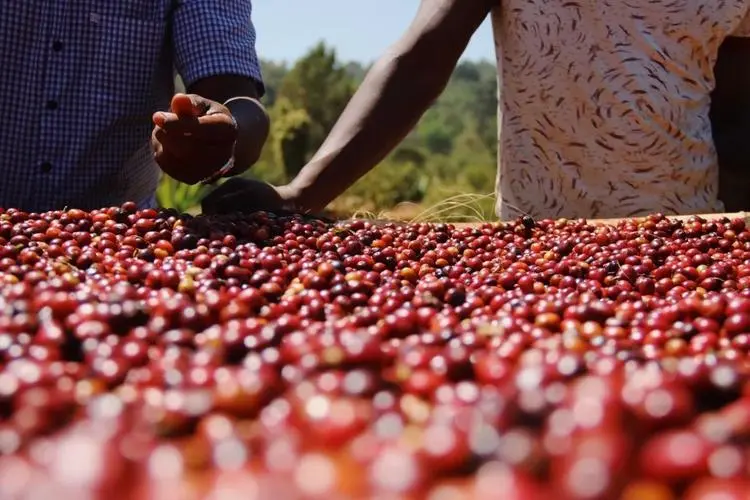
Because this bean has a rich strawberry and cream aroma, the Chinese green bean importer named it "Huakui." Later, DW Company increased the number of processing plants in Hambella to four. In addition to the original "Buku Abel," it added "Buku Saysay," "Haro Soresa," and "Tirtiro Goye," with an annual production capacity of about 1,100 tons of coffee. Afterwards, Huakui 2.0 was launched in 2018, and 3.0 and 3.1 in 2019. Since then, a Huakui x.0 series has been released every year, and it has now reached Huakui 7.0. However, as DW Company expanded its processing plants year by year and production increased, its flavor has become noticeably different from the Huakui coffee beans that became famous in 2017.
Front Street Coffee (FrontStreet Coffee) Ethiopia Guji Region Huakui 7.0 Coffee Beans Region: Guji Region Estate/Processing Plant: DW Company Buku Abel Processing Plant Altitude: 2250-23500 meters Variety: Heirloom Processing Method: Natural Flavor: Citrus, Apricot, Passion Fruit, Fermentation Aroma, Tea-like
At present, this Huakui 7.0 coffee bean from Front Street Coffee (FrontStreet Coffee) is natural-processed and medium-light roasted. Front Street uses a V60, a 1:15 ratio, and 92°C water for brewing. A slight fermentation aroma can be smelled, with a passion fruit-like acidity on the palate, citrus and apricot flavors, a soft mouthfeel, and a fresh tea-like quality.
The above content is compiled by CoffeeHunters, a coffee news website.


