








How Does Coffee Composition Create Tiger Stripes on Espresso?
Tiger stripes are the darker brown bands that sometimes appear on the crema, the golden foam layer on top of an espresso shot. They form because the crema is not a single flat color but a golden gradient, and fine coffee particles plus oils shift that gradient into visible stripes. The stripes are a cosmetic sign of extraction, not proof that the shot tastes better.
The crema itself is a mix of coffee oils, gases, and water held together as foam, and its color comes from the dissolved solids in the shot. Fines, the tiny particles that pass through the basket, settle into the foam and darken parts of it. Espresso with stripes often shows more body, while a clean, stripe-free surface tends toward clarity in the cup.
After extracting espresso, the golden, dense foam on the surface is the Crema. Sometimes this layer of crema develops brown stripes of varying intensity, resembling tiger stripes, which enthusiasts call "tiger-striped espresso." How exactly do these patterns form? Do they mean the coffee tastes better? Front Street Coffee will start from the composition of the crema, analyze the origin of the tiger stripes, and compare the respective advantages of tiger-striped espresso and regular espresso in terms of body and cleanliness, helping coffee lovers view this phenomenon more rationally.
While slacking off, Front Street Coffee once came across a claim: "Espresso with tiger stripes on the surface tastes better than regular espresso!"
Quite a few people echoed this claim, as if such espresso really did have better flavor. So today, Front Street Coffee will talk about whether espresso really tastes better with tiger stripes, and how these tiger stripes are produced.
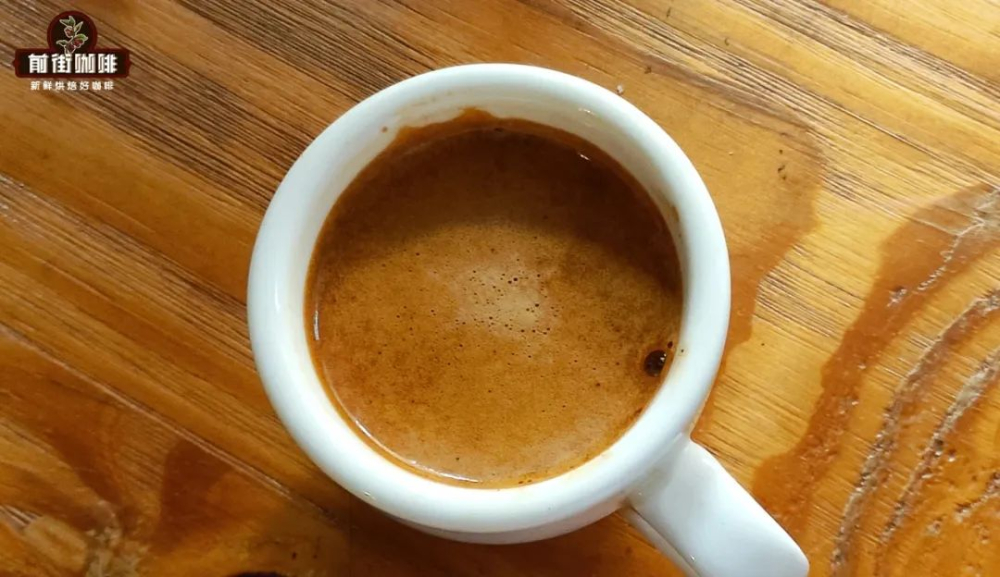
First, let's talk about what tiger-striped espresso looks like. After extraction is complete, a thick, dense layer of foam floats on the surface of the espresso—this is the essence of an espresso machine, the "Crema." Normally, this layer of crema shows a golden gradient; although there are color variations, overall it has a gradually transitioning sense of layering.

The term "tiger stripes" originally refers to patterns on the surface of an object that resemble the strongly contrasting markings on a tiger's body. Applied to espresso, it's the same idea: the crema surface is no longer a pure golden gradient, but instead shows many deeper brown stripes. Because they look very much like tiger fur coloring, people often jokingly call it "tiger-striped espresso."
Many people's "tiger-striped espresso" appears suddenly without warning. If this were in an age of limited information, it might have become a kind of mysticism. Fortunately, with today's developed information dissemination, these phenomena can all be easily explained, so the label of mysticism naturally no longer applies. Back to the point: how exactly are tiger stripes formed?
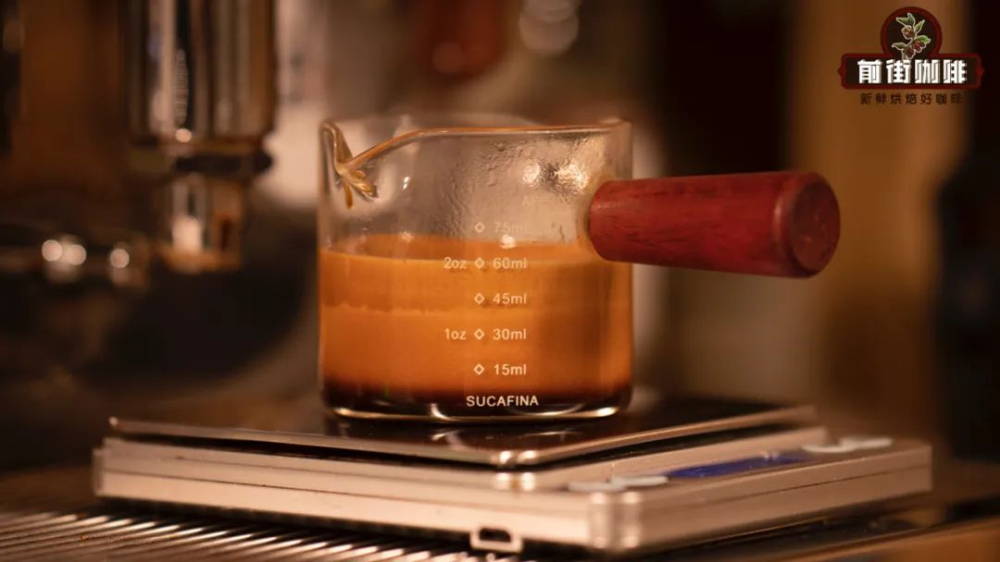
The formation principle of tiger stripes in espresso
It's actually very simple. Front Street Coffee mentioned earlier that the crema of a normally extracted espresso is not a single gold or yellow color, but a golden gradient. By looking at the composition of the crema, we can find the reasons for both the gradient and the formation of tiger stripes.
Espresso crema is foam formed when high pressure forces out both the carbon dioxide and aromatic substances released by the coffee beans. In addition to these substances, the extremely fine particles produced during grinding are also forced out along with them. And these fine particles are precisely the culprit that causes differences in crema color and a bitter taste.
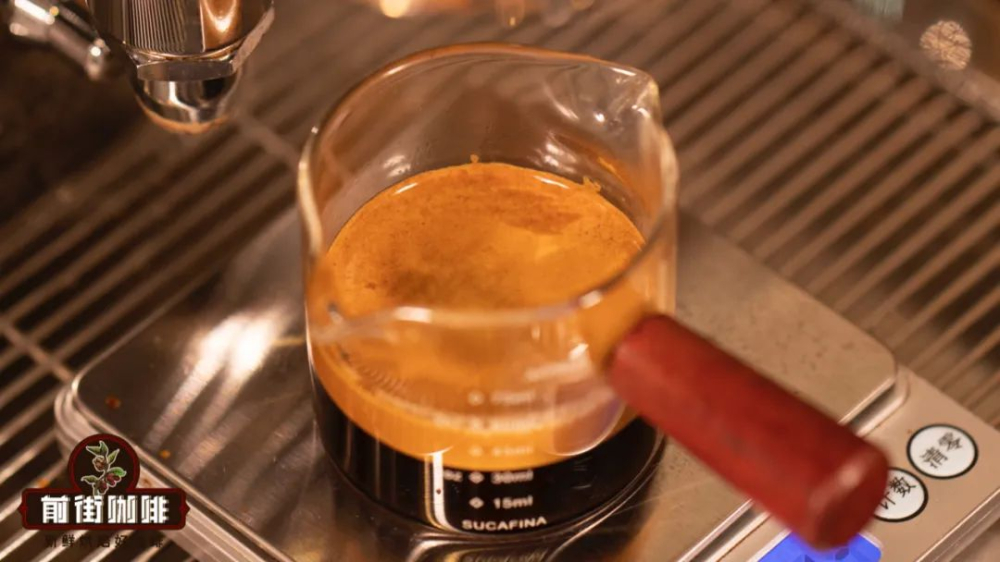
When the grind is too fine and there are too many fine particles, the surface of the espresso crema will form dark stripes like tiger stripes because of the large presence of these fine particles. So the tiger stripes on espresso are actually fine particles.
So, does tiger-striped espresso really taste better than regular espresso?
Honestly, the two cannot be directly ranked as superior or inferior, because each has its own strengths. Besides coloring the crema, fine particles also increase bitterness, and bitterness can enhance the body of the coffee. Therefore, tiger-striped espresso with more fine particles will inevitably have a fuller body than regular espresso.
(Report! This counts as a skin bonus!)
But the negative effects brought by fine particles are also considerable. An increase in fine particles makes the bitterness stronger and the grainy texture more obvious, which means the cleanliness of the espresso will decline somewhat. After drinking the espresso, if you observe the bottom of the cup, you'll find that it retains more fine particles than regular espresso.
To sum up: if judging by body, tiger-striped espresso indeed has the advantage over regular espresso; if comparing cleanliness, regular espresso without tiger stripes comes out ahead.
Front Street Coffee
No. 10, Bao'an Qian Street, Yandun Road, Dongshankou, Yuexiu District, Guangzhou City, Guangdong Province
The above content is compiled by CoffeeHunters, a coffee news website.


