







Why Has Jiangmen's Coffee Store Density Overtaken Big Cities?
Jiangmen in Guangdong ended last year with more than 1,500 coffee stores, a net gain of over 400 in a single year, or growth above 35%. In the 2022 Top 100 Chinese Cities by Number of Coffee Shops, the city ranked 21st nationwide with 3.8 stores per 10,000 people, a density that outpaces Shanghai, Shenzhen, and Guangzhou.
Two forces drive the growth: a century-old overseas Chinese hometown coffee culture and returning young entrepreneurs, alongside chain brands pushing into lower-tier markets. The city recently held a Coffee Culture Week with more than 150 coffee brands exhibiting. Nationally, China's coffee consumption market grows at over 15% a year, and the report asks how Jiangmen's crowded field will evolve.
China's coffee consumption market continues to expand, with an average annual growth rate exceeding 15%, and coffee fairs and cultural festivals are emerging endlessly across the country. Jiangmen in Guangdong recently held a Coffee Culture Week, attracting more than 150 coffee brands to exhibit, but what is even more noteworthy is the astonishing growth of coffee shops in this city—by the end of last year, the number had surpassed 1,500, with more than 400 new additions for the year, an increase of over 35%. In the "2022 Top 100 Chinese Cities by Number of Coffee Shops," Jiangmen ranked 21st nationwide, with 3.8 cafés per 10,000 people, a density that has surpassed first-tier cities such as Shanghai, Shenzhen, and Guangzhou. Behind this phenomenon lies both the deep accumulation of a century-old overseas Chinese hometown coffee culture and the combined impetus of returning young entrepreneurs and the downward expansion strategy of chain brands. This article will analyze the multiple factors behind the rapid rise of Jiangmen's coffee market and explore the future direction of the industry's involution.
▲
Click to follow | Daily specialty coffee culture magazine Coffee Workshop
China is now one of the fastest-growing coffee consumption markets in the world, with an average annual growth rate maintained at over 15%. More and more consumers are beginning to encounter and fall in love with coffee, and coffee fairs, coffee culture festivals, and other activities held in various places have become important windows for the public to learn about coffee culture and experience the coffee atmosphere.
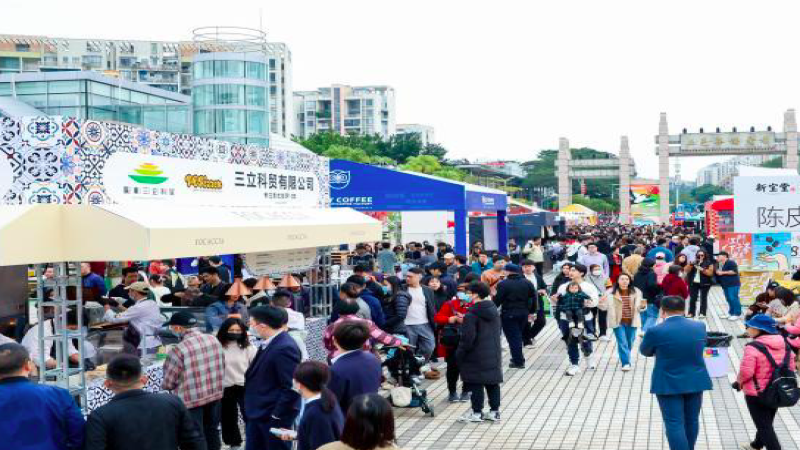
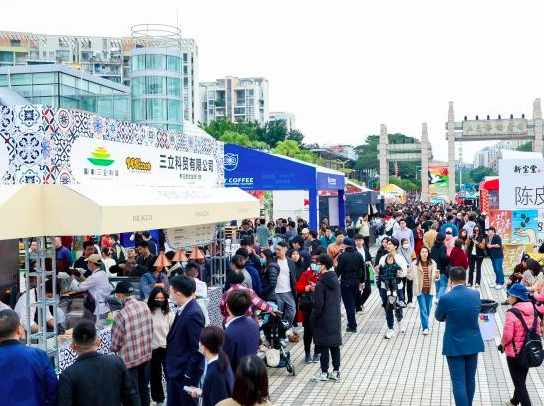
The Coffee Culture Week that recently concluded in Jiangmen, for example, gathered more than 150 coffee brands. On site, there were mobile food trucks of various styles, creative coffee specials, and a wide variety of coffee equipment, attracting coffee lovers with different preferences to come and check in. The popularity was overwhelming, and the scene was very lively.
Statistics show that by the end of last year, the number of cafés in Jiangmen had exceeded 1,500 citywide, with a net increase of more than 400 in just the past year, a growth rate of over 35%. In the "2022 Top 100 Chinese Cities by Number of Coffee Shops," Jiangmen ranked 21st nationwide, with an average of 3.8 coffee shops per 10,000 people. This density has already surpassed that of recognized coffee hot spots such as Shanghai, Shenzhen, and Guangzhou.
Faced with such a large number of coffee shops in a non-first-tier city like Jiangmen, many netizens are puzzled: when it comes to coffee culture atmosphere and accumulation, aren't first-tier cities like Shanghai and Guangzhou superior?
In fact, Jiangmen's coffee industry did not emerge overnight. As early as the 1860s, overseas Chinese brought coffee culture back to Jiangmen. Entering the early 21st century, a number of Hong Kong and Macao coffee enterprises successively settled there, further driving the development of the local coffee industry. It can be said that Jiangmen's foundation in coffee culture is in no way inferior to those coffee hot spots.
At the same time, more and more young people are unwilling to continue "involution" in big cities and instead choose to return to their familiar hometowns to start businesses and realize their coffee dreams. It is precisely this wave of returning home that has led to a year-by-year rise in the number of cafés in non-first-tier cities such as Jiangmen, Nantong, and Foshan. Many netizens who returned home for the New Year lamented that there are many more cafés in their hometowns than before. A netizen from Nantong roughly estimated that Nantong has two or three coffee shops on average on every street.
In addition, first-tier cities such as Shanghai, Guangzhou, and Shenzhen can no longer contain the "ambitions" of chain coffee brands. Brands such as Starbucks, Luckin, and Cotti have all turned their attention to lower-tier cities, including these places in this year's store expansion map.
According to incomplete statistics from Linkshop, 20 chain coffee brands opened a total of 1,504 new stores in January this year, up 80.55% year-on-year from January 2023, bringing the total number of stores to 38,988.
The vast majority of coffee brands have entered a "cooling-off period," and the pace of store openings has slowed somewhat. For example, Starbucks' number of new stores was less than half that of December 2023, and Luckin's number of store openings also decreased slightly compared with December 2023. But overall, the total number of coffee shops is still on the rise, and chain coffee stores in lower-tier cities will continue to increase.
Consumers' continuously rising demand for coffee, young people's yearning for a coffee career, and chain brands' optimism about the broad prospects of China's coffee market—these factors together are driving the growth in the number of cafés across the country. This also means that the involution in the coffee industry will continue. As for whether new tricks will emerge from the involution, only time can answer.
Image source: Internet
Disclaimer: Some images in this article are from the Internet. For some content on the website, such as images, we will respect the original author's copyright and indicate the source. However, due to the large quantity, some images and texts may not have been credited in time. Please understand. If the original author has any disputes, they may contact the website for handling. Once verified, we will correct it immediately. Compiled and edited by "Coffee Workshop." Please indicate the source when reposting. If there is infringement, please inform us for deletion. Thank you~!
The above content is compiled by CoffeeHunters, a coffee news website.


