







What Defines Washed Huila Coffee From Colombia?
Colombia is the world's third-largest coffee producer and second in arabica output, and Huila is one of its most recognized specialty origins. High altitude, volcanic soil and abundant water shape the cup. Front Street Coffee's entry-level Colombian selection comes from this region and is washed processed.
The Caturra variety expresses rich tropical fruit aromas in Huila's high-altitude environment. Coffee first arrived in Colombia with Dutch Jesuit missionaries in the 18th century, and by 1912 it accounted for 50% of exports. The National Federation of Coffee Growers, founded in 1927, has long supported small farms producing arabica Colombia is known for.
Colombia, as the world's third-largest coffee producer, ranks second globally in Arabica production. Among its many growing regions, Huila, with its high altitude, volcanic soil, and abundant water resources, has become one of the country's most renowned origins for specialty coffee. Front Street Coffee's entry-level selection of Colombian coffee beans comes from here. This article will guide you through the development history of Colombian coffee, the unique terroir of the Huila region, and how the Caturra variety expresses rich tropical fruit aromas in Huila's high-altitude environment.
Colombian coffee enjoys an excellent reputation in the global coffee market. It remains the world's third-largest coffee producer, with output second only to Brazil and Vietnam, while ranking second globally in Arabica production.
Colombia is located in the northwest of South America, within the tropical zone. The country is divided into an eastern plains region and a western mountainous region, with climate varying according to terrain. The southern part of the eastern plains and the Pacific coast have a tropical rainforest climate, while the mountains at elevations of 1,000 to 2,000 meters have a subtropical climate, and the northwest has a tropical savanna climate. Average annual temperatures range between 15.8 and 20.5 degrees Celsius, providing ideal conditions for coffee cultivation.
The Development of Colombian Coffee
Coffee was first brought to Colombia by Dutch Jesuit missionaries in the 18th century and gradually spread throughout the country. It was not until the late 19th century that the coffee industry truly took off. Although the country experienced civil war during this period, after the conflict subsided, the government, in order to revitalize the coffee industry, consolidated wasteland and divided it into small plots, selling them to farmers at extremely low prices to encourage them to grow coffee and other crops and start new lives. By 1912, the coffee industry had reached considerable scale, accounting for 50% of Colombia's total exports.
In 1920, the Colombian Coffee Federation was established to protect the rights and interests of small coffee farms. The organization continued to grow and in 1927 pushed for the establishment of the more authoritative and regulatory National Federation of Coffee Growers of Colombia, known as FNC. Over the years, FNC has enhanced the global competitiveness and influence of Colombian coffee through various measures, helping the country become the world's third-largest coffee producer, though small estate cultivation remains predominant domestically.
Huila Growing Region
Colombia is a vast country with multiple coffee-growing regions. Due to differences in mountainous terrain and microclimates, each region's coffee has its own distinctive flavor. Currently, the more well-known regions include Antioquia, Santander, Huila, and Narino, among others. Among them, Front Street Coffee's entry-level selection of Colombian coffee beans comes from the Huila growing region.
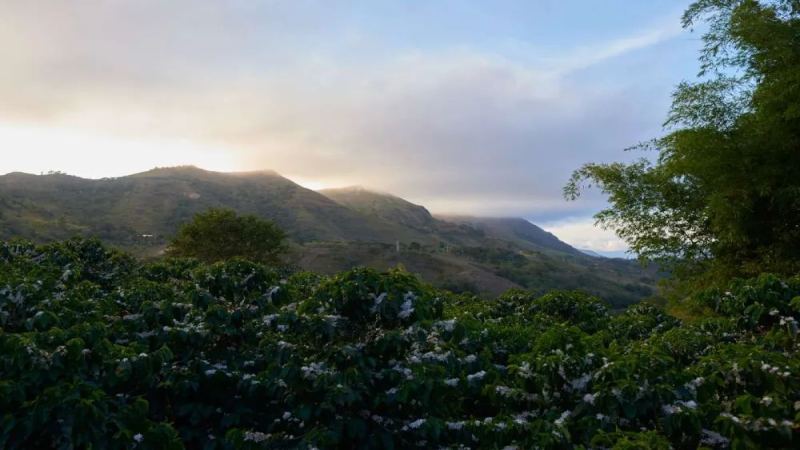
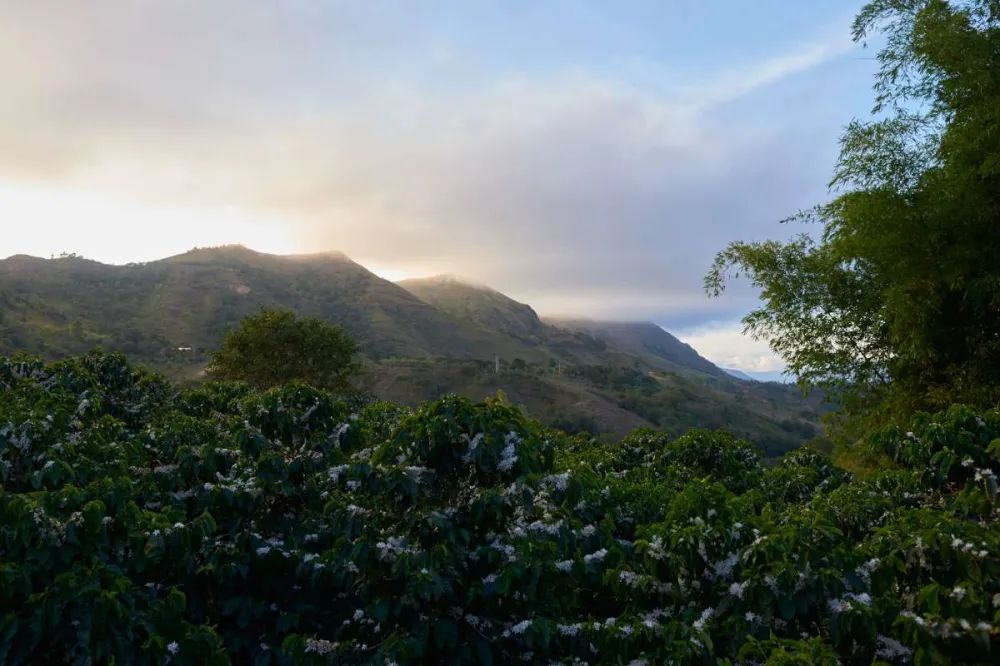
The province of Huila is located in southern Colombia, in the southern part of the Central Cordillera. It is composed of the middle and eastern ranges of the Andes, with most of its area lying in the Magdalena River Valley, making it Colombia's most famous specialty coffee region. The region is surrounded by mountains, with coffee cultivation at elevations between 1,200 and 1,800 meters. High altitude, volcanic soil, abundant water, and a unique climate together give the coffee here a clean, balanced, and smooth flavor.
Caturra Caturra
Caturra is a mutation of Bourbon, discovered between 1915 and 1918 on a plantation in Minas Gerais, Brazil. Caturra has a single gene mutation that results in a relatively short plant. Its name comes from the Guarani language, meaning "small." This variety is suitable for cultivation at high altitudes, and the higher the altitude, the better the flavor, though yields are limited. The high altitude of coffee cultivation in the Huila region gives the Caturra grown here rich tropical fruit aromas.
The above content is compiled by CoffeeHunters, a coffee news website.


