








Frontstreet Coffee: How Pour-Over Water Flow Rate Changes Extraction
Flow rate in pour-over brewing is simply the amount of water poured per second, and it shapes extraction time, the state of the coffee bed, and the final flavor. A common mistake is to treat a small flow as gentle and a large flow as forceful; impact force actually comes from pouring technique and the distance between the kettle spout and the coffee bed.
Spout shape also changes the stream, so the same pour volume and tilt can still give different flow rates, with narrow spouts producing finer streams than wide ones. Many electronic scales now show flow rate while weighing. Front Street Coffee suggests measuring with an ordinary scale when no flow-rate function is available, then adjusting during the brew.
During the pour-over brewing process, the speed of pouring water directly affects the extraction time, the state of the coffee bed, and ultimately the flavor expression. Many enthusiasts misunderstand large and small flows, believing that a small flow equals gentleness and a large flow equals forcefulness. In reality, flow rate refers to the amount of water poured per second and has no absolute relationship with impact force. This article will analyze in detail the effects of large and small flows on different extraction results, share how to measure pouring flow rate with an ordinary electronic scale, and, combined with Front Street Coffee's practical experience, explain when to switch flow rates, helping you adjust flexibly during brewing to achieve a more ideal coffee flavor.

Common Misconceptions About Water Flow
Many people have a common misunderstanding about water flow: they think a small flow means gentle pouring and weaker agitation of the coffee grounds, while a large flow means a thick stream and strong impact. But in fact, large and small flows describe the speed of pouring, that is, how much water is poured per second. What truly determines the impact force of the water is the pouring technique and the distance between the kettle spout and the coffee bed. Even with a small flow, as long as the pouring height is sufficient, it can still create enough penetrating force to make the coffee grounds tumble; conversely, a large flow can also be poured gently.
In addition, the shape of the spout can also cause differences in the water stream, which was also mentioned in a previous article. Even if the pouring volume and tilt angle are exactly the same, the flow rate poured from different spouts may still differ. A narrow spout usually produces a finer stream, while a wide spout produces a thicker stream. So when discussing water flow, if the difference in spouts is ignored, communication can easily lead to disagreement.
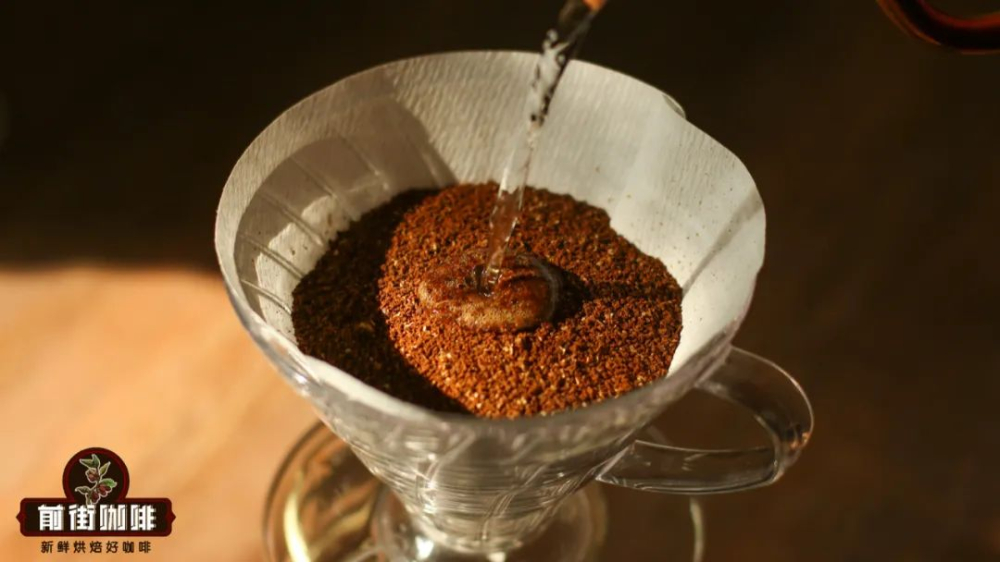
So how can you know your own pouring flow rate? Actually, it is not complicated to do. Many electronic scales on the market now have a flow rate measurement function, which can display the amount of water poured per second while weighing.
If you do not have this kind of electronic scale with a flow rate measurement function, there is no need to worry at all. Front Street will now share a simple method for measuring pouring flow rate with an ordinary electronic scale.
How Do You Measure Your Own Pouring Flow Rate?
First, just prepare an ordinary electronic scale; it does not need to have a flow rate measurement function. Then place any container on the scale, and next pour water in the way you usually do while starting the timer.

Stop after timing for ten seconds, then divide the amount of water poured during those ten seconds by 10 to get your pouring speed per second. Front Street tested with a copper kettle modified into a gooseneck. When maintaining a vertical stream, the minimum flow rate was 2.2 ml/s and the maximum flow rate was 9 ml/s; after switching to a Kalita copper kettle with an elephant-nose spout, under a vertical stream the minimum flow rate was 4 ml/s and the maximum flow rate was 12 ml/s. In multi-pour brewing, very few people use only one flow rate from beginning to end, because coffee made that way is not undrinkable, but it is not good enough. Therefore, everyone can flexibly combine different effects of large and small flows according to their own brewing technique.
What Effects Do Large and Small Flows Each Bring?
As long as you brew one pour-over coffee with a large flow and one with a small flow, the difference can be seen very intuitively. The brewing parameters are as follows: use Guatemala New Oriente Geisha beans, grind size at Ek43 setting 9.5, coffee-to-water ratio 1:15 (15 g beans, 225 ml water at 92°C), using a three-pour brewing method.
1. Brewing time: Brewing with a small flow throughout took 2 minutes 05 seconds, while brewing with a large flow throughout took 1 minute 57 seconds. It can be seen that under the same brewing parameters, a small flow requires a longer time than a large flow.
2. Coffee bed height: What we often call raising the coffee bed means that when the amount of water poured is greater than the amount draining out, the position of the coffee bed is pushed upward. The greater the difference between the poured water and the drained water, the faster the coffee bed rises. Combined with the first point, it can be seen that a small flow raises the coffee bed more slowly, while a large flow raises the coffee bed more quickly.
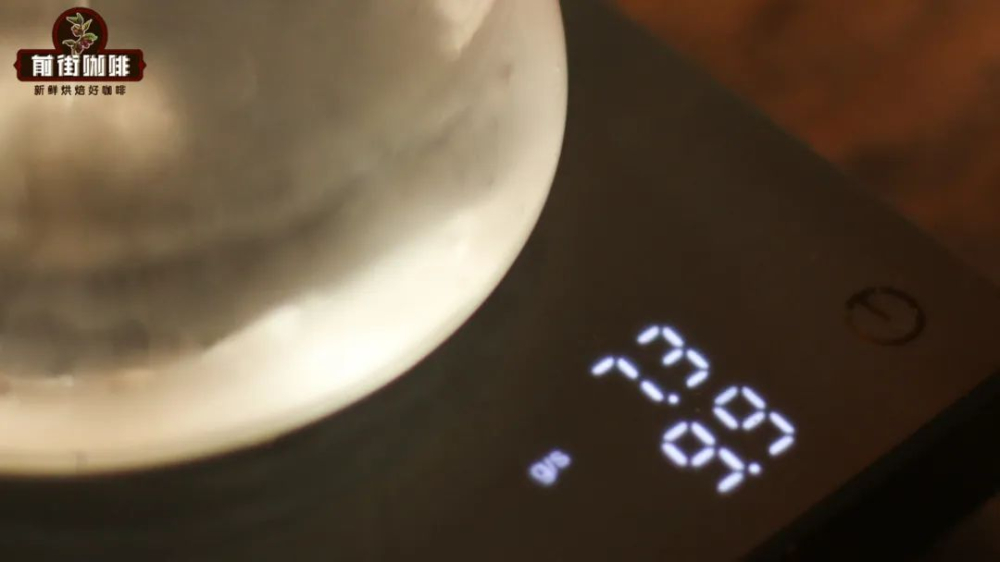
Usually, when people mention raising the coffee bed, they mean using a large flow to widen the gap between the amount of water poured and the amount draining out, so that the coffee bed rises rapidly in a short time.
3. Flavor expression: With a small flow, the draining speed is slow. Coffee brewed with a small flow throughout tastes richer and more concentrated in flavor, because the extraction time is longer and the number of agitations is also greater; with a large flow, the draining speed is fast. Coffee brewed with a large flow throughout has a more prominent and clearer flavor, but compared with coffee brewed with a small flow, it will be lighter and thinner.
When Should You Use a Large Flow, and When Should You Use a Small Flow?
Regarding the choice of flow rate during brewing, Front Street's advice is to "adapt as you go." This is because the choice of flow mainly depends on the brewing method you are using, the current state of the coffee bed, and the brewing time.
If you are used to brewing with a large flow, then when the following situations occur, it is best to switch to a small flow:
The draining speed is clearly faster than usual: The water level should have been at the middle of the dripper at a certain point in time, but because the grind is too coarse, the water drains too quickly and is about to reach the bottom. At this time, you need to switch to a small flow to extend the extraction time and avoid under-extraction.
If you are used to brewing with a small flow, then when the following situations occur, it is best to switch to a large flow:
Extraction time is too long: Although a long extraction can obtain more coffee substances, it can also easily bring out bitter components. If clogging occurs during brewing, or if the grind is too fine and causes slow draining, you need to switch to a large flow to speed up draining and reduce the risk of over-extraction.
When the coffee bed needs to be raised: A small flow pours less water, so the gap with the draining speed is small, and the coffee bed rises more slowly. Therefore, when the coffee bed needs to be raised, it is best to use a large flow after the bloom to quickly raise the coffee bed so that the coffee grounds can be fully and evenly extracted.

Of course, what Front Street means by increasing or decreasing the flow is adjusting based on the original flow, and the fluctuation during pouring should not be too large; a small increase or decrease is enough. For example, if the water flow rate used by Front Street during brewing is 5 ml/s, then when the flow needs to be increased, raising it to 6–7 ml/s is enough; there is no need to raise it to the extreme of 8–9 ml/s.
Front Street Coffee (FrontStreet Coffee)
No. 10, Bao'an Qian Street, Yandun Road, Dongshankou, Yuexiu District, Guangzhou, Guangdong Province
The above content is compiled by CoffeeHunters, a coffee news website.


