








How Do You Froth Milk for a Latte Without Diluting It?
Purging the steam wand before frothing expels condensed water that collects in the pipe when it sits idle, which would otherwise dilute the milk and can create large coarse bubbles. After frothing, close the valve before removing the pitcher, then purge and wipe the wand so milk residue does not dry, adhere or carbonize in the steam holes.
The step also affects machine upkeep. Dried milk stains clog the steam holes over time and can harbor deterioration, so cleaning right after each use keeps steam flow steady. Baristas disagree on covering the wand with a cloth during steaming: some consider it safer and faster, others see no need, which is why practice varies behind the bar.
At the coffee bar, you can often hear the "hissing" sound of baristas steaming milk, and you'll also notice that they always purge the steam wand for a few seconds before and after use, sometimes even covering it with a cloth the entire time. These seemingly superfluous little actions actually reflect considerations for coffee quality and operational safety. Purging the steam wand not only expels condensed water from the pipe to avoid diluting the milk, but also cleans the steam holes to prevent blockages. As for whether to cover the steam wand with a milk cloth, baristas each have their own reasoning—some insist that covering it is safer and more efficient, while others believe it's completely unnecessary. This article will examine both sides of the argument, providing a detailed analysis of this debate over details in espresso preparation, helping coffee enthusiasts gain a deeper understanding of the correct milk frothing technique.
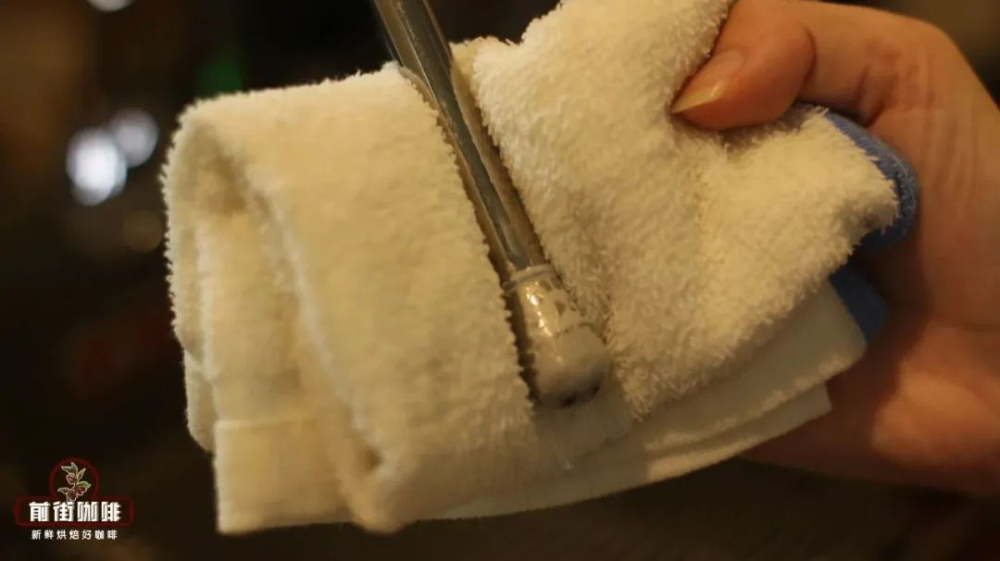
Walking near a café, the air is filled with a rich coffee aroma, and you can faintly hear the "hissing" sound of steam. If you observe the busy baristas behind the counter, you'll notice a recurring action: whether before starting to steam milk or after finishing, they always let the steam wand purge for a few seconds, then wipe it with a cloth—some even wrap the steam wand with a cloth the entire time.
Why is it necessary to purge steam both before and after use? Why do some baristas cover the steam wand with a cloth while others don't?
Reasons for purging the steam wand before and after use
Purging steam for a few seconds before frothing milk serves to raise the temperature of the steam wand while expelling condensed water accumulated inside the pipe. After the steam wand has been idle for a minute or two, the residual steam in the pipe gradually cools and condenses from gas back into liquid water. If this cold water is not purged before use and the wand is inserted directly into the milk pitcher, the milk will be diluted, and in severe cases, large coarse bubbles will form.

After frothing the milk, you should close the steam valve before removing the pitcher. At this point, a small amount of milk residue will remain on the surface and in the steam holes of the wand. If not cleaned promptly, these milk stains will gradually dry and adhere to the wand under high heat, and may even carbonize. Over time, they can deteriorate and give off an unpleasant odor. Meanwhile, solidified milk can also clog the steam holes, and long-term accumulation will significantly reduce the steam output of the wand.
Therefore, after frothing milk each time, you should immediately wipe away the residual milk foam with a clean, damp cloth, and then open the steam again to purge for a few seconds, expelling as much residual milk from inside the wand as possible.
Pro side: You should cover it with a cloth
1. Prevent steam from spraying in all directions and causing burns
You should know that some high-volume cafés are equipped with dual-boiler or triple-boiler commercial espresso machines, and these devices have extremely powerful steam output. Front Street Coffee has seen scenes where, upon opening the valve, steam could spray one or two meters away and fill the entire bar area. This not only blocks your vision and interferes with the espresso being extracted, but also very easily causes burn accidents. Therefore, baristas use a dedicated milk cloth to cover the steam wand to prevent steam from splattering everywhere.
2. Catch the residual milk expelled from inside the wand after frothing
As mentioned earlier, a small amount of milk remains inside the steam wand and cannot be removed by wiping. If you purge directly, this milk will splatter onto the drip tray or counter below. Over time, the entire drip tray becomes sticky. Digital scales, shot glasses, and other commonly used tools will also get coated, making every part of the bar sticky. So some baristas cover the wand with a cloth before purging steam after frothing milk.
3. Save time—wiping and purging can be done simultaneously
The core of espresso preparation lies in fast and consistent output. When the volume is high and the pace is intense, the one or two seconds gained by doing one extra or one fewer action becomes especially precious. Therefore, many baristas, in order to save time, purge the steam wand while wiping the milk off its surface—completing both steps at once, rather than wiping first and then turning the valve to purge.

4. A habit formed during initial learning
Many beginners encountering an espresso machine for the first time may be trying it at a friend's shop or learning in a training class. Inevitably, some are intimidated by the forceful burst of steam the first time they face the steam wand and dare not get close, or they directly touch the metal surface of the wand and burn their hand. Therefore, they are advised to cover it with a dedicated cloth before purging steam. Some training institutions, encountering such situations frequently, simply require that the steam wand must be covered with a cloth whenever it is purging steam. Over time, this habit becomes ingrained.
Con side: No need to cover it—there's no necessity
1. The milk cloth becomes increasingly damp
Although steam is released as gas, it condenses into water when it meets a cold surface. If you cover the wand with a cloth every time you purge, after just a few pitchers of milk (each pitcher requires two purges), the entire milk cloth will become soaking wet, greatly affecting its usability. Moreover, if you're not careful, it will start to smell bad over time—especially in hot summer weather, when it develops odors even faster, requiring frequent washing and replacement of the milk cloth.
2. Just pay a little attention when purging
Some cafés with lower daily output, due to limited demand, are only equipped with single-boiler, single-nozzle commercial espresso machines, and the steam pressure is not very strong. As long as you're careful not to turn the steam to maximum and not to point the nozzle at people, there's nothing to worry about. Therefore, these baristas don't cover the wand with a cloth when purging.
3. Afraid of burns? Just don't touch the metal part of the steam wand
Steam wands usually come with a plastic or rubber sleeve for easy gripping. If not, it doesn't matter—you can buy heat-shrink tubing online and slip it on yourself. A few yuan will get you five or six meters—cheap and practical. Of course, some baristas say they've long since developed "iron palms" and don't need to worry about burning their hands at all.
The above content is compiled by CoffeeHunters, a coffee news website.


