







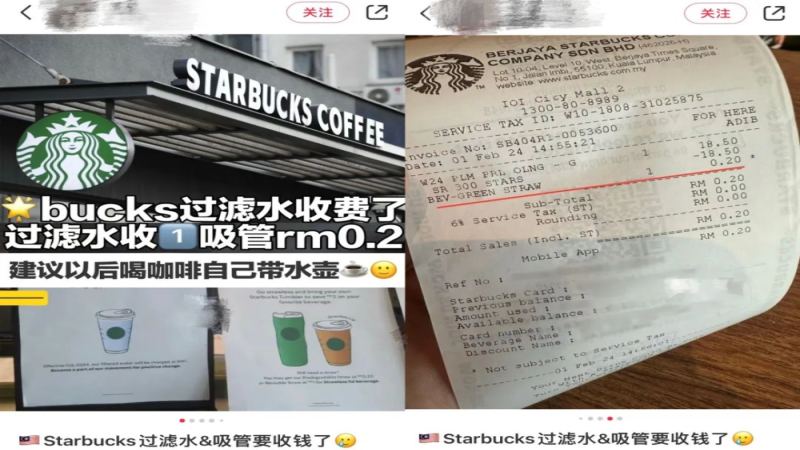
Why Is Starbucks Charging for Water and Straws?
Since 2024, Starbucks outlets in Malaysia charge RM1 for filtered water, and biodegradable and reusable straws also carry an extra fee. The policy, framed as an environmental measure urging customers to bring their own cups and cut single-use items, drew heavy discussion online, with some calling it a shift of environmental costs onto consumers.
Staff said stores have long dealt with customers taking small advantages, and the charge may ease operational pressure. Critics argue in-store prices are already high, so a small cup of water should not cost extra. Supporters see it as a push to reduce single-use cups. Similar debates about paid water at other chains suggest the issue is not unique to Starbucks.
Since 2024, Starbucks in Malaysia has been charging RM1 for filtered water, and both biodegradable straws and reusable straws also require an extra fee. This new environmental policy quickly sparked heated discussions among netizens both at home and abroad: some criticized it for shifting the cost of environmental protection onto consumers, while others believed it would help reduce single-use items. Starbucks employees revealed that stores have long dealt with people taking small advantages, and the charging measures might alleviate operational pressure. How to balance environmental protection and consumer interests has become the focus of attention.
▲
Click to follow | Daily specialty coffee culture magazine Coffee Workshop
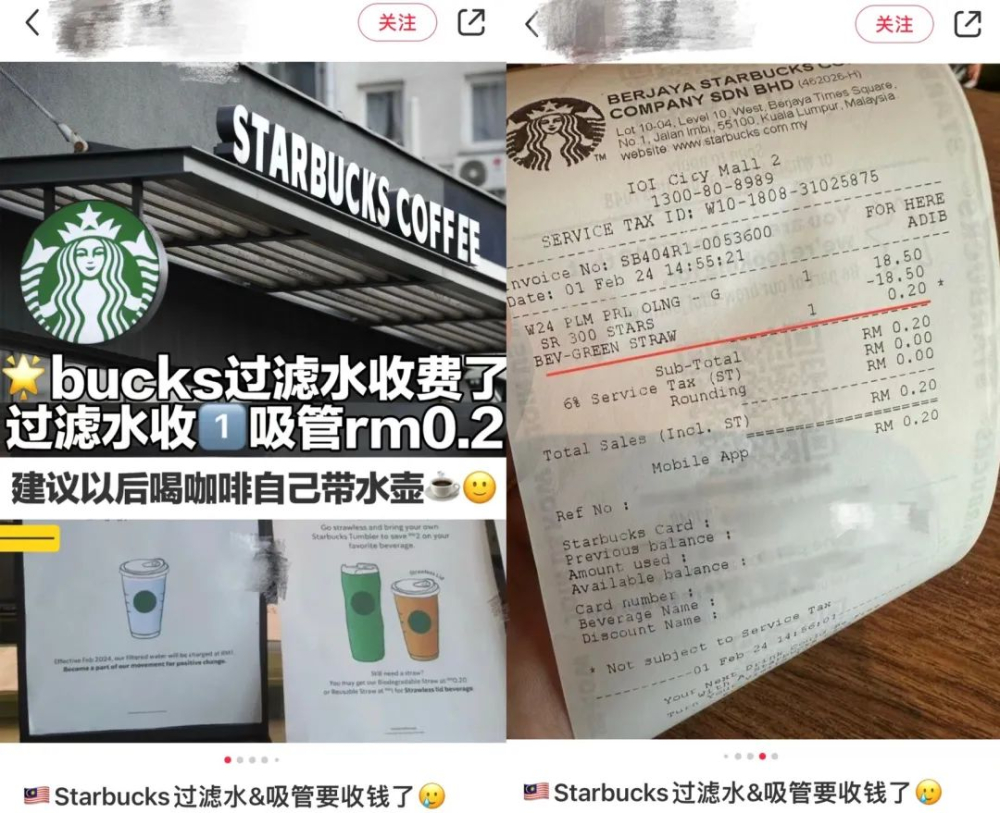
Recently, a Malaysian netizen posted on social media, saying, "Starbucks filtered water & straws are now charging money."
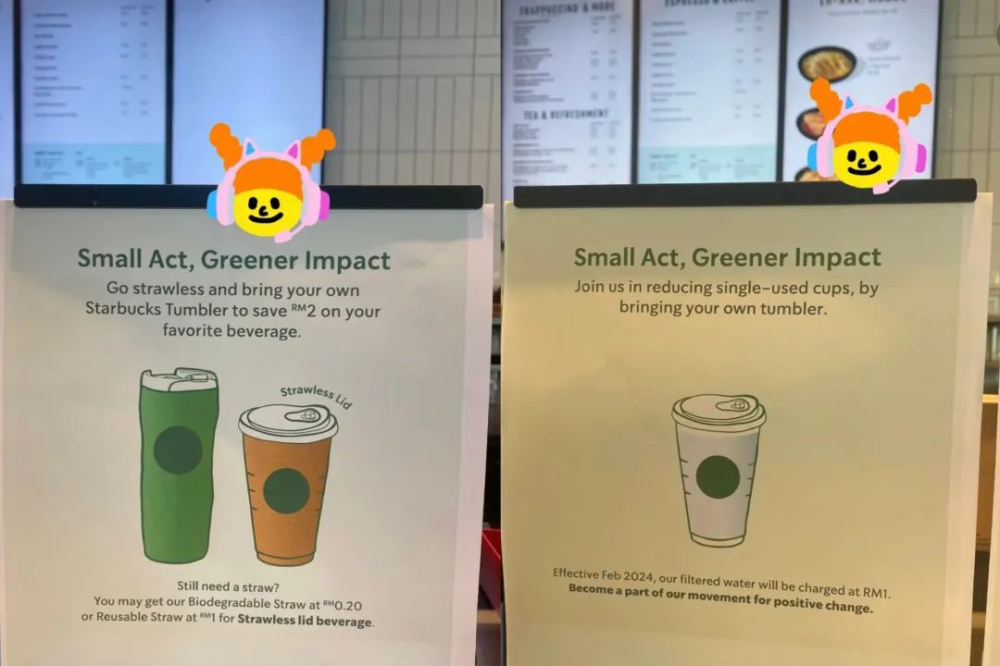
The picture posted by the netizen showed that Starbucks has introduced its latest environmental policy: "Small actions, green environmental protection, please join us in bringing your own cup and reducing the use of single-use cups."
It particularly mentioned: "Since 2024, Starbucks will charge RM1 for providing filtered water. In addition, biodegradable straws and reusable straws also require additional payment, and everyone is urged to actively participate in this environmental action." Shortly after the post was published, it attracted heated discussion and complaints from netizens at home and abroad.
Faced with this measure by Starbucks, many netizens said in the comments that it was too outrageous. "Starbucks keeps saying it is environmental protection, but in fact it shifts the cost of environmental protection onto consumers," and if you choose "dine-in, you shouldn't use a single-use cup." Secondly, some netizens also pointed out, how much tap water can one drink? Usually people just rinse their mouths after drinking coffee. When consuming in-store, the products are already priced so high, and yet they still charge for a small cup of tap water. "Really, don't be so stingy."
In response, some consumers also believed, "No one scolds ChaPanda for charging for water; Starbucks is just too spoiled." Regarding Starbucks charging for filtered water, although some consumers consider it unreasonable, from another perspective, it is also a measure Starbucks has taken to encourage consumers to reduce the use of single-use and plastic straws. Therefore, Starbucks' measure of charging for filtered water also has its rationality.
A Starbucks partner "complained" about this: if I were a consumer, I would not accept it, but as an employee, I can totally accept it. I often encounter situations where a whole crowd of people ask for water all day long, the public tissues placed outside are taken away directly by the pack, and a whole family comes in without buying anything and occupies seats.
On the other hand, another Starbucks partner said that in stores they really encounter too many people taking small advantages, so they quite support charging for water. In addition, although these measures by Starbucks may not be very friendly to some consumers, from a long-term perspective, they do indeed have positive significance.
First, these measures help reduce the use of single-use items, thereby lowering pollution to the environment. Globally, a large amount of plastic waste is discarded every year, causing serious damage to the Earth's ecological environment. By encouraging consumers to bring their own cups and reduce the use of plastic straws, Starbucks is actually contributing to environmental protection.
However, the implementation of these measures also needs balanced consideration. For consumers, if Starbucks' charges for filtered water and straws are too high, and if the implementation of these measures is too rigid or not humane enough, it may also arouse consumer resentment. In the process of implementing the entire measure, consumers' interests and feelings also need to be fully considered. Only by balancing the interests of all parties can the goals of sustainable development and long-term profitability truly be achieved.
Image source: Internet
Disclaimer: Some images in this article are from the Internet. For some content on the website, such as images, we will respect the original author's copyright and indicate the source. However, due to the large quantity, some images and texts may not have been credited in time. Please understand. If the original author has any disputes, they can contact the website for handling. Once verified, we will correct it immediately. Compiled and edited by "Coffee Workshop." Please indicate the source when reprinting. If there is infringement, please inform us for deletion. Thank you~!
The above content is compiled by CoffeeHunters, a coffee news website.


