







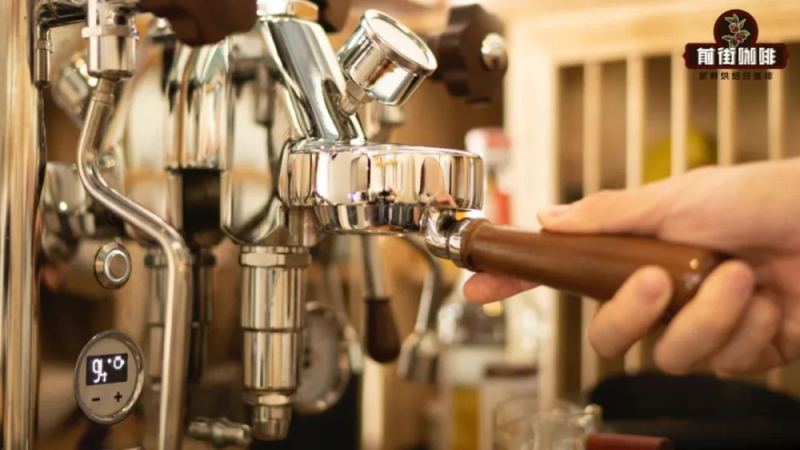
Why Do Most Coffee Machines Default to 9 Bar?
Nine bar is the factory default on most espresso coffee machines because it produces a steady flow rate and a balanced extraction. Tests at 6 bar, 9 bar, and 11 bar show pressure changes shift flow, shot time, and flavor. Below 9 bar shots run thin and under-extracted; above 10 bar burnt, bitter notes appear.
The article separates extraction pressure from pump pressure. Extraction pressure is what the water applies at the puck once the portafilter is locked in, while pump pressure is what the machine's internal pump outputs, and the two are not the same reading. Pressure profiling, which varies pressure during a shot, is a newer trend on higher-end coffee machine models.
In the extraction parameters of espresso, pressure is often regarded as a variable that is not easy to adjust yet has far-reaching effects. This time, Front Street Coffee focuses on this "hidden key player"—extraction pressure. The article first clarifies the difference between extraction pressure and pump pressure, then through three comparative experiments at 6 bar, 9 bar, and 11 bar, demonstrates how pressure changes affect flow rate, time, and flavor performance. It then explains why 9 bar became the factory default for coffee machines, and the burnt bitter issues that may arise above 10 bar. Finally, it briefly mentions the trend of pressure profiling, providing coffee enthusiasts with a clear reference for understanding pressure and parameter adjustment.
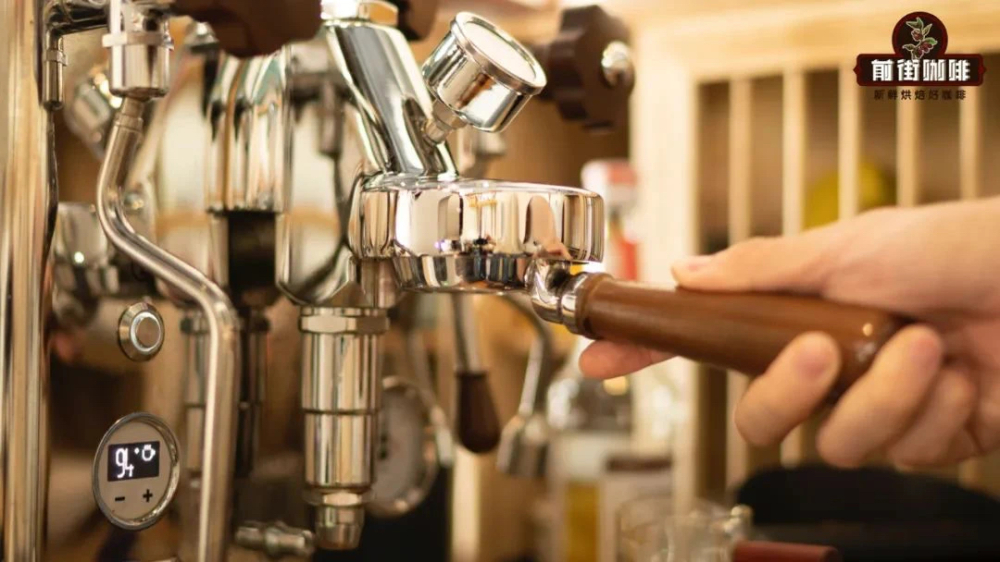
However, have you noticed that there is another parameter that is actually quite critical, but for many coffee machines it is rather troublesome to adjust, so Front Street Coffee usually talks mainly about those extraction variables that are relatively easy to control. So today, Front Street Coffee wants to specifically discuss this "behind-the-scenes key player" in the extraction process—"extraction pressure"!
The "product" obtained through pressure
The reason espresso can stand apart from regular coffee is largely thanks to that golden layer of Crema, because only through pressurized extraction can such a fine and thick layer of foam be formed.
In most people's understanding, the pressure of a coffee machine is almost synonymous with "9 bar," which is inseparable from the various espresso tutorials encountered in daily life. Of course, this statement itself is not wrong; most coffee machines are set to 9 bar by default at the factory. So the question follows: do you know why the default pressure of coffee machines is set at exactly 9 bar?
The pressure differences in coffee machines
Let's first sort out the types of pressure involved in coffee machines. It is actually divided into two parts: extraction pressure and pump pressure!
Extraction pressure: the 9 bar we often refer to is "extraction pressure"! That is, after locking in the portafilter, the pressure applied to extract the substances from the coffee grounds—this is extraction pressure!
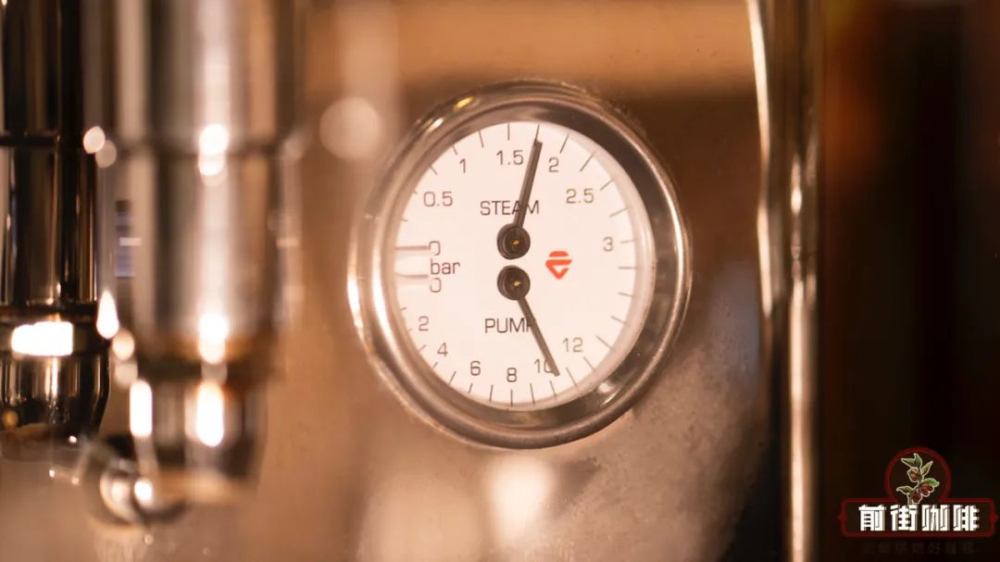
Pump pressure: the extraction pressure of a coffee machine comes from the internal pump. Pump pressure refers to the pressure directly output by the pump when the extraction button is pressed. The two each correspond to a gauge. When we only let the coffee machine dispense water without locking in any component that needs to withstand pressure, we will see the needle of one gauge turn immediately at the moment the extraction button is pressed—that is the "pump pressure gauge."
And when you lock in a portafilter loaded with a puck, or use a blind portafilter for extraction, the value on the other gauge will gradually climb after the water is released, which shows that it is the "extraction pressure gauge"!
After clarifying the difference between the two pressures, let's next discuss why the extraction pressure of coffee machines is usually set at 9 bar!
Why is the standard extraction pressure of coffee machines 9 bar?
To understand more intuitively why 9 bar became the standard, it is worth doing an extraction experiment to see how espresso parameters change under different pressures!
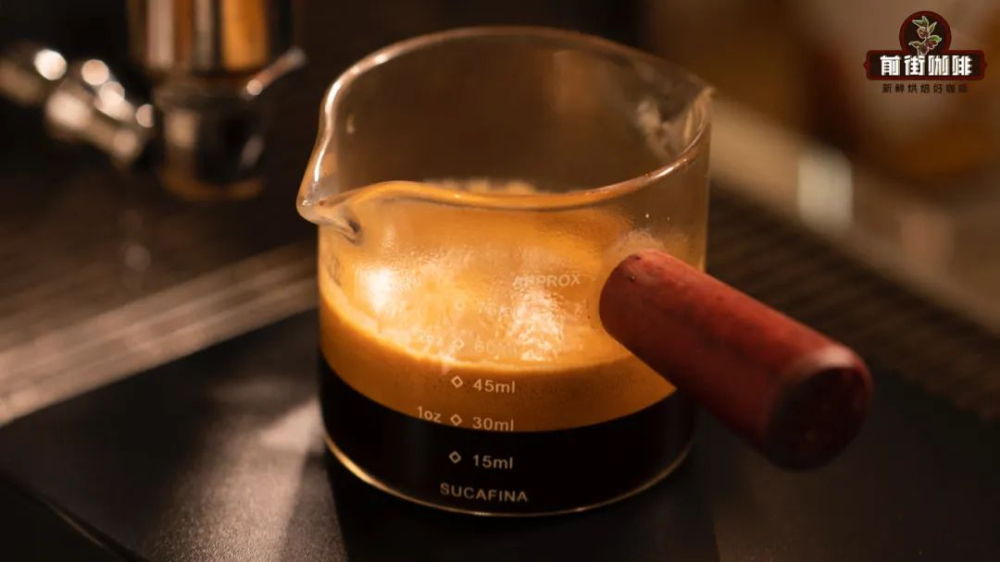
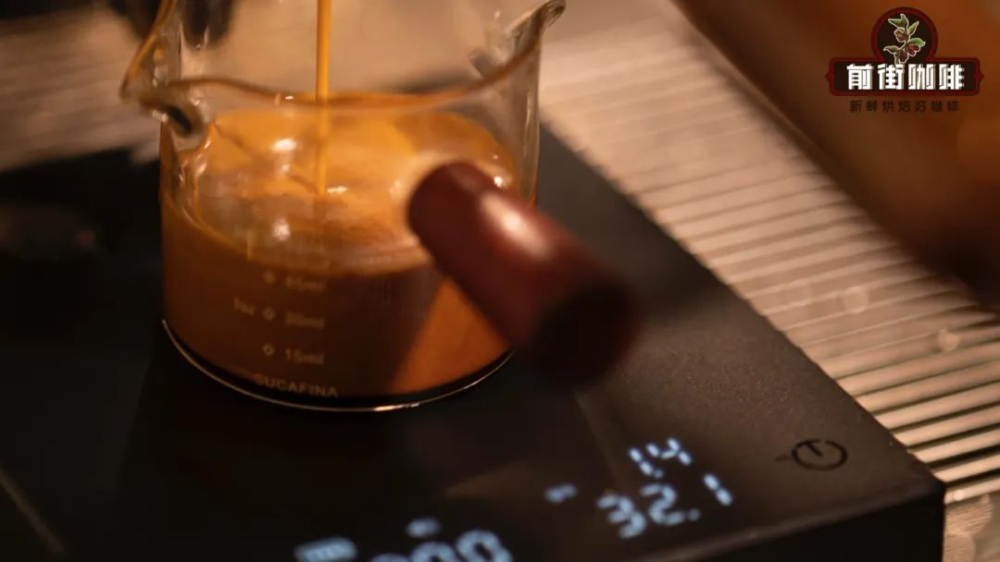
The dose used in this experiment was 20 g, with a brew ratio of 1:2, that is, 40 ml. This is a set of parameters determined by Front Street Coffee based on 9 bar! Under the standard 9 bar pressure, extracting 40 ml of coffee liquid from 20 g of coffee grounds takes 30 seconds, with a flow rate of 1.4–1.6 per second!
Next we tested with 6 bar and 11 bar respectively, observing the differences in time required and final taste!
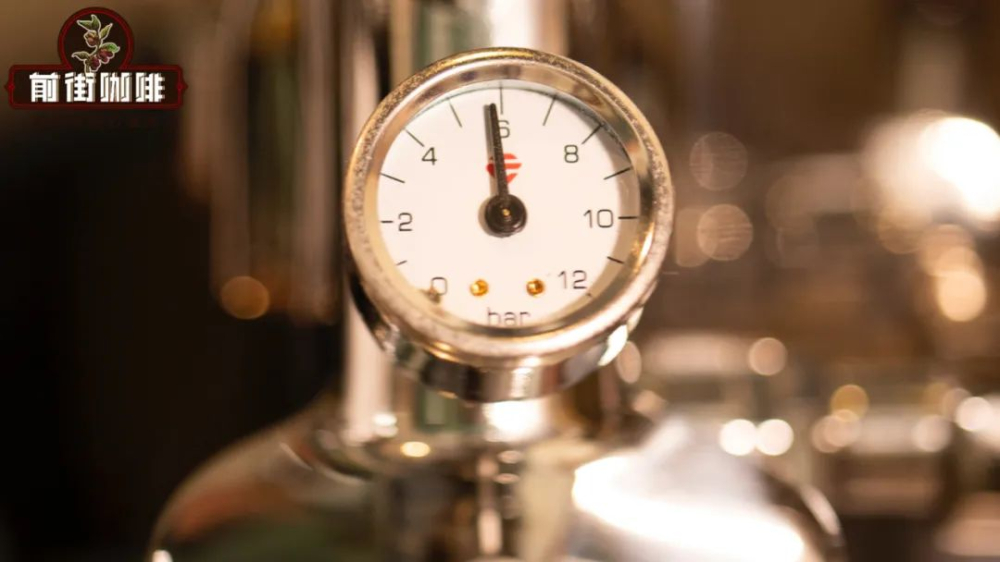
After adjusting the pressure to 6 bar for extraction, the change can be clearly seen from the pressure gauge. Originally, when extracting at 9 bar, it took only 5–6 seconds to rise from 0 to 9 bar, but after changing to 6 bar, it took 7 seconds to go from 0 to 6 bar, and the flow rate was also slower (about 0.7–0.9 ml per second). Extracting 40 ml of coffee liquid from 20 g of coffee grounds took 38 seconds.
Finally, the 11 bar pressure test! From the pressure gauge it can be observed that it took 5 seconds to rise from 0 to 11 bar. The initial flow rate was not much different from 9 bar, but as extraction progressed, the speed became faster and faster! The final extraction time was 27 seconds, with a flow rate in the range of 1.5–1.8 per second!
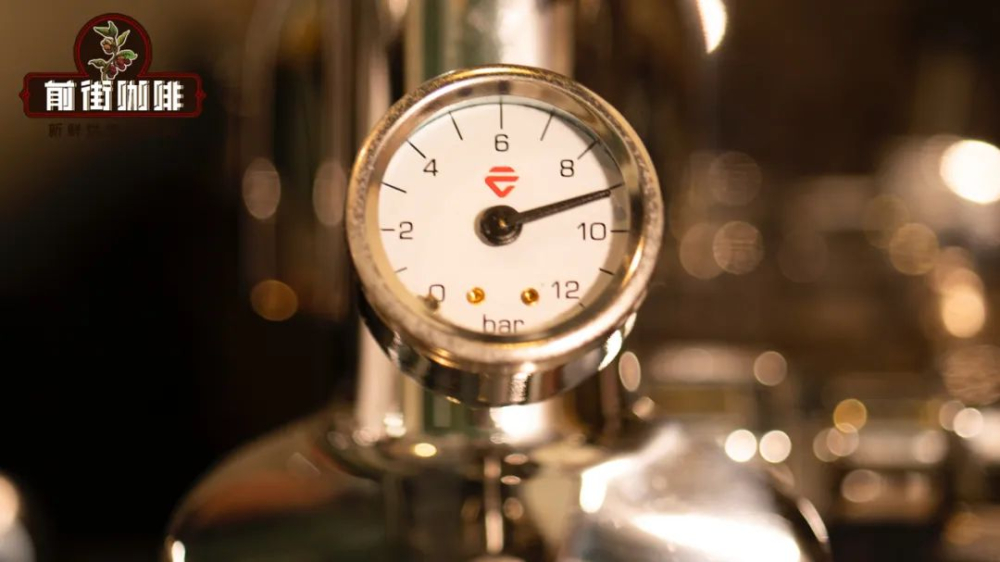
After extraction, Front Street Coffee immediately tasted each one, and the results were as follows: the espresso extracted at 6 bar was not very different in appearance from the espresso at 9 bar, but the mouthfeel of the crema was somewhat rough, and its acidity and aroma were less full than at 9 bar, with less clear layering. However, it tasted softer and had a slightly higher body; the espresso at 11 bar also showed no obvious difference in appearance, but as soon as it entered the mouth, its acidity and aroma were more prominent and intense, even pungent!
Although this experiment set the parameters based on 9 bar, it also clearly shows that under the same parameters (grind, dose, brew ratio), the lower the extraction pressure, the longer the time required, the less distinct the flavor layers, and the softer the taste; while the higher the extraction pressure, the shorter the time required, and the more impactful the taste! This is actually related to the sour, sweet, and bitter extraction formula that Front Street Coffee often mentions, but that is not today's focus~
Going back, the reason 9 bar became today's pressure standard for coffee machines is that after pump-pressurized coffee machines became widespread, they fully replaced the early coffee machines with only 3–4 bar. After all, the new coffee machines had higher extraction pressure and could complete extraction more quickly, but problems also followed!
People found that it was not the case that the greater the pressure and the faster the speed, the better the extracted coffee tasted. When the pressure exceeds 10 bar, the extracted coffee is prone to developing an odor similar to charcoal or burnt wood. But when used at 9 bar, negative conditions appeared the least, the coffee taste was suitable, and the flavor performance was also good. Thus, these advantages of 9 bar gradually became the default pressure of coffee machines through word of mouth!
As Front Street Coffee mentioned in previous articles, with the passage of time, the pressure during extraction is no longer an unchanging 9 bar. During espresso extraction, it can be manually adjusted to make the pressure change, thereby allowing the espresso to present the taste you desire. This extraction method has a professional name—"pressure profiling." When there is time later, Front Street Coffee will discuss it in detail~
Front Street Coffee
No. 10, Baoqian Street, Yandun Road, Dongshankou, Yuexiu District, Guangzhou, Guangdong Province
The above content is compiled by CoffeeHunters, a coffee news website.


