








Why does sour coffee or bitter coffee appear in pour-over?
Sour coffee usually means the brew is under-extracted, so sweet and bitter compounds that would balance the cup are missing. Bitterness that tastes burnt generally points the other way, toward over-extraction. Grind size, coffee-to-water ratio, water temperature, and contact time are the variables that decide which side the cup lands on.
A pour-over should be judged by balance: acidity, sweetness, bitterness, flavor, and body. Because grounds sit at a millimeter-level scale, grind is hard to read without practice. When the grind is too fine, water meets more resistance, flow slows, and soaking time stretches, pulling out harsher compounds. Roast level also changes how bitterness is perceived, so adjust one variable at a time.
A good cup of black coffee should have a balanced ratio of acidity, sweetness, and bitterness—if any one of these is too dominant, the balance is broken. In cupping, we emphasize harmony of flavors, but in daily brewing, slight missteps with variables like grind size, coffee-to-water ratio, and water temperature can make coffee taste sharply sour or burnt bitter. In this article, Front Street Coffee will explore the common causes of acid-bitter imbalance in pour-over coffee, focusing on the relationship between grind size and extraction time, while also explaining how roast level affects the perception of bitterness, and offering simple, actionable adjustments to help coffee lovers quickly identify the problem and brew a smoother cup.

In the cupping evaluation system, if a coffee's acidity, sweetness, flavor, cleanliness, body, and aftertaste all feel harmonious, its balance score will certainly be high, indicating the beans are of excellent quality and will ultimately receive a respectable score.
But when it comes to brewing, there are many influencing factors—such as grind, ratio, and water temperature—and one careless move can break this "balance," making the coffee either too sour or too bitter. Although you may not know which step is to blame, it's certain that the extraction has gone wrong. In this article, Front Street Coffee will discuss how to make quick adjustments when this happens.
Actually, the taste we perceive in coffee is mainly determined by the proportions of acidity, sweetness, bitterness, and other flavors—that is, the taste differences caused by the ratio of flavorful soluble compounds. For example, when you drink a very sour coffee, it doesn't necessarily mean it contains too much sour-tasting compounds; it could also be that there are too few sweet and bitter soluble components to provide balance.
Most beginners who encounter coffee that's too bitter often find it's related to an incorrect grind size. After all, ground coffee exists at a millimeter-level microscopic scale, and unlike other parameters, it's hard to express with intuitive numbers, nor can it be compensated for through diligent practice. Therefore, for beginners with little brewing experience, getting the grind right is even harder.
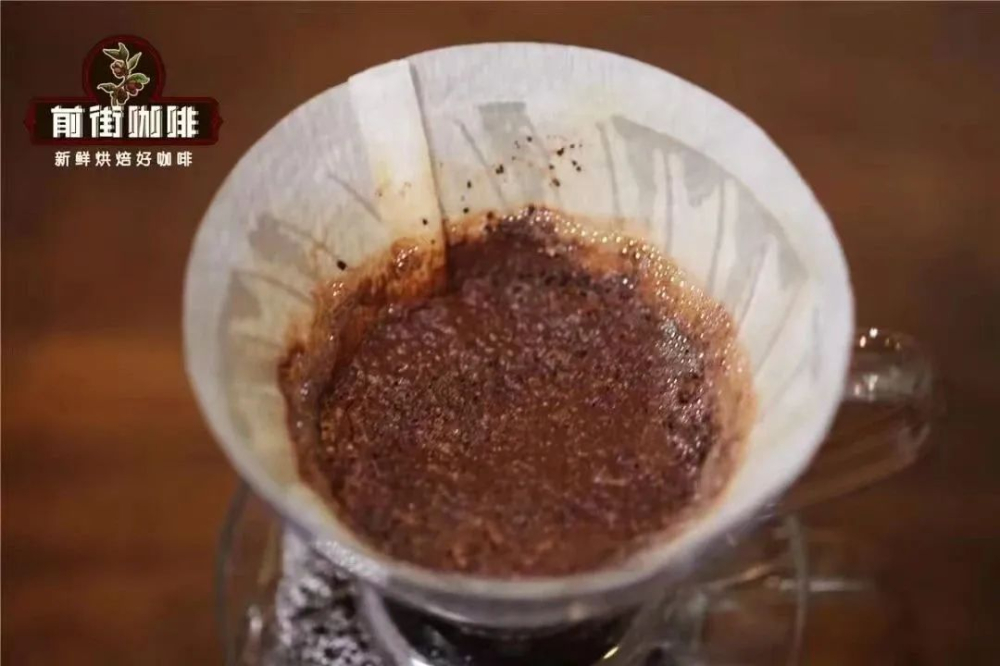
When the grind is too fine, first, the water encounters more resistance, making it difficult to flow through, which prolongs the soaking time and releases a large amount of bitterness. Second, the smaller the particles, the higher the dissolution efficiency, making the coffee more prone to tasting too bitter. For example: if the flow rate in the first half is even but becomes progressively slower in the second half, with the water level in the dripper getting higher and higher, it means the holes are clogged by fine particles. In this case, the simplest solution is to coarsen the grind appropriately, using extraction time as a reference.
Ideally, the coffee should flow through at a consistent rate, with an extraction time of about 2 minutes (for 15g of coffee). Of course, some drippers are designed with a slower flow rate, which can cause the coffee to soak longer during extraction and result in more bitterness. You can also switch to a dripper with a faster flow rate, such as a V60.
Unlike sharp sourness, bitterness in coffee is often influenced not only by brewing but also by roast level. Everyone has a different tolerance for bitterness—some people find Mandheling not bitter at all, while others think it's a cup of "Chinese medicine." So those who are naturally sensitive to bitterness should avoid dark-roasted coffees with labels describing caramel, dark chocolate, hazelnut, cocoa, cream, etc., and prioritize medium-light roasted beans that highlight floral and fruity (acidic) flavors.
Front Street Coffee
No. 10, Baoqian Street, Yandun Road, Dongshankou, Yuexiu District, Guangzhou, Guangdong Province
The above content is compiled by CoffeeHunters, a coffee news website.


