








How does the roasting process affect coffee bean resting?
Freshly roasted coffee beans are usually rested for a few days before brewing. Right off the roaster they hold a large amount of carbon dioxide plus popcorn-like Maillard aromas and sometimes smoke. Ground and brewed immediately, those gases block water from dissolving flavor compounds, so the cup tastes flat or carries roast off-flavors.
Resting lets carbon dioxide escape and takes unpleasant odors with it while flavors unfold. Aroma holds for roughly two to three weeks, with days 8 to 25 often called the peak flavor period. Darker roasts expand more and hold more gas, so they tend to need a different rest time than lighter ones, which is where the roasting process matters.
Do freshly roasted coffee beans really need to rest for a few days before brewing? This question puzzles many coffee enthusiasts. This article, from the perspective of Front Street, discusses the core logic of coffee bean resting: why are freshly roasted beans often recommended to sit for a while? What role does carbon dioxide play in this? How long do beans of different roast levels need to rest? Can beans that haven't rested properly still be consumed? Additionally, we will share a simple blooming observation method to help you roughly judge the current state of the beans. Whether you are used to patiently waiting or prefer to brew immediately after opening the bag, understanding this knowledge will allow you to handle each bag of coffee more confidently.

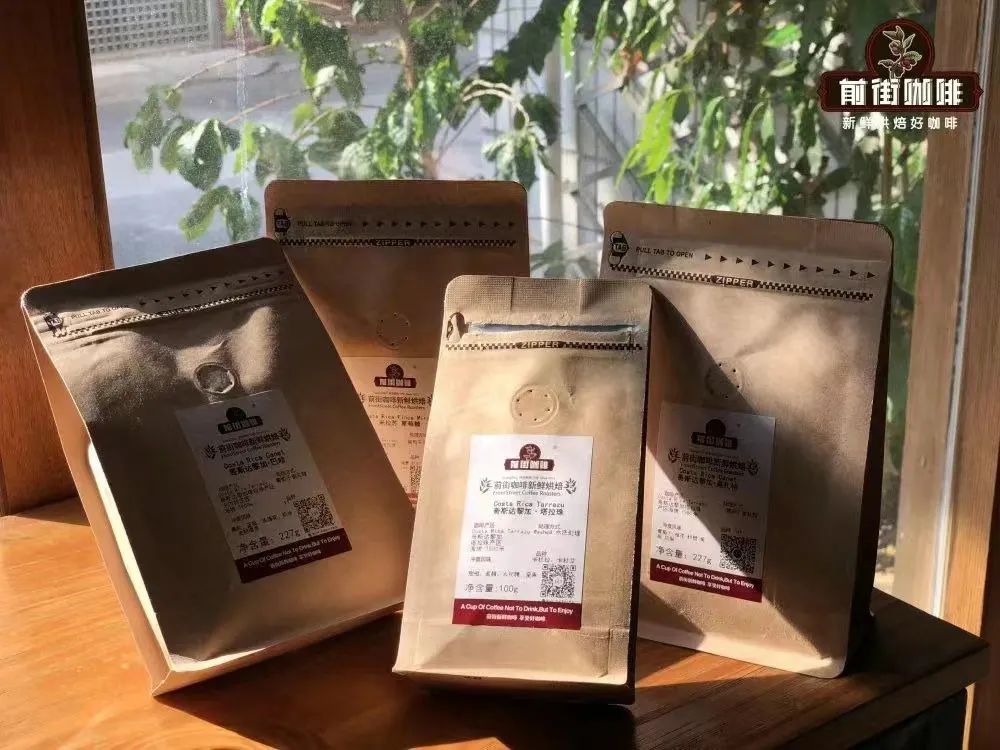
Why do freshly roasted coffee beans need to rest for a period of time? If they haven't been "rested" properly, does that mean they can't be consumed? And what methods can be used to judge the freshness of beans? Today, Front Street will talk with everyone about the matter of coffee bean resting.
Why are freshly roasted coffee beans recommended to "rest" for a few days before drinking?
The reason is that beans just off the roasting machine have accumulated a large amount of carbon dioxide inside, while also carrying the sweet, popcorn-like aroma generated by the Maillard reaction, and sometimes even a hint of smokiness. If they are ground and extracted immediately at this point, these gases will form a barrier, making it difficult for water to fully dissolve the flavor components in the coffee, and may even bring residual off-flavors from the roasting process into the cup, ultimately leading to an unsatisfactory result.
Freshly roasted coffee can maintain its aroma for about two to three weeks, among which days 8 to 25 are generally considered the stage with the fullest aroma and the most distinct flavor characteristics, also known as the "best flavor period." The essence of resting beans is to allow the beans to slowly release carbon dioxide while also carrying away unpleasant odors produced during roasting. At the same time, the flavor substances inside the beans gradually unfold, making it easier for us to obtain ideal aromatic components during extraction.
The darker the roast level, the more the coffee beans expand, the looser their internal structure, and the higher the total amount of accumulated carbon dioxide, so naturally more gas needs to be released. In other words, dark-roasted beans require a longer resting time. For example, coffee beans intended for espresso use (or medium-dark roast) usually need to wait about 7–10 days before showing a better flavor; while medium-light roasted beans that emphasize floral and fruity acidity have a resting period of roughly 4–7 days.
Can beans that haven't "rested" properly not be consumed?
Front Street's view is: after receiving the coffee beans, you can enjoy them directly.
Today, more and more roasted bean merchants and consumers recognize the importance of coffee freshness, and most beans delivered to buyers are roasted within one week. Taking Front Street Coffee as an example, Front Street Coffee's roasting schedule is planned according to consumption within 5 days. Even in the least ideal situation, customers receive beans that are at most 5 days after roasting, and adding 1–2 days of transportation time, the flavor has basically stabilized. Therefore, resting beans is not mandatory, and whether or not it is done does not affect normal drinking.
Of course, if you receive beans that we just roasted yesterday, Front Street suggests you immediately brew a cup and try it! Although a bag of coffee beans often needs several days after roasting for the flavor to stabilize, by starting to drink from the freshest state, you can both feel the day-by-day changes in the beans' aroma and gradually develop the ability to judge whether the beans have been "rested well," while also appreciating another side of specialty coffee's charm and experiencing the different surprises coffee brings.
Before tasting, is there a way to simply judge how much the beans have "rested"?
You can observe the swelling state of the coffee bed during blooming to roughly judge whether the beans have "rested enough." The purpose of blooming is to release carbon dioxide from the coffee grounds while also wetting the coffee bed to "preheat" it. When blooming the same beans, if the coffee bed easily rises to form a "hamburger"-shaped dome, it indicates that the gas content in the grounds is relatively high and the beans are relatively fresh; conversely, if the coffee bed barely changes during blooming and does not expand, it means the beans may no longer be very fresh.
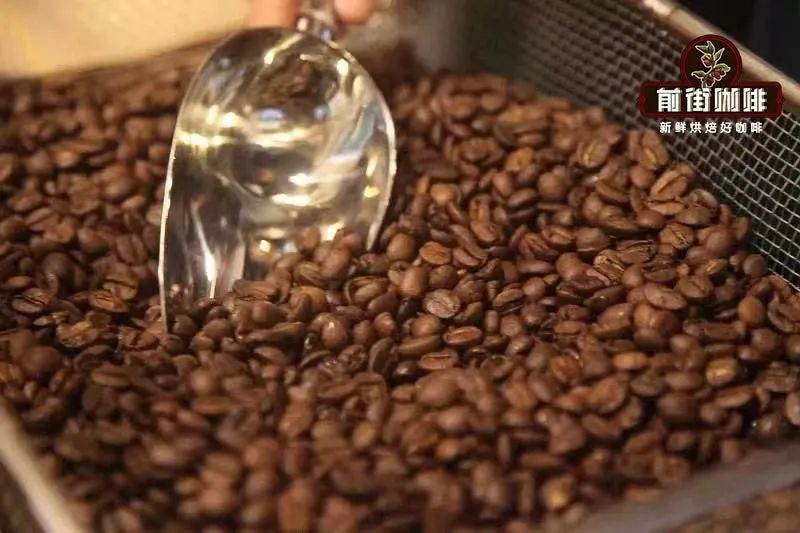
It should be noted that not all beans will show an obvious "hamburger" effect. Some coffees that are lighter roasted or have harder bean texture naturally have a smaller dome, and during blooming they look like a flattened hamburger, seeming to have expanded yet also seeming not to have expanded... But this does not mean the beans are not fresh.
Of course, observing degassing through the blooming dome is only a rough reference method. Whether the beans are actually fresh and whether they have rested well ultimately must be concluded by combining it with the flavor actually felt after tasting.
Front Street Coffee
No. 10, Bao'an Qian Street, Yandun Road, Dongshankou, Yuexiu District, Guangzhou, Guangdong Province
The above content is compiled by CoffeeHunters, a coffee news website.


