







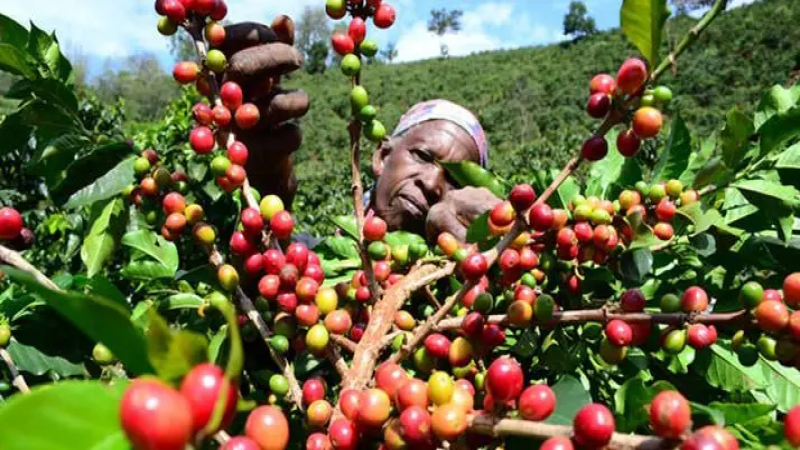
How did coffee cultivation in Tanzania shape KP423, SL28 and Geisha?
Tanzania sits in East Africa, bordered by Kenya, Uganda, and others, with coastal savanna and inland plateau climates that suit coffee. Coffee arrived from Ethiopia in the 16th century and became an important cash crop under German colonial rule. Today the country grows Typica, Bourbon, Kent, and locally developed disease-resistant varieties.
The Tanzanian Coffee Research Institute, founded in 2001, works to revitalize the sector and has released 23 improved varieties, including 19 Arabica hybrids and 4 Robusta types. KP423 came from selecting Kent, while Kenya's SL28 and Panama Geisha also trace links to Tanzania. Washed beans from the Kilimanjaro volcanic highlands show citrus, berry, and honey notes.
Tanzania is located in East Africa, bordering Kenya, Uganda, and several other countries, and its unique climatic conditions provide diverse environments for coffee cultivation. The history of coffee in the country can be traced back to the 16th century, and today it has developed Typica, Bourbon, Kent, and independently developed disease-resistant varieties. Since its establishment in 2001, the Tanzanian Coffee Research Institute (TaCRI) has continued to promote the revitalization of the industry, releasing 23 improved varieties including KP423. At the same time, Kenya's well-known variety SL28 and Panama Geisha are both inextricably linked to Tanzania. Front Street Coffee has also selected washed beans from the Kilimanjaro volcanic area in the northern highlands, presenting a tea-like flavor of citrus, berries, and honey.
Tanzania is located in East Africa, sharing borders with Kenya, Uganda, Zambia, Rwanda, Burundi, and other countries. The eastern coastal zone and some inland lowlands have a tropical savanna climate, while the western inland plateau exhibits tropical mountain climate characteristics.
According to some historical records of coffee, coffee was introduced to Tanzania from Ethiopia in the 16th century, and afterward, during the German colonial period, coffee had developed into an important cash crop for the country. The varieties currently cultivated in Tanzania include Typica, Bourbon, Kent, and disease- and disaster-resistant varieties developed domestically. The Tanzanian Coffee Research Institute (TaCRI) was established in 2001 as a non-profit institution aimed at revitalizing Tanzania's coffee industry. The institute provides key public services to stakeholders in the domestic coffee industry, is committed to improving yield and quality, and at the same time enhances producers' profitability and the competitiveness of Tanzanian coffee in the international market.
Tanzania's contributions to the coffee field are quite rich. In terms of crop improvement research, TaCRI has so far released 23 improved coffee varieties, covering 19 Arabica hybrids and 4 Robusta varieties, one of which is KP423.
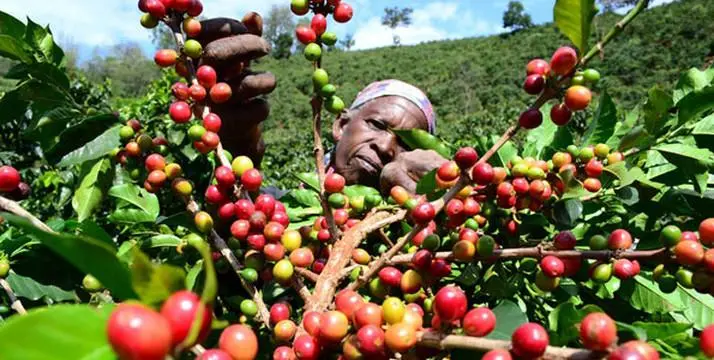
KP423 is one of the varieties released by Tanzania, originating from selection of the Kent variety. Kent is a Typica hybrid discovered in 1911 at the Kent coffee estate in the Mysore region of India. It was produced by crossing S288 with Typica and has the characteristics of high yield and resistance to leaf rust, so it was introduced to Kenya, Indonesia, Tanzania, and other parts of East Africa. In the 1920s, Kent became part of an intensive selection program at the Lyamungu research station in Tanzania. KP423 was released in Tanzania in the 1940s and was sent to Uganda, where it occupied an important position in local Arabica-growing areas. However, the variety's leaf rust resistance has now failed.
In addition, Kenya's famous variety SL28 is also connected to Tanzania. SL28 is a single variety selected and released by Scott Laboratories, which has now been renamed the National Agricultural Research Laboratories (NARL) of Kenya. In 1935, a senior coffee officer at Scott Laboratories selected a tree from a drought-resistant population in what was then called Tanganyika (present-day Tanzania) and brought it back to the laboratory. SL28 is a descendant of this variety.
In fact, the rise to fame of Panama Geisha is likewise related to Tanzania. The Geisha variety was initially collected from Ethiopian coffee forests in the 1930s, then sent to the Lyamungu research station in Tanzania, and in 1953 was taken to the Tropical Agricultural Research and Higher Education Center (CATIE) in Costa Rica, where it was registered as T2722. After its resistance to coffee leaf rust was confirmed, the variety was distributed throughout Panama through CATIE in the 1960s.

Front Street also offers coffee from Tanzania, using coffee beans from the Kilimanjaro volcanic area in the northern highlands and adopting the washed processing method. Brewed with a V60 dripper at a 1:15 coffee-to-water ratio, it can present citrus and berry flavors, accompanied by honey-like sweetness, with a smooth mouthfeel and a tea-like quality.
The above content is compiled by CoffeeHunters, a coffee news website.


