








What Makes SOE Coffee Priced Higher Than Blends?
SOE coffee, short for Single Original Espresso, usually costs a few dollars more than a house blend because it presents a single origin on its own rather than balancing several. The price reflects the cost structure behind those beans and the narrower margin for error in roasting and extraction when a blend can no longer cover defects.
The soe meaning in coffee is single-origin espresso, in contrast to blends built for stability. Espresso shops originally used single-origin beans such as Mocha and Brazil without comment, but as quality and yields from different origins varied, merchants turned to blending and dark roasting to compensate. The specialty coffee wave brought light-roasted, fruit-acidic beans back to the espresso bar.
Walking into a café and ordering an SOE often costs a few bucks more than a regular blend—what's the real reason behind this? SOE stands for Single Original Espresso, emphasizing the individual expression of single-origin beans, in sharp contrast to espresso blends that pursue stability and balance. From the early everyday use of single-origin beans, to the prevalence of blends due to dark roasting, and then to the return of light-roasted, fruit-acidic beans to the espresso realm under the specialty coffee wave, the popularity of SOE reflects coffee consumption's pursuit of more refined flavors. This article will trace the historical thread of SOE, analyze its cost structure, and explain the key influence of roasting and extraction on the success of a cup of SOE, while retaining Front Street Coffee's professional view that SOE and blends each have their own merits.

Nowadays, many cafés prepare several SOE beans with unique flavors for customers to choose from in order to create their own signature style. Once we decide to switch from a blend to an SOE, we usually have to pay a few dollars more—what exactly is the reason for this?
The full name of SOE is "Single Original Espresso," which literally translates to single-origin espresso, clearly meant to distinguish it from House Blend Espresso.
During the period when espresso first became popular, coffee shops around the world used single-origin beans, such as Mocha coffee and Brazil coffee. Because this was such a normal practice, no one bothered to emphasize or explain it.
But as coffee consumption continued to climb, the quality of coffee beans from various origins began to vary widely, and yield, quality, and even flavor could become less stable.
To avoid the risks these uncertainties posed to extraction, some merchants began blending beans from different origins so they could complement each other's strengths and offset weaknesses.
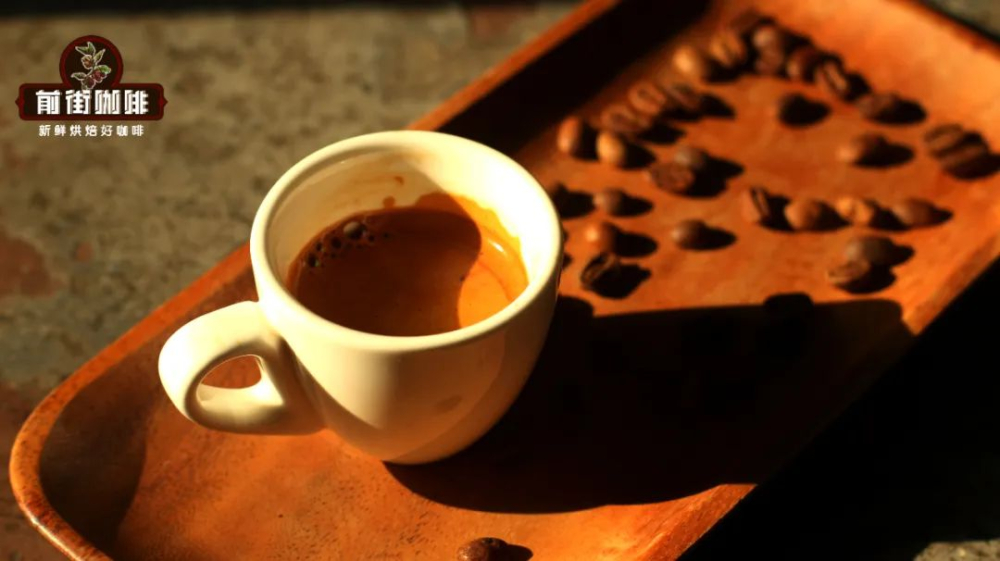
At the same time, producers would use dark roasting to erase less pleasant flavors and acidity. Dark roasting can also mask defects, and while stabilizing the coffee's taste, it can extract a thick layer of crema. This way, even if a batch from a certain origin was of lower quality, or a growing region suffered a crop failure and reduced production the following year, the blend recipe could be adjusted to "save the day."
So before the specialty coffee wave arrived, the raw materials used for espresso were usually blends of beans from two or more origins, with little attention paid to origin and batch. As for the taste, because of the "pitch-black" dark roast, it was basically fixed in rich, full-bodied notes like caramel, dark chocolate, nuts, cream, and cocoa.
By the 1980s, the industry had improved the quality of coffee beans from many origins through a series of scientific methods, and people began to emphasize the concept of "specialty coffee." Roasters also gradually realized that beans from each origin had their own characteristics, so they intentionally kept lightening the roast level of some beans to highlight their regional terroir, while also "unearthing" more floral and fruity notes.
At first, single-origin beans were used only in drip or immersion brewing methods such as pour-over, siphon, and French press. It wasn't until 2007 that, in order to shine on the competition stage, WBC World Barista Championship contestant James Hoffmann made espresso from single-origin beans and won that year's championship with it. In this way, SOE gradually became popular along with the specialty coffee wave.
It's not hard to see that SOE, which focuses on a single origin, often uses beans with a lighter roast level and fruity acidity, with the goal of presenting rich yet light aromas and mouthfeel completely different from traditional bitter coffee. For example, the citrus-lemon notes of Ethiopian beans, the raisin-honey sweetness of Costa Rican beans, and the tomato-berry character of Kenyan beans. The higher the distinctiveness, the easier it is for consumers to remember the characteristics of an SOE, but from a cost perspective, higher-quality single-origin beans naturally cost more, so paying extra makes perfect sense.
Front Street Coffee believes that the original intention of SOE is to amplify the bean's own strengths and highlight the "individuality" of espresso. Compared with blends, neither is inherently better or worse; the key is whether the user wants to express a rich, balanced, and affordable cocoa-toned coffee, or a floral-fruity coffee with higher demands for refined flavor.
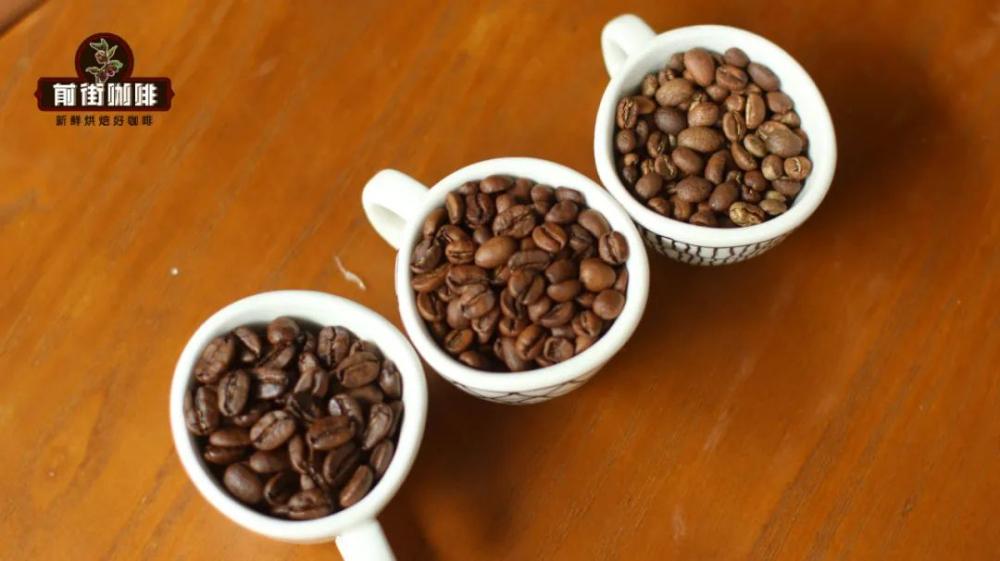
Today, SOE has undoubtedly become mainstream, and many coffee shops are following the trend by bringing single-origin beans with more detailed traceability information into the espresso realm, hoping to create something delicious and eye-catching. But among them, some single-origin espressos inevitably fall short; although they fly the "SOE" banner, they fail to bring out the coffee's distinctive flavor.
As Front Street Coffee mentioned above, SOE uses highly recognizable coffee flavors as its main selling point, so whether a cup of SOE coffee tastes good depends not only on the prerequisite of high-quality coffee beans, but also greatly tests the "interpretive" ability of the roaster and barista.
If the coffee beans used to make SOE are roasted too dark, the resulting espresso can easily taste bitter, and aromatic compounds cannot be expressed; if roasted too light, on the one hand the full-bodied substances are hard to bring out, and on the other hand the extraction demands are higher—once grinding, temperature, ratio, and other parameters are not well controlled, the espresso can easily become sour, astringent, or thin, and when made into an Americano or latte it has even less "coffee flavor."
Therefore, if roasting and extraction are not handled properly, then no matter how high-quality and expensive the beans selected are, emphasizing their "single-origin" nature is not very meaningful.
- END - Front Street Coffee
No. 10, Bao'an Qian Street, Yandun Road, Dongshankou, Yuexiu District, Guangzhou, Guangdong Province
The above content is compiled by CoffeeHunters, a coffee news website.


