







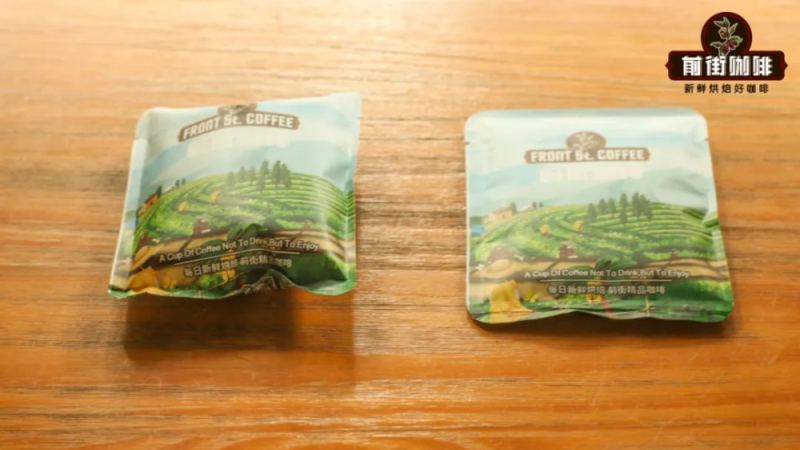
Does a puffed bag mean the roasting process ruined the beans?
A bulging coffee bean bag is usually not a sign of spoilage. Coffee beans release carbon dioxide after roasting, and roughly half of that gas stays inside the porous bean structure before escaping over the following days. If the bag lacks a one-way degassing valve, that gas has nowhere to go and inflates the packaging from the inside.
Three conditions make swelling most likely: a very fresh roast date, a medium-dark roast level, and packaging without a valve. Darker roasting breaks down the bean structure further, so more carbon dioxide is generated and retained. To preserve coffee, check the roast date and the valve rather than the shape of the bag.
The coffee bean bag you just bought is bulging—does that mean it's gone bad? Is it still safe to drink? Actually, the reasons for coffee bean bag swelling are quite different from those for ordinary food. Ordinary food bags usually swell due to leaks or gas produced by bacteria, but coffee beans themselves actively release carbon dioxide. When the roast date is very fresh, the roast level is on the darker side, and the bag happens to have no one-way degassing valve, swelling becomes a natural phenomenon. This article breaks down the three main causes of coffee bean bag swelling in detail, helping coffee lovers judge when to enjoy it with peace of mind and when to be more cautious, with professional advice from Front Street Coffee attached.
(Example image) Generally speaking, if a sealed packaged food swells up without warning, there are only two reasons: the first is physical swelling—put simply, the packaging is damaged and leaking air, so a vacuum state cannot be maintained inside the bag, and the bag swells; the second is bacterial swelling, which means the food sterilization process failed to completely eliminate possible gas-producing bacteria, and these bacteria continue to multiply in the food after packaging and release gas, eventually causing the bag to expand.
However, these two situations do not apply to coffee beans. The reason is that coffee beans naturally release gas on their own. If swelling occurs, it is most likely because this bag of beans simultaneously meets the following three conditions:
1. The roast date is too fresh
Everyone knows that freshly roasted beans have a very prominent characteristic—they are extremely full of gas! The gas here is carbon dioxide (CO2).
A large amount of carbon dioxide is produced during the coffee roasting process. After roasting is complete, about half of the carbon dioxide remains inside the porous structure of the coffee beans. This gas is gradually released over time, and especially in the period right after roasting, the amount released reaches its peak!
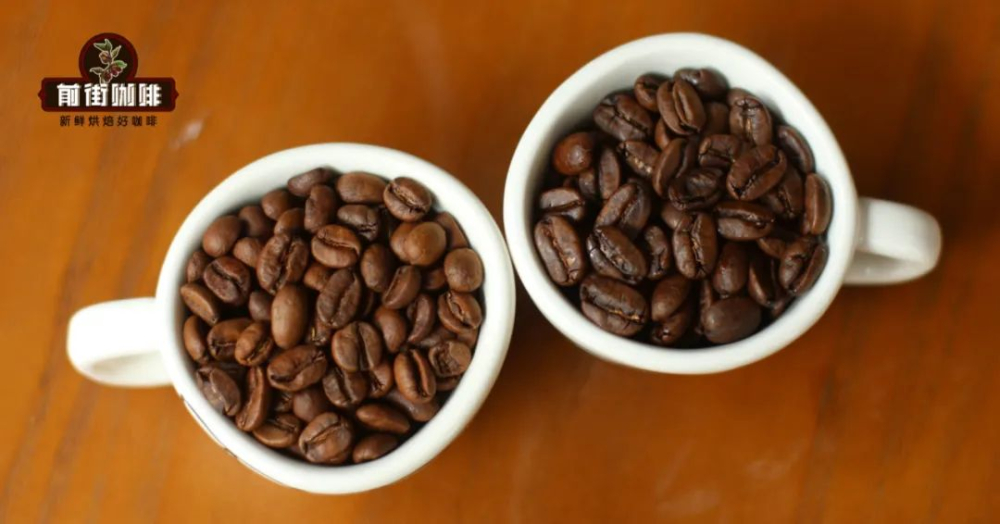
2. The beans are at a medium-dark roast level
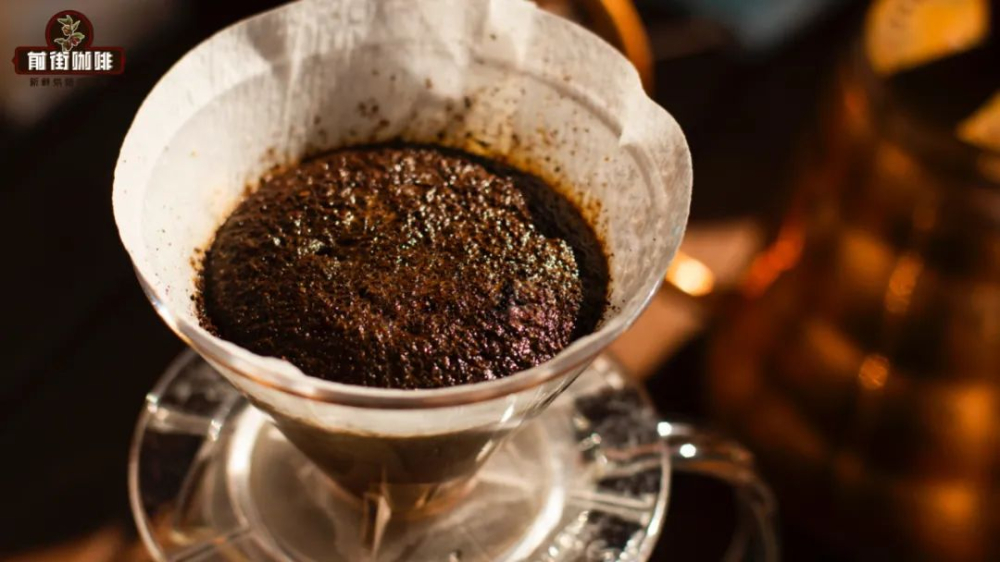
The roast level directly determines how much carbon dioxide the coffee beans can ultimately retain. The reason, as mentioned earlier, is that the darker the coffee beans are roasted, the more thoroughly their internal structure is broken down and the more porous they become overall, so they can generate and hold more carbon dioxide. Therefore, dark-roasted beans usually release far more gas than light-roasted beans! This can be observed very intuitively during the blooming stage of pour-over brewing.
3. The packaging bag lacks a one-way degassing valve
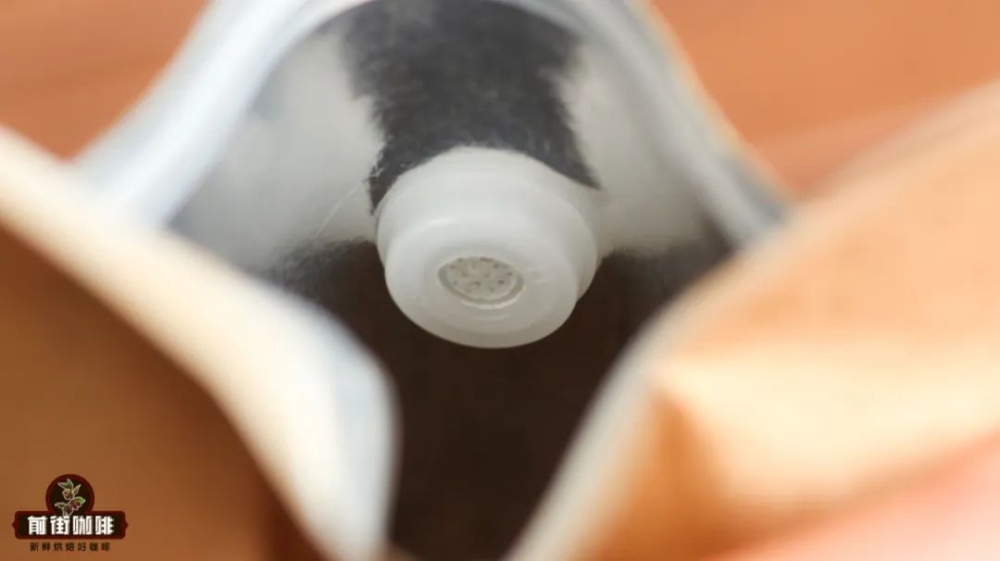
This is the most critical factor causing swelling: the coffee bean bag is not equipped with a one-way degassing valve! In the article "No!!! This hole is not for squeezing out air to smell the aroma!!!", we mentioned that the purpose of the one-way degassing valve is to prevent the packaging bag from bursting under gas pressure.
After the beans are roasted and come out of the roaster, they are immediately cooled, and once cooled they must be bagged and stored right away, otherwise the flavor will dissipate along with the carbon dioxide! After bagging, the beans still continue to release a large amount of gas. At this point, a device is needed that can let gas out while blocking outside air from entering, thereby both preventing the coffee bag from bursting and preserving the flavor—that is the one-way degassing valve!
However, not all bean bags are equipped with a one-way degassing valve. Some sellers, in order to reduce the beans' contact with air and preserve flavor longer, choose packaging bags without a degassing valve. When a bean bag without a degassing valve meets freshly roasted dark-roasted beans, swelling is unavoidable!
"But every bag of coffee beans sold by Front Street has a degassing valve, so logically there shouldn't be swelling—could it be a sample?" With this question, Front Street asked that friend in return. And the friend replied like this: "Is it possible that I bought it from another seller..."
Front Street Coffee (FrontStreet Coffee)
No. 10, Bao'an Qian Street, Yandun Road, Dongshankou, Yuexiu District, Guangzhou, Guangdong Province
The above content is compiled by CoffeeHunters, a coffee news website.


