








How Does Ethiopian Coffee Cultivation Affect Bean Size?
Ethiopian Heirloom coffee beans vary in size because they are not a single variety but a collective label for thousands of unidentified coffee plants, protected by the government under the name Heirloom. Bean size differences come mainly from Ethiopia's coffee cultivation system, where plantation, forest, semi-forest, and garden coffee coexist and multiple varieties are mixed during harvesting and processing.
In plantation coffee, large private estates handle cultivation, management, processing, and sales themselves, without relying on processing stations or cooperatives, though their share of national output stays relatively small. Farm size, shade, altitude, and picking practices differ across these models, and when lots are combined the result is a natural mix of bean sizes and shapes rather than a uniform grade.
Many coffee enthusiasts notice a phenomenon when buying Ethiopian Heirloom coffee beans: the beans vary in size. This is not coincidental but is closely tied to Ethiopia's unique coffee cultivation system. As the birthplace of coffee, Ethiopia is home to thousands of unidentified coffee varieties, which the government protects under the name "Heirloom." However, the real key to uneven bean size lies in its diverse cultivation models—plantation coffee, forest coffee, semi-forest coffee, and garden coffee coexist, combined with the mixing of multiple varieties during harvesting and processing, ultimately creating what we see as a "natural grand assortment." This article will break down these stages one by one, giving you an in-depth understanding of the root causes of uneven Ethiopian Heirloom bean size.

When Ethiopia is mentioned, most coffee enthusiasts are familiar with it—this is the birthplace of coffee, home to tens of thousands of coffee varieties of all kinds. However, many friends notice a detail after getting their hands on Ethiopian Heirloom coffee beans: the bean sizes are not uniform! This naturally makes one want to figure out: what exactly causes this?
In fact, the term Heirloom does not refer to one specific bean variety; it is a collective name for numerous coffee varieties. In Ethiopia, a large number of coffee varieties have yet to be officially identified. In hopes of finding a variety capable of rivaling Geisha, many people flock to Ethiopia, trying to discover that "dark horse" that can compete with Geisha. To prevent these varieties from being stolen by outsiders, the Ethiopian government uniformly labels them as "Heirloom." However, this does not explain the issue of uneven bean size—after all, no matter how many varieties there are, as long as you focus on growing the same one, wouldn't you be able to ensure uniformity?

Now you've hit the key point! In fact, this is directly related to Ethiopia's coffee cultivation methods. The country's coffee cultivation can be roughly categorized into the following types:
Plantation coffee: Produced by large coffee plantations operated by private owners. These plantations usually handle all stages themselves—cultivation, management, processing, and sales—without relying on processing stations or cooperatives. However, their output accounts for a relatively small proportion of Ethiopia's total coffee production, only about 5%–6%.
Forest coffee: Refers to coffee trees that grow naturally in forests. This type of coffee is completely free from human intervention and care; only when the fruit ripens do farmers come to pick it regularly. Forest coffee accounts for about 8%–10% of Ethiopia's total coffee exports.
Semi-Forest coffee: The cultivation areas for this type of coffee lie between forests and farmers' living areas. Like forest coffee, these are also naturally growing varieties; the difference is that farmers manage them regularly, and dedicated workers handle the picking once the fruit ripens.
Garden coffee: This is Ethiopia's highest-yielding category, accounting for 50%–55% of the country's total exports. Garden coffee is grown near farmers' homes, usually cultivated alongside other cash crops.
When most coffee farmers plant coffee, they do not know exactly which variety they are planting—only that it belongs to Arabica coffee. These beans are collected and picked by them from various parts of Ethiopia, so they often plant multiple different varieties at the same time, and when the harvest season comes, they harvest and sell them on their own. Since they don't even know what they're planting, they naturally won't sort them by category at harvest; instead, they simply harvest them all mixed together. This is the first mixing of multiple varieties.
Apart from plantation coffee, whether it is forest coffee, semi-forest coffee, or garden coffee, these beans picked by farmers themselves are basically sent to nearby processing stations. The processing stations do not separate them by variety; instead, they gather all coffee cherries together for unified processing, then send them to auction houses for official grading and classification, and finally sell them to green bean traders.
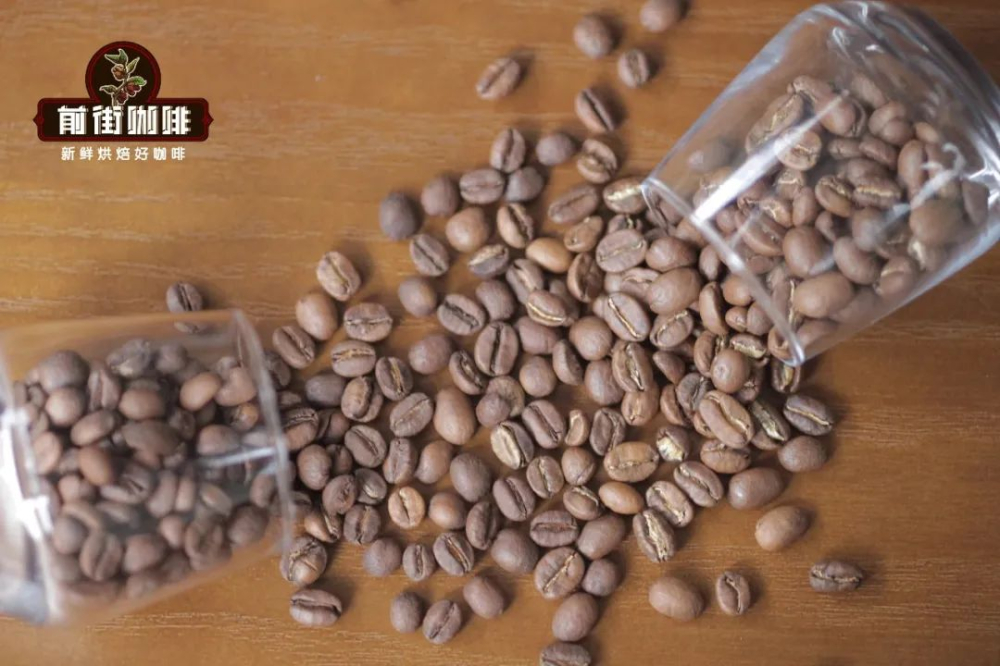
After these two mixings—at cultivation and processing—the Heirloom beans we see now are so uneven in size. This is because these beans may have already become a "natural grand assortment" at the cultivation or processing stage—composed of beans from different varieties and even different growing environments. How could their sizes possibly be uniform?
- END - Front Street Coffee (FrontStreet Coffee) No. 10 Bao'an Qian Street, Yandun Road, Dongshankou, Yuexiu District, Guangzhou, Guangdong Province
The above content is compiled by CoffeeHunters, a coffee news website.


