







Why Is Coffee Extraction of Floral Notes So Difficult?
Floral aromas in pour-over coffee are low-polarity flavor molecules that are hard to extract and easily masked by other flavors. Beans can carry floral descriptions yet taste flat once brewed, because roast level, bean variety and origin all shape how much of that aroma survives. Adjusting the coffee-to-water ratio and pouring technique during coffee extraction helps white floral notes come through more clearly.
A three-stage brewing plan was tested with an Ethiopian Gold Label Geisha, a washed-style profile similar in character to Yirgacheffe lots. SCA research on aroma retention shows darker roasts consume floral compounds while rising concentrations of other flavors suppress them. Grind size, water temperature and pour structure matter as much as the bean itself.
Many coffee enthusiasts buy coffee beans with floral descriptions, only to find that the expected floral aroma is missing when they brew and taste them. This is not an illusion, but because floral aromas themselves are low-polarity flavor molecules that are both difficult to extract and easily masked by other flavors. This article starts with the sources and types of coffee floral aromas, explains why the roast level affects how well floral notes are retained, and draws on relevant SCA research findings to introduce how adjusting brewing parameters such as the coffee-to-water ratio and pouring technique can make white floral notes more clearly expressed. The article also uses the Ethiopian Gold Label Geisha recommended by Front Street Coffee for a brewing experiment, sharing a specific three-stage operation plan and tasting results.
When buying coffee beans, many people are drawn in by the floral descriptions printed on the bag and can't resist placing an order. But when they actually brew it and take a sip, the question often arises: "Where did the floral aroma go? Why can't I taste it at all?"
Floral aroma is a rather special presence in coffee flavor. Even if you buy beans labeled with floral notes, it is not easy to truly taste that floral aroma. So some friends ask: "Is there any method that can make the floral aroma in brewed coffee more prominent?" That's a good question, but before getting started, it helps to first understand: why do some coffee beans naturally carry floral aromas?
Why does coffee have floral aromas?
The reason certain coffees have rich floral aromas is related to their bean variety, the terroir of their origin, and post-processing methods (for details, see: How Is Coffee Flavor Formed). But for a seed to become the coffee in our cup, it must go through roasting, and the degree of roasting is precisely the key link that determines how strong or weak the floral aroma is!
When coffee beans are heated inside the roaster, their internal aroma compounds continuously transform under various chemical reactions. The darker the roast, the more easily the floral aroma is consumed; moreover, floral aroma is a type that is easily suppressed by other odors. Once the roast is too dark and the concentration of other flavors rises, the floral aroma will be noticeably masked.
Therefore, beans usually described as having floral notes tend to choose a "medium-light" roast. In this roast range, there are not too many intense flavors to obscure the floral aroma, and at the same time the retention of floral flavor compounds is at its highest level.
Types of floral aroma
Just as the fruit flavors we taste differ, floral aromas also have different categories. The classification here is not based on broad categories such as white floral or purple floral, but on the odor characteristics we perceive. The main types of floral aroma are three: fresh-scented, stuffy-scented, and delicate-scented.
Fresh-scented, as the name suggests, these floral aromas smell fresh and elegant, such as jasmine and gardenia. White floral is the most typical representative among them, and also the most frequently encountered floral aroma in our understanding. If you want to drink jasmine aroma, you can buy Front Street Coffee Yirgacheffe Gedeo and Front Street Coffee Panama Boquete Geisha.
Delicate-scented floral aromas give a soft, soothing feeling, and rose and lavender are classic representatives of the delicate-scented type. To taste rose floral aroma, choose Front Street Coffee Strawberry Candy, and you can also taste grape juice and dried blueberry flavors.
Stuffy-scented differs from the previous two types. It is more impactful and smells slightly pungent, meaning it can be a bit sharp at first sniff. Typical representatives of this type of floral aroma are osmanthus and chamomile. Front Street Coffee Mozart coffee beans are recommended.
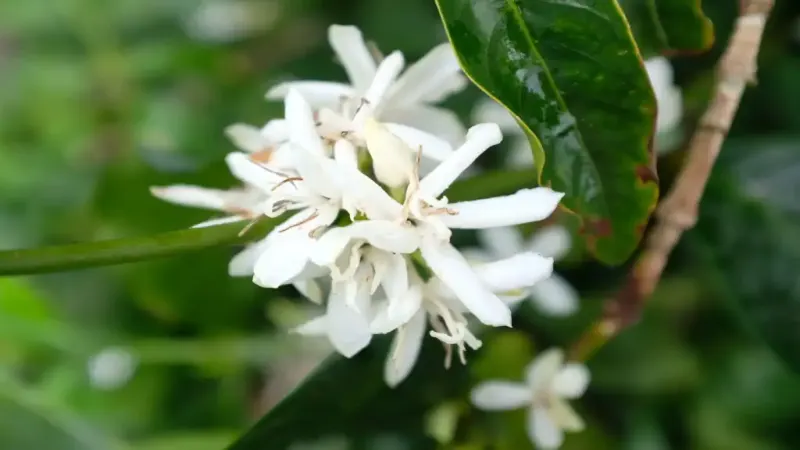
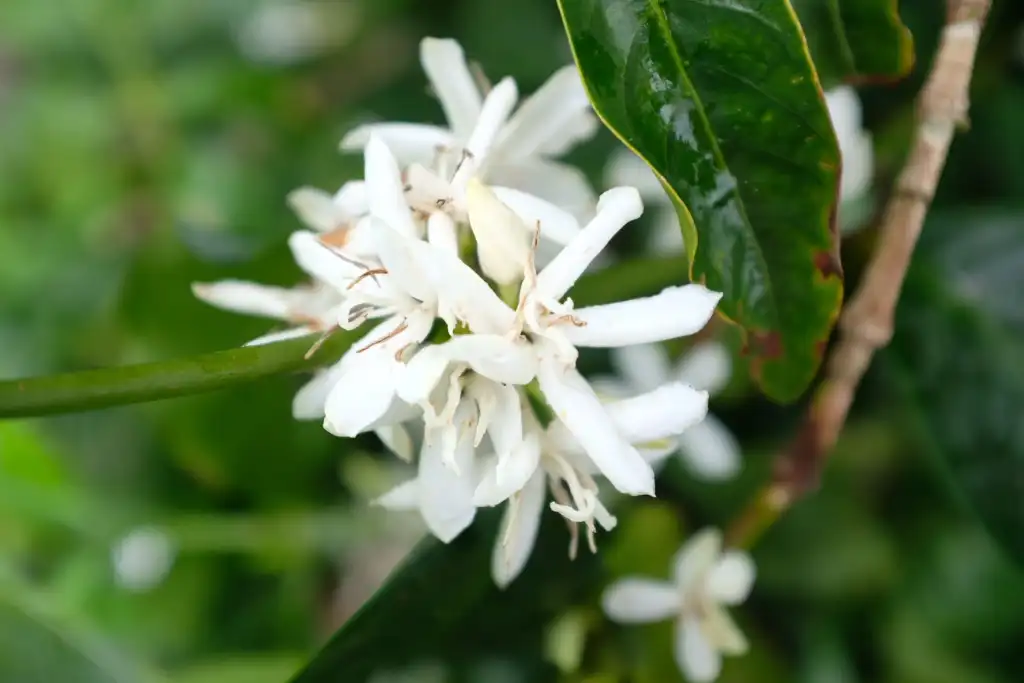
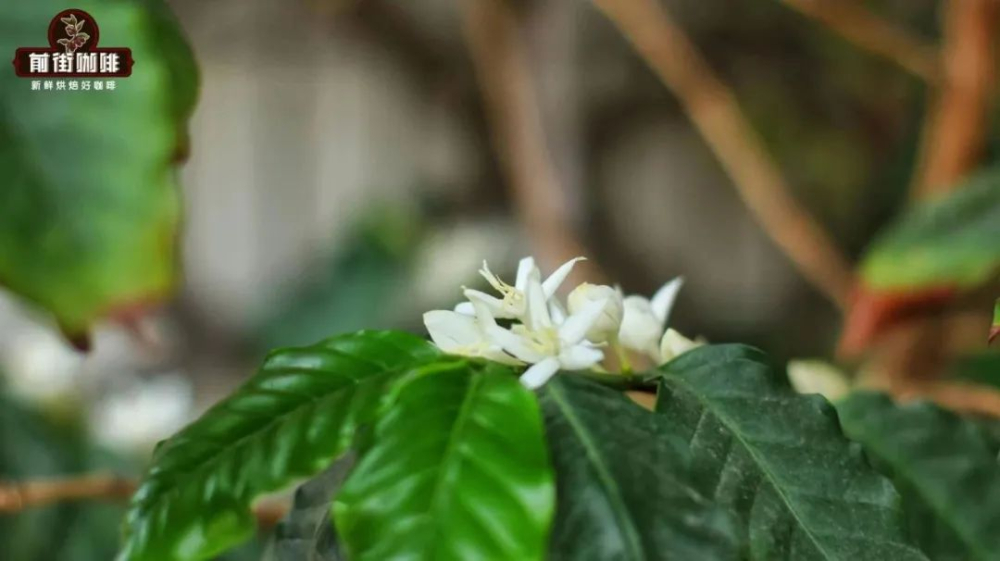
Here is an extra point of knowledge: the description "white floral" covers an extremely large group of flowers. Besides the common jasmine, camellia, and coffee flower, it also includes many white flowers such as white orchid, gardenia, and white rose.
This is because when tasting coffee, the clustered flavors and aromas make it hard for us to clearly distinguish which specific flower it is. After all, the aroma base of these white flowers is broadly similar. So people simply collectively refer to this type of floral aroma as "white floral."
So, is there any trick to brewing out floral aromas?
There certainly is. According to research by American biologist Dr. Hacklott and SCAA consultant Lingle, the essence of coffee extraction is hot water dissolving flavor molecules in coffee, and molecular weight and polarity determine the dissolution speed of flavor molecules!
Generally speaking, flavor molecules with small mass and high polarity dissolve faster; flavor molecules with large mass and low polarity dissolve more slowly. Floral flavor belongs to low-polarity molecules and requires a longer time to be extracted. Not only that, as mentioned earlier, it is also a molecule with very weak sensory stimulation. If the concentration or other flavors are too high, the floral aroma is difficult for our senses to catch.
So fussy! Hard to extract and easily covered up. If that's the case, then to clearly taste floral aroma, don't we need to increase the extraction yield while lowering the concentration?
Believe it or not, an extraction experiment commissioned by the SCA in 2020 and conducted by the University of California confirmed: coffee with low concentration and high extraction does indeed carry more obvious floral aromas! Then the answer is simple. As long as you adjust the brewing parameters and pair them with a bean that has floral notes, you can get a cup of coffee rich in floral aroma!
Lowering the concentration is easy to understand: you need more water to dilute the coffee, so just increase the coffee-to-water ratio. The pour-over coffee Front Street produces daily mainly uses a 1:15 coffee-to-water ratio. If you want to release floral aroma by diluting the concentration, you can raise the ratio to 1:16! (Front Street once compared 1:16 and 1:17 coffee-to-water ratios and found that the coffee concentration at 1:17 was diluted too much, making it hard to satisfy friends with a "heavier" taste preference.)
There are many ways to increase the extraction yield: raise the water temperature, grind finer, or increase the degree of agitation. Front Street relatively recommends increasing the degree of agitation, because once the first two are changed, it means other parameters must also be adjusted accordingly, otherwise you risk over-extraction. So under the premise of ensuring stability, increasing agitation is necessarily the best choice!
During brewing, what plays the role of agitation is the water flow when pouring. We can strengthen agitation by appropriately increasing the impact force of the water flow or the number of circling motions, thereby increasing the extraction yield. Without further ado, Front Street directly uses a bean with rich floral aroma for a brewing experiment! The extraction parameters are as follows:
Bean used: Ethiopia · Gold Label Geisha
Dose: 15g
Coffee-to-water ratio: 1:16 (normally 1:15)
Brewing water temperature: 92°C
Grind setting: Ek43 setting 10, 70% passing rate on a No. 20 sieve
Dripper used: V60
Brewing method: three-stage
The water amounts for the three stages are: 30ml for blooming, 140ml for the second stage after blooming with a steady (normally slow) large-circle pour, and 70ml for the third stage with a steady small-circle pour!
The total extraction time was 2 minutes 12 seconds. Compared with the Gold Label Geisha extracted using the original parameters (1:15 and slow circling), this cup indeed had a richer white floral aroma, the fruity sweet-and-sour taste was softer, and it had an obvious green tea finish. Very nice! Go ahead and give it a try~
The above content is compiled by CoffeeHunters, a coffee news website.


