








Why does robusta coffee production need new breeding?
Robusta's share of global coffee production rose from 25 percent in the early 1990s to 40 percent, and demand keeps climbing, yet breeding work has lagged. World Coffee Research warns that if consumption growth overlaps with the climate crisis, a severe global supply shortage could occur. The organization is launching a robusta breeding program using genetic material provided by CIRAD.
Six producing countries account for 95 percent of global robusta output by volume, leaving supply exposed to climate change, disease and pests. In Uganda, planting trials have already distributed nearly 50,000 disease-resistant robusta seedlings to farmers. The global network aims to strengthen research so that coffee production can keep pace with rising demand.
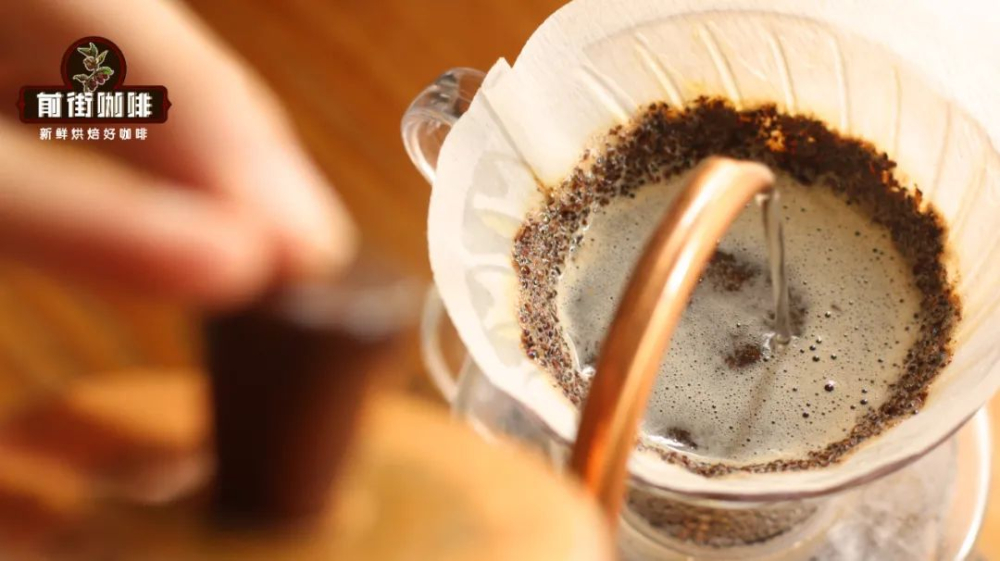
In the world of pour-over coffee, the V60 dripper has become an almost essential classic tool for beginners and a constant companion for veterans. Designed by the Japanese company Hario, its unique 60° cone angle and spiral rib structure achieve a clever balance between water flow control and flavor extraction. Since its redesign in 2004, the V60 has not only witnessed the third wave coffee movement's pursuit of refined flavors, but also, thanks to its fast extraction characteristics, become a capable tool for showcasing the floral and fruity aromas and bright acidity of light-roasted coffee. As a veteran V60 user, Front Street Coffee uses it thousands of times a year, and today we'll discuss why this affordable dripper stands out and how to choose between different material versions.

If you're just getting into pour-over coffee and ask an experienced friend which dripper to buy—something practical, easy to use, and decent-looking—the answer will almost certainly be the same name: V60.
The V60 can be considered a budget dripper that everyone praises after using. Almost every pour-over enthusiast has one in their equipment list. As a staple for daily cafe output, Front Street uses the V60 at least thousands of times a year, making us a "veteran user" of this dripper. With so many types of drippers on the market, why has the V60 become the "crowd favorite" in the pour-over world?
Who invented the V60?
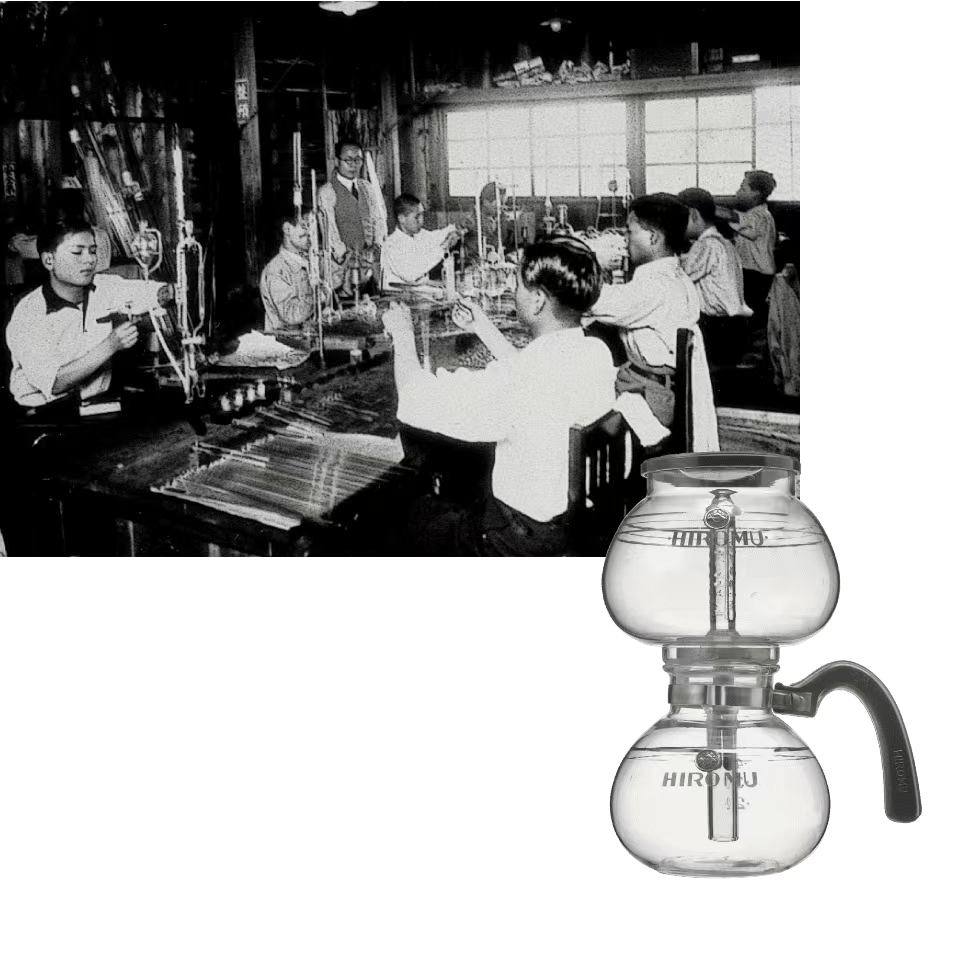
Hario, the company that designed the V60 dripper, was founded in Tokyo, Japan in 1921 and is a well-known local glassware manufacturer. In its early days, it mainly designed and produced heat-resistant glass instruments and equipment for scientific research institutions. For example, the heat-resistant glass server commonly used with pour-over is a popular Hario product.
In the 1940s and 1950s, Hario officially entered the home equipment field. Their first coffee extraction device was the siphon. At the time, the mainstream extraction methods in the coffee market were mainly slow immersion, such as the Melitta dripper, cloth filters, and siphon—either with small hole diameters or too complicated brewing steps, and generally time-consuming. So Hario wanted to create a brewing filter that was simple to operate and had a faster flow rate.
In 1964, Hario's designers began experimenting with laboratory funnels to extract coffee, but it was not put into commercial use, and relevant records are scarce. In the 1980s, Hario launched a paper drip filter, somewhat similar in appearance to the Chemex, with a funnel-shaped filter on top and a container connected below, which went into production in 1980.
In 2004, Hario redesigned the prototype of the V60, making its form closer to what we are familiar with today, and named it after its unique 60° cone angle and "V" shape. It was officially launched a year later. On HARIO's official website, we can still find the prototype of this dripper: a conical ceramic dripper with 12 toothpicks neatly glued to its inner wall to simulate the drainage grooves.
The extraction principle of the V60 dripper
1. Compared with other drippers, the conical shape plus the 60° angle design means that when brewing with the V60, water must first flow to the center before dripping into the server. This extends the contact area between water and coffee grounds, allowing aromas and flavors to be fully extracted.
2. Its iconic large single-hole design allows water to pass through without obstruction. The flow rate of the liquid largely depends on the brewer's flow control ability and is directly reflected in the coffee flavor. If your pouring habit is too heavy or too rushed, the delicious substances may not have been released from the coffee before extraction ends, and the resulting coffee may taste thin and bland. Therefore, to brew a flavorful, sweet cup with the V60, you really need to practice and adjust your pouring technique to better express the coffee's balance of acidity and sweetness.
3. The spiral raised ribs on the side wall vary in length and run through the entire dripper. First, they prevent the paper filter from fitting tightly against the dripper, leaving enough space for air circulation and maximizing the coffee particles' water absorption and expansion. Second, the spiral groove design also causes the downward-flowing water to press against the coffee bed, creating richer layers while extending the water flow path, avoiding under-extraction caused by the large hole diameter.
What made everyone start paying attention to the V60 dripper?
Before the millennium, the coffee market was dominated by medium to dark roasts, and the flavor direction of coffee brewing also favored expressions such as richness, body, high sweetness, and lingering sweetness, as well as the caramelized flavors derived from dark roasting, such as chocolate, maple syrup, nuts, and vanilla. With the arrival of the third wave coffee movement, people began to pursue a sense of place—for example, the white floral aromas of Ethiopia and the berry acidity of Kenya. Coffee roasting began to shift from dark to light, and flavor appreciation shifted from rich and sweet to delicate acidity and aroma.
Before the V60 appeared, the slow extraction methods that favored immersion gave coffee an overall rounded, full, balanced, and sweet character, but struggled to express the floral and fruity aromas and light acidity of some light-roasted beans. For example, the extraction of slow drippers like Melitta and KONO focused on a full-bodied flavor profile. The V60's fast extraction characteristic happens to give coffee a more three-dimensional aroma and acidity, allowing certain delicate flavors to be expressed.
It's also a V60—which material is better for brewing coffee?
Nowadays, there are V60 drippers in various materials on the market. In addition to the resin material that Front Street favors, there are also ceramic, glass, copper, stainless steel, and other versions. Each material not only affects the dripper's appearance and weight, but its thermal conductivity during brewing also creates subtle extraction differences—though the structural design remains unchanged.
The reason Front Street "uniquely favors" the resin version of the Hario V60 is, first, that resin material effectively blocks heat loss. Second, in standard industrial mass production, resin is the easiest material to shape and the one with the smallest tolerances. Besides, who wouldn't like a dripper that doesn't break easily, right?
- END - Front Street Coffee
No. 10, Baoqian Street, Yandun Road, Dongshankou, Yuexiu District, Guangzhou, Guangdong Province
The above content is compiled by CoffeeHunters, a coffee news website.


