







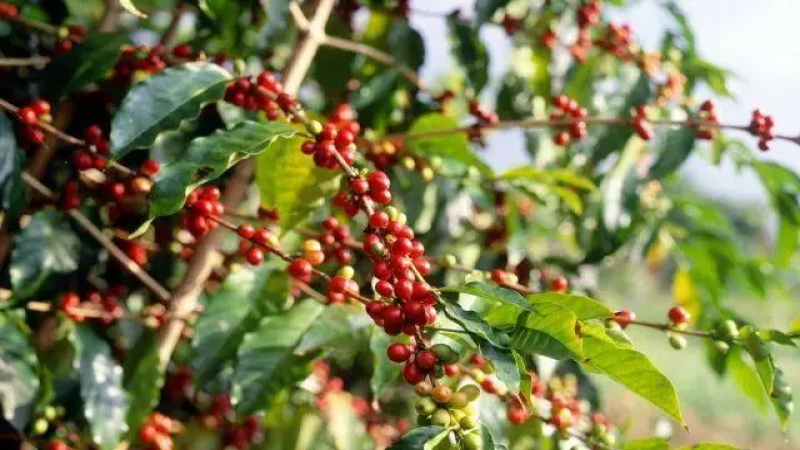
How Guji and Yirgacheffe Shape Ethiopian Arabica Coffee
Ethiopia, the birthplace of arabica coffee, holds an estimated 10,000 to 15,000 varieties, most still not genetically identified. Guji, once part of Sidama, became an independent region through the Ethiopia Commodity Exchange in 2010. Its Hambella sub-region, near the Kochere mountains of Yirgacheffe, grows coffee at 2,100 to 2,300 meters.
Huakui rose to attention at the 2017 Taste of Harvest competition with strawberry and cream notes, and a competitor placed second using the same beans that year. Hambella now has roughly 20 processing plants of varying size, and its harvest runs from November to January. The 7.0 version shows citrus, apricot, and passionfruit flavors.
As the birthplace of Arabica coffee, Ethiopia boasts the world's richest coffee gene pool. Among its regions, Guji has gained international prominence through Huakui coffee beans, becoming a focal point for coffee enthusiasts. This article will guide you through the diversity of Ethiopian coffee varieties, the independent journey of the Guji region, and the evolution of Huakui coffee from its championship win in 2017 to its current 7.0 version. Additionally, we will share the brewing experience of Huakui 7.0 obtained by Front Street Coffee, allowing you to appreciate its unique citrus, apricot, and passionfruit flavors. Whether you are a coffee novice or a seasoned enthusiast, you will gain comprehensive insights into Huakui coffee.
When it comes to coffee, Ethiopia is always an unavoidable name. As the largest Arabica coffee-producing country in Africa, it not only has a long coffee history but also nurtures extremely rich variety resources. It is estimated that there are currently 10,000 to 15,000 coffee varieties in Ethiopia, the vast majority of which have not yet undergone formal genetic identification.
As the birthplace of coffee, Ethiopia is a global treasure trove of coffee genetics. Numerous well-known regions are distributed here, such as Guji, Yirgacheffe, and Sidama. Among these regions, Guji is precisely where the famous Huakui coffee beans are produced.
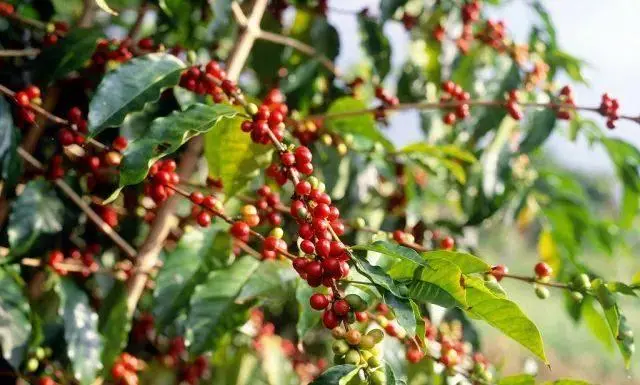
The Guji region was originally part of Sidama until it was officially designated as an independent region by the Ethiopia Commodity Exchange (ECX) in 2010. The most widely known product of Guji is Huakui, which was born in the Hambella sub-region under Guji. Hambella is bordered to the west by the Kochere mountains of Yirgacheffe, with coffee cultivation at altitudes of 2,100 to 2,300 meters, and to the southeast and north by other Guji sub-regions such as Shakiso and Uraga. Currently, the Hambella area has about 20 processing plants of varying sizes, with the harvest season concentrated from November to January of the following year. Huakui truly rose to fame at the 2017 TOH (Ethiopia National Taste of Harvest Competition), where it won first place with its outstanding strawberry and cream flavor. In the same year, Li Jianfei from Beijing, the runner-up in the China region of the World Coffee Brewing Championship, also used Huakui coffee beans in the competition and won second place, further enhancing Huakui's reputation.
The champion Huakui coffee beans came from the "Buku Abel" processing plant set up by DW Company in Hambella. It is a natural-process bean, named "Huakui" by a Chinese green bean importer due to its rich strawberry and cream aroma. Subsequently, DW Company expanded its processing plants in Hambella to four, adding "Buku Saysay," "Haro Soresa," and "Tirtiro Goye" in addition to the original "Buku Abel," with an annual output of approximately 1,100 tons. Strictly speaking, among these estates and processing plants, only the natural coffee produced by the "Buku Abel" processing plant can be called "Huakui coffee beans," which also explains why Huakui 2.0, Huakui 3.0, and Huakui 3.1 appeared in 2018 and 2019, respectively.
Huakui 2.0 was released in 2018, and 3.0 and 3.1 were introduced in 2019. Since then, the Huakui x.0 series has continued annually, evolving to Huakui 7.0 by 2023. However, with the continuous expansion of DW Company's processing plants and increasing annual output, Huakui's flavor has shown significant differences compared to the 2017 original that made it famous.
Front Street Coffee currently offers Huakui 7.0, which also comes from the Buku Abel processing plant and is naturally processed. After brewing with a V60 dripper at a 1:15 coffee-to-water ratio, tasting reveals citrus, apricot, and passionfruit-like sweetness and acidity, with a slight fermented note, a smooth mouthfeel, and a tea-like finish.
The above content is compiled by CoffeeHunters, a coffee news website.


