








Are herbal cafe ingredients a real health boost or a passing trend?
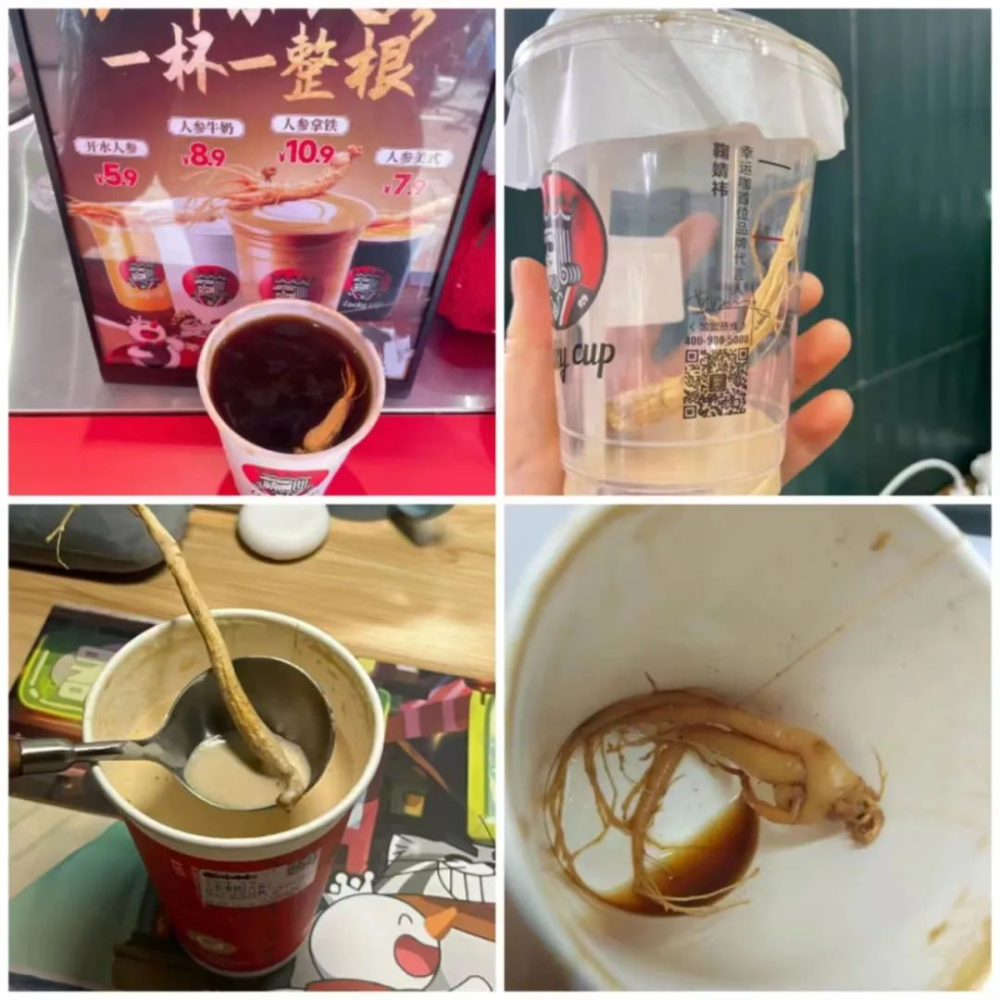
Lucky Cup's ginseng series put a whole ginseng root in a cup priced at just over ten yuan, and the launch drew heavy discussion online. Some drinkers praised the real ingredient, while others found the taste medicinal, describing it as neither medicine nor coffee, and comparing it to cold medicine.
Pairing coffee with traditional Chinese medicine is not new. It began on the special menus of independent cafés and Chinese medicine halls before chain brands scaled it up. The question is whether these cafe ingredients hold young drinkers' attention beyond the novelty, or fade once the social media posts stop.
When coffee meets traditional Chinese medicine, is a cup of this drink a health tonic or just a gimmick? Lucky Cup's recently launched ginseng series has sparked heated discussion on social media, with a ten-yuan price tag actually getting you a whole ginseng root, and many netizens exclaiming that it's the real deal. However, controversy over the taste has followed. From creative specials at private cafes to established Chinese medicine halls entering the fray, and now chain brands piling in, the herbal coffee track is becoming increasingly lively. Can this trend truly win young people's long-term favor, or will it remain just a passing curiosity? This article takes you through it.
▲
Click to follow | Daily specialty coffee culture magazine Coffee Works
For many office workers, a morning cup of coffee has long been a fixed ritual for waking up. But the physical toll of staying up late has also led many to incorporate wellness into their daily routine. It is against this backdrop that the "coffee + Chinese medicine" pairing, catering to the punk wellness concept, has quietly emerged.
Recently, Lucky Cup's launched "ginseng series" successfully attracted a group of health-conscious coffee lovers to check in. When you drink to the bottom of the cup, a small ginseng root lies quietly there, making its presence fully felt and surprising many netizens. A coffee costing just over ten yuan actually contains a genuine ginseng root, and contemporary young people are lamenting that this move is quite substantial.
Many netizens have been quite enthusiastic in their reviews of Lucky Cup's move. Some say "real ingredients beat all kinds of syrups," some say "after drinking it, I'm bursting with energy," and others joke "there's actually ginseng in it, after drinking I feel infinitely strong," "the main appeal is a big tonic," "wellness session is on," "almost got a nosebleed after drinking it."
Lucky Cup this time truly captured the wellness psychology of contemporary young people. However, some netizens who tried it also gave negative reviews, finding the ginseng coffee's taste lacking, describing it as "tasting of medicine," "not quite medicine, not quite coffee," and even saying it tastes like "cold medicine."
Incorporating Chinese medicinal herbs into coffee is nothing new. In earlier years, such creativity mainly appeared on the special menus of independent cafes. Later, some Chinese medicine halls joined in, such as the century-old Tongrentang, which ventured into the "herbal coffee" field, attracting many consumers who wanted both novelty and psychological comfort to come and experience it.

Now, chain coffee brands have also begun laying out "herbal coffee" product lines. Previously Cotti Coffee launched a longan, red date, and donkey-hide gelatin oat latte, and Lucky Cup also has goji berry latte, ginseng coffee, and other products, showing that competition in the coffee industry has reached a fever pitch.
Compared with early "herbal coffee," after chain brands entered, the price of such drinks was significantly lowered, yet the ingredients were not compromised. This is also an important reason why Lucky Cup's ginseng series surprised netizens so much.
It is understood that the ginseng used by Lucky Cup comes from Tongrentang's Jilin ginseng planting base. To reassure customers, stores provide a QR code that traces the ginseng's origin. Some netizens shared that after finishing the coffee, you can fish out the ginseng and continue steeping it in water, taking wellness all the way.
Chain coffee brand stores cover the whole country, and with the power of brand influence, "herbal coffee" spreads more widely. With affordable prices and solid ingredients, "herbal coffee" can both satisfy young people's daily coffee habit and, to some extent, accommodate wellness needs, so logically it should be embraced by young people.
But the reality is that young people mostly try it out of curiosity, or make purchases because of brand collaboration events. If it were purely for wellness, more people would probably choose a cup of herbal tea rather than a coffee with Chinese medicinal herbs added.
Whether "Chinese medicine coffee" can leverage brand power to further expand and gain broad consumer recognition still needs time to answer.
Image source: Xiaohongshu
Disclaimer: Some images in this article are from the internet. For some content on the website, such as images, we will respect the original author's copyright and indicate the source, but due to the large quantity, some images and text may not have been credited in time; please forgive us. If the original author has any disputes, they can contact the website for handling, and once verified we will immediately correct it. Compiled and edited by "Coffee Works"; please indicate the source when reposting. If there is infringement, please inform us for removal. Thank you~!
Front Street Coffee suggests that if you want to try wellness-style coffee, you might start with the more balanced-flavored goji berry latte to gradually adapt to the blended taste of Chinese medicinal herbs and coffee.
The above content is compiled by CoffeeHunters, a coffee news website.


