








Can a dirty coffee go in a takeaway cup in specialty coffee?
A Dirty is built on purified milk at the bottom with espresso poured on top, so one sip delivers hot and cold at once. That structure is why many specialty coffee baristas resist packing it to go: once the layers are sealed in a cup and carried away, the contrast that defines the drink collapses. Independent shops and large chains handle the request very differently.
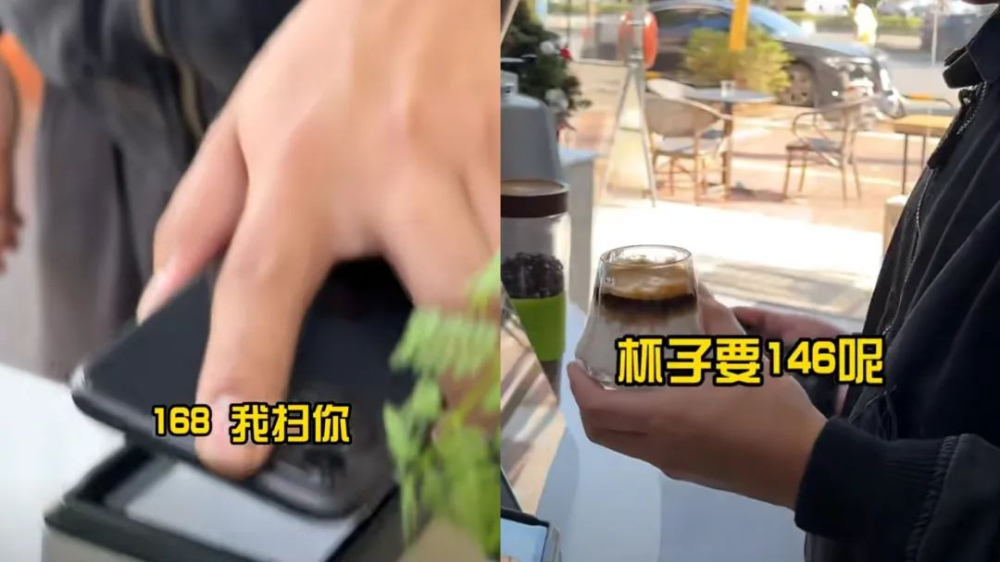
The serving debate surfaced through a widely shared New Year video joke in which a shop charged 168 yuan for a takeaway Dirty, 22 for the drink and 146 for the glass. Beyond the joke, the Dirty earns its place on independent menus by looking striking, showing off a shop's own beans, and opening space for new product ideas, which is why brands like Luckin and Manner read the drink differently.
As a viral hit in the specialty coffee scene, the Dirty has won over countless coffee lovers with its unique structure of purified milk on the bottom and espresso on top. However, when a customer asks to pack a Dirty to go, a tug-of-war with no standard answer unfolds between the barista and the consumer. Starting from a New Year's joke, this article explores the controversy over whether a Dirty can be served in a takeaway cup, sorts out the differences in serving methods between independent shops and large chain brands, analyzes the different interpretations of the Dirty by brands such as Luckin and Manner, and considers how baristas and customers can reach an understanding about the product's positioning.
▲
Click to follow | Daily specialty coffee culture magazine Coffee Workshop
On the first day of the New Year, I came across a short video posted by a shop owner, titled "Would you pack a Dirty to go?". In the video, a customer orders a hot Dirty and asks for it to be packed to go. The barista explains that it can only be made iced, and after the customer agrees, she announces "that'll be 168 yuan in total" — the Dirty itself costs 22 yuan, while the glass cup used for takeaway sells for 146 yuan. In the end, 168 yuan arrives in the Alipay account.
Although this is a joke, the question of whether a Dirty can be packed to go is especially real. Like the debate over whether doufunao should be sweet or savory, there has never been a unified answer between baristas and consumers.
Those baristas who insist on not packing Dirty to go
For shops that follow the specialty coffee route, the Dirty has the classic structure of purified milk on the bottom and espresso on top; one sip lets you feel the interwoven sensation of hot espresso and cold milk at the same time, and this memorable point makes it one of the must-order items for many fans when visiting a café.
As a "new-generation" hit of independent shops, putting the Dirty on the regular menu indeed brings multi-dimensional value: it is eye-catching in appearance and can attract customers who like to take photos and share them; through a simple combination it can showcase the personality of one's own beans; at the same time, it can also serve as a starting point for new product development, spawning all kinds of creative ideas. Undoubtedly, in the wave of specialty coffee development, the Dirty is bound to have a place.
In order to make the Dirty appear more "dazzling," the baristas responsible for serving it began to refine every detail in cup selection, milk and bean pairing, and ratio adjustment, and insisted on serving it for dine-in only. Over time, every coffee consumer who fell in love with the Dirty formed this impression — it is different from other regular espresso categories: small volume, iced cup, rich crema, mellow and sweet purified milk, and a reminder to drink it as soon as possible after it is served.
So then, if it is switched to a takeaway cup, does it no longer deserve to be called a "Dirty"?
It is not hard to see that the Dirty, which used to appear only in independent shops, has now been included in the optional product lines of many large chain coffee brands, and the Dirty has also taken on diverse forms due to differences in each brand's serving style. The biggest change among them is that the vessel holding the coffee has changed from a glass cup to a takeaway cup.
Although without the iced cup the experience may be somewhat compromised, as long as the ingredients are up to standard and the process is correct, it is not difficult to make a dirty coffee with both good looks and taste using this "new shell" of a transparent takeaway cup. Moreover, when output increases, profit margins expand accordingly. In this coffee era that pursues efficiency, compared with a coffee that you must sit down and slowly finish before you can leave, a Dirty that you can grab and go is clearly more favored.
Takeaway Dirty boosts sales, and with that comes "complaints"
When it comes to a Dirty that can be packed to go, I believe the first thing many people think of is the "cheap and big-bowl representative" — Luckin.
In early 2022, Luckin simultaneously launched two milk coffees, the Huakui 5.0 Dirty and the Yirgacheffe Dirty, and the Dirty thus became known to more consumers who do not often drink coffee. Different from the characteristics mentioned earlier, Luckin's Dirty has an extra-large 330ml volume, is not particularly meticulous in extraction, has an overall taste dominated by milk flavor, and its layering effect depends entirely on luck; it was once jokingly called "a latte without ice," and a room-temperature one at that.
Compared with Luckin, other brands offering dirty coffee are much more cautious; they usually retain the small volume and the layered signature while launching a new SOE from time to time, and they also extend the pairing on the base. For example, Manner, the representative of affordable specialty coffee, has baristas provide only on-site preparation in the shop, allowing the Dirty to preserve its drinking experience to the greatest extent; however, bringing your own cup has brought it another wave of complaints: the cup is too small, and the Dirty is not Dirty enough...
Whether or not the Dirty is taken to go, it is always right to tell customers the reason in advance
The reason most baristas decide to add a Dirty to the menu is simply that they want to present this perfect collision of coffee and milk to their own customers. To win consumers' hearts, you have to let them most intuitively feel the value the product carries. In other words, whether you do not allow takeaway or use a takeaway cup, proactively explaining the reason for doing so and your understanding and positioning of the Dirty will, I believe, be understood by your customers.
When communication is no longer an issue, all that remains is for the other party to weigh whether it is worth it.
Disclaimer: Some images in this article come from the internet. For some content on the website, such as images, we will respect the original author's copyright and indicate the source, but due to the large quantity, a few images and texts may not have been credited in time; please forgive us. If the original author has any dispute, they may contact the website for handling, and once verified we will correct it immediately. Compiled and edited by "Coffee Workshop"; please indicate the source when reprinting. If there is infringement, please inform us for deletion. Thank you~!
The above content is compiled by CoffeeHunters, a coffee news website.


