







Why Dripper Flow Rate Affects Pour-Over Extraction Time
Many pour-over enthusiasts apply a two-minute extraction window, yet the same recipe can run long or short when the dripper changes. The cup shape, hole size, and flow guide ribs alter how quickly water passes through the coffee bed. A V60 and a flat-bottom cake dripper can differ by twenty seconds or more even when all other variables stay the same. This means extraction time alone is not a reliable target without accounting for the dripper.
Front Street Coffee has often referenced a two-minute total time in past guides, usually based on a V60. When a brewer using a cake dripper followed that advice, the result ran to two minutes and twenty seconds. The fix is not to force every dripper to match one time, but to adjust grind size, pour structure, or both when flow rate changes. Treat extraction time as feedback, not a fixed rule.
In the practice of pour-over coffee, many enthusiasts directly apply common brewing frameworks, such as controlling the total extraction time to around two minutes. But in actual brewing, the same parameters may show significant time deviations due to different drippers. What exactly is going wrong behind this? The shape of the dripper, the size of the holes, and the distribution of the flow guide ribs all change the flow rate, which in turn affects the final flavor. This article compares the measured performance of the V60 and the cake dripper to explore a core question: When facing drippers with different flow rates, must we re-plan the brewing framework? And how should we view the parameter of extraction time?
Front Street Coffee has often mentioned in past content that the total extraction time for pour-over coffee should be maintained at around 2 minutes. A friend followed the parameters given by Front Street Coffee, but the extraction time ended up at 2 minutes and 20 seconds. After checking one by one, the problem was finally pinned down to the dripper—the example from Front Street Coffee used a V60, while this friend had a cake dripper, which led to the question at the beginning of the article.
What Exactly Is the Difference Between Drippers?
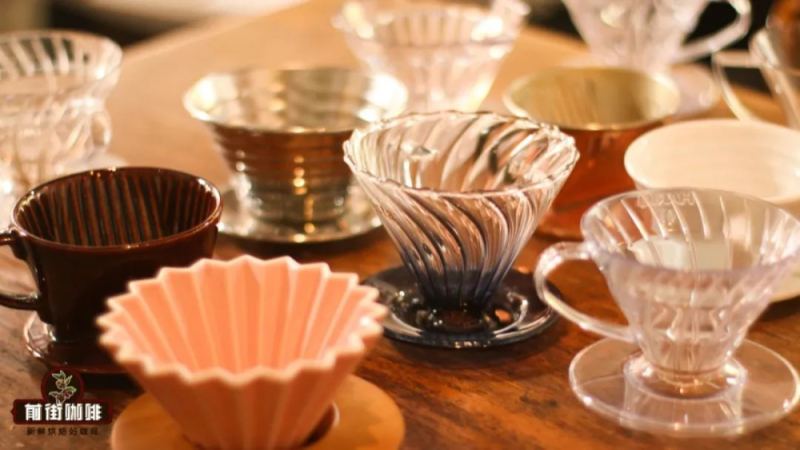
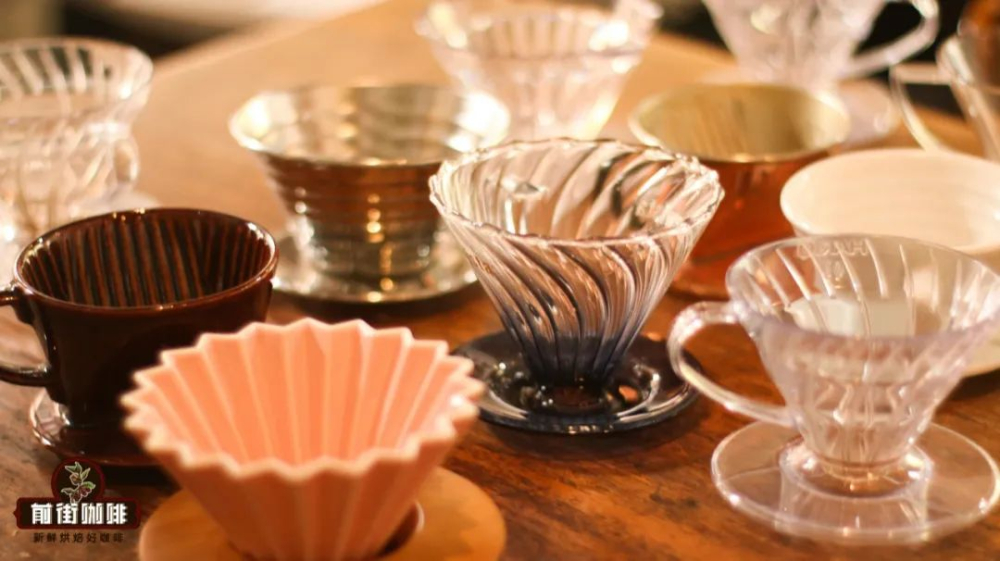
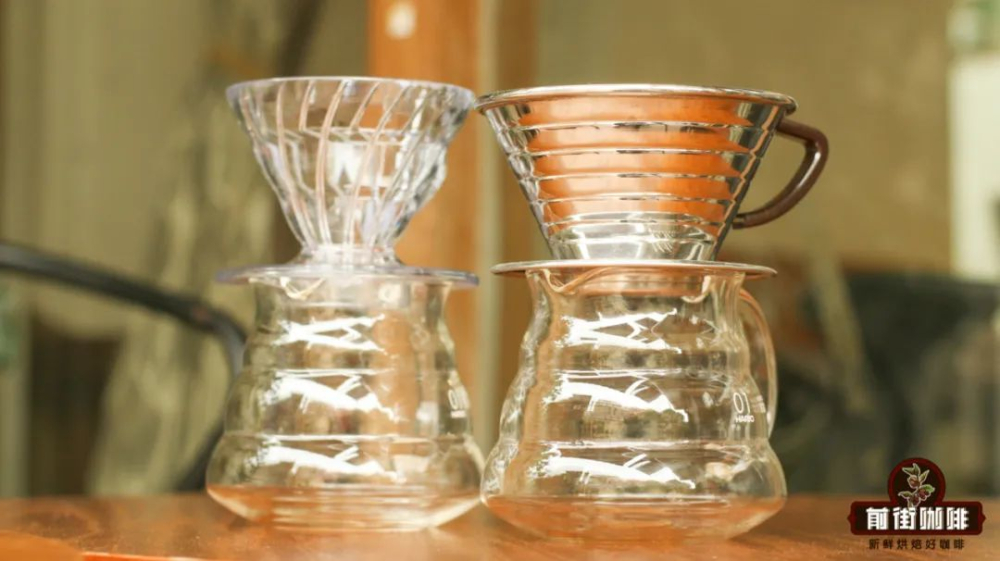
First, one thing must be made clear: the difference between drippers goes far beyond appearance. The shape of the cup body, the size of the outlet holes, and the arrangement of the flow guide ribs all have a substantial impact on the extraction process. If classified by shape, the most common drippers on the market can be roughly divided into three categories: trapezoidal or fan-shaped, conical, and flat-bottomed or cake-shaped.
Whether what changes is the shape, the hole size, or the layout of the flow guide ribs, they ultimately all affect the same thing—flow rate, and this is precisely the variable that most needs to be considered when building brewing parameters. For example, drippers that pursue rich layers and lively flavors usually have a faster flow rate, such as the V60, Chuanliu, B75, Origami, and Ice Eye.
Conversely, if a dripper is intended to present a more balanced taste and a more solid mouthfeel, its flow rate tends to be slower. Kono, the Infinite dripper, flat-bottomed drippers, and cake drippers are typical representatives.
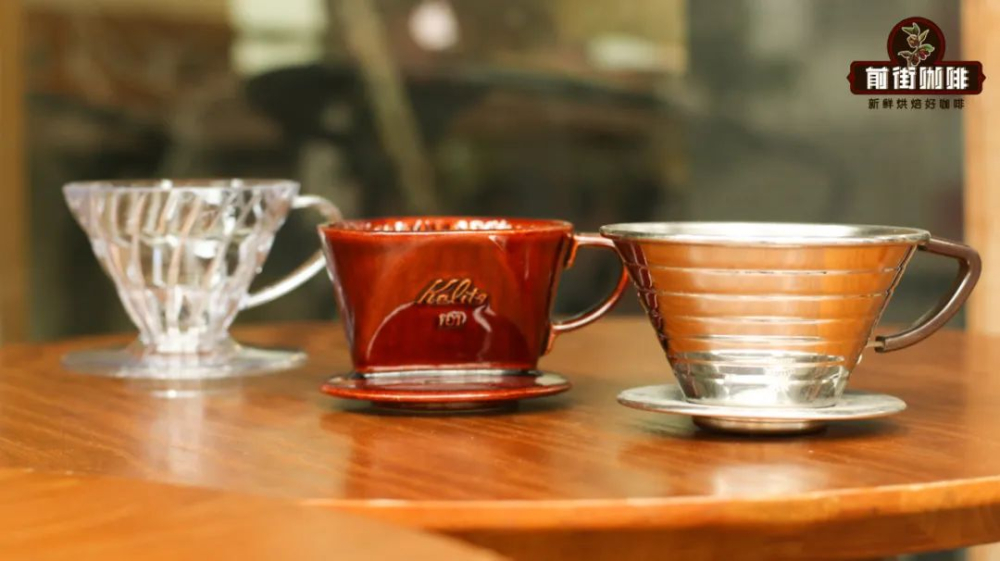
Front Street Coffee previously conducted a horizontal test specifically on dripper flow rates, and the order from fast to slow was roughly: B75 > Chuanliu ≥ Starry > Ice Eye > V60 ≥ Origami > flat-bottomed cake (3 holes) > Kono > Kalita fan-shaped (3 holes) > Infinite dripper > Mellita fan-shaped (single hole).
So returning to the original question: when the dripper is changed, should the brewing parameters and technique change along with it? It is better to directly do a comparative brew, putting the faster-flow V60 and the slower-flow cake dripper together, and see whether the V60 parameter set can be directly applied to the cake dripper.
Beans used in the experiment: Panama Hartmann Geisha Flavor description: pineapple juice, Earl Grey tea, blueberry, apricot Dose: 15g Grind size: 75% passing through a No. 20 sieve Coffee-to-water ratio: 1:15 Water temperature: 92°C Brewing method: three-pour
Both drippers were first bloomed with twice the coffee dose in water (30ml) for 30 seconds. After blooming, 120ml of hot water was slowly poured in a large circular motion for the second pour. When the water level was about to reach the bottom, 75ml was slowly poured in a small circular motion for the third pour, and timing stopped once dripping finished.
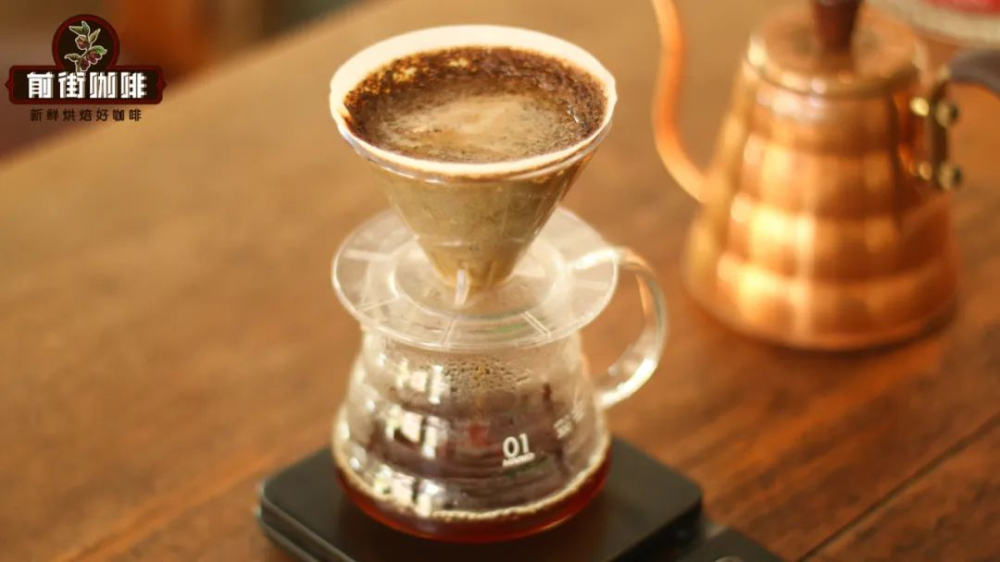
The total extraction time for the V60 was 2 minutes and 1 second, while for the cake dripper it was 2 minutes and 18 seconds. In terms of flavor, the Hartmann Geisha brewed with the V60 had a full-bodied juice feel, with bright, uplifting pineapple juice-like acidity and an Earl Grey black tea note in the finish.
The Hartmann Geisha brewed with the cake dripper showed a clearer blueberry sweetness, softer acidity, also with an Earl Grey black tea aftertaste, and a noticeably fuller body.
From this it can be confirmed: the brewing parameters and technique used for the faster-flow V60 can also be applied to the slower-flow cake dripper.
When Front Street Coffee often says, "Brewing time is best controlled at 2 minutes," this statement actually has prerequisites—a 15g dose, three-pour brewing, and the use of a V60 dripper. If this parameter set is directly transferred to a slightly slower-flow dripper, the extraction time will naturally be extended.
Of course, we can also adjust the parameters in reverse and force the extraction time of a slow-flow dripper back to around two minutes, but doing so often causes shortcomings in flavor, such as a thinner mouthfeel and a weaker taste.
So in the end, we adjust parameters not to pursue a certain time number, but because negative performances appear in the coffee's taste, and only then do we need to correct them by changing the parameters. There is no need to agonize too much over time itself; as long as the final taste in the cup satisfies you, that is enough.
FrontStreet Coffee
No. 10 Bao'an Qian Street, Yandun Road, Dongshankou, Yuexiu District, Guangzhou, Guangdong Province
The above content is compiled by CoffeeHunters, a coffee news website.


