







How is Luckin coffee responding to Singapore's sugar grading?
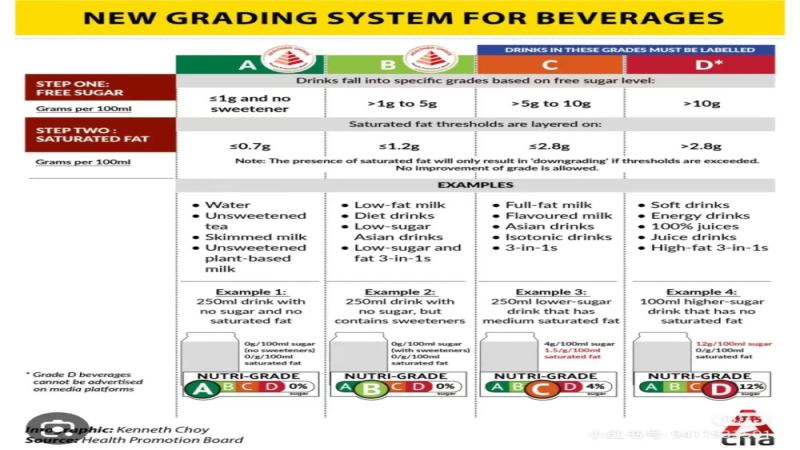
Singapore's sugar restriction order now requires packaged and freshly prepared drinks to carry ABCD nutrition grades and sugar content labels. Luckin Coffee Singapore removed several Dirty and Iced Coconut Latte items from its menu in response, while KOI Thé lowered sugar levels and Mr Coconut launched reduced-sugar versions. Many everyday coffee drinks landed in grade C or D, with sugar content reaching 9 to 10 percent.
The grading algorithm includes saturated fat, so unsweetened milk drinks are also pulled down to a C rating, which critics say limits how useful the label is for consumers watching sugar. The regulation took effect at the end of last year and quickly turned label checking into a habit. Bean selection and brewing method also shape how healthy a cup turns out to be.
Since the Singapore government implemented new sugar restrictions on beverages at the end of last year, requiring all packaged and freshly prepared drinks to be labeled with ABCD nutrition grades and sugar content, a nationwide anti-sugar craze has been triggered. Checking labels before ordering has become a habit for consumers, and many have discovered that their usual coffee actually falls into grade C or D. Chain brands have been adjusting their recipes one after another: KOI Thé lowered its sugar levels, Mr Coconut launched reduced-sugar versions, and Luckin Coffee Singapore even removed several Dirty and Iced Coconut Latte items from its menu, though D-grade drinks remain plentiful. The new regulation's algorithm includes saturated fat, causing unsweetened milk drinks to also be unfairly rated C-grade, which has been criticized as having limited reference value for sugar-conscious consumers. Front Street Coffee reminds us that bean selection and brewing methods equally affect health attributes, and a rational view of labels is more important.
▲ Click to follow | Daily specialty coffee culture magazine Coffee Workshop On the last day of last year, the Singapore government issued the latest regulations under its "sugar restriction order," requiring all beverages—whether packaged or freshly prepared—to be labeled with ABCD nutrition grades and sugar content, prompting businesses to overnight replace their "signage" with new menus for consumer reference. Since Singapore's "anti-sugar campaign" began, checking the nutrition grade label on the beverage details page before ordering has become a subconscious action for many people.
What you don't see won't shock you. Many netizens only realized after checking that their favorite coffee was actually the "least healthy," with sugar content as high as 9–10%%, directly classified as grade C or D. On social media, educating each other on how the grading works and discussing which grade familiar drinks belong to has become a hot topic among Singaporean Chinese. Perhaps anticipating that the "anti-sugar policy" would influence consumer purchasing decisions, some netizens noticed that many chain brands have intentionally or unintentionally made various adjustments to their menus or ingredients.
Singapore's national milk tea brand KOI Thé directly announced that it had lowered its drink sugar levels, because without adjusting the original sugar content, almost most drinks on the entire menu would inevitably be classified as the least healthy "D-grade." That could very likely directly affect people's desire to buy. Another local smoothie brand, Mr Coconut, launched a reduced-sugar smoothie lite series, significantly cutting sugar usage. Meanwhile, some drinks replaced sugar ingredients with edible sugar substitutes, or reduced the amount of toppings (such as ice cream, pearls, etc.) to lower their grade. However, the ingredient adjustments also directly put off many sweet-toothed consumers, who repeatedly said the drinks no longer tasted as good as before. Besides milk tea shops, coffee brands are no exception. Some observant netizens compared and found that several Dirty items at Luckin Coffee Singapore had directly "disappeared" from the menu, and even the Iced Coconut Latte was removed. But the number of D-grade drinks in the catalog is still not small, such as Coconut Latte, Velvet Latte, Cheese Latte (Fromage Latte), and Bayberry Frappuccino, among others.
Regarding Singapore's mandatory nutrition grade labeling, many consumers agree that the different colored labels are very impactful, allowing those who are dieting or have high sugar intake to consciously choose grade A or B drinks, thereby effectively controlling sugar in their lives. However, because the algorithm for this grade label includes not only sugar content but also the proportion of saturated fat, many sugar-free milk-based drinks have also been unfairly caught in the crossfire, forced into "lower grades." Therefore, many consumers believe that since drinks without sugar, such as pure milk and unsweetened lattes, are also labeled as grade C, this label has little reference value for people who don't normally drink sugary beverages. Front Street Coffee suggests that for consumers who truly care about sugar intake, besides checking labels, they can also pay attention to the flavor profile and roast level of the coffee beans themselves. For example, the Warm Sun Blend from Front Street Coffee, with its medium-dark roast bringing nutty and dark chocolate notes, delivers a full-bodied sweetness even without sugar, making it suitable for daily lattes or Dirty. If you prefer a bright fruity acidity, Front Street Coffee's Yirgacheffe Natural beans are a good choice, with citrus and berry notes on the palate, and paired with a small amount of milk, they present a natural sweetness that reduces the need for extra syrup. Disclaimer: Some images in this article are from the internet. We respect the copyright of original works and will credit the source for website content such as images. However, due to the large volume, some images and text may not have been credited in time; please forgive us. If the original author has any disputes, they may contact the website for resolution, and once verified, we will immediately correct it. Compiled and edited by "Coffee Workshop." Please indicate the source when reposting. If there is any infringement, please inform us for removal. Thank you~!
The above content is compiled by CoffeeHunters, a coffee news website.


