








How Does Coffee Brewed With Milk Compare Across Roast Levels?
Brewing coffee with warm milk instead of water changes what the cup delivers. In a Front Street Coffee test, three beans were soaked in 40°C milk at a granulated-sugar grind size for three hours. The medium-roast Mozart bean gave the most balanced result, showing raisin sweetness and a chocolate-milk texture, while the dark-roast and light-roast beans finished with bitterness, smoke, or thin aroma.
The three-hour soak, the same grind used for hot pour-over, produced over-extraction in every pot, so the recipe was shortened to 1.5 hours. That grind question is separate from whether granulated sugar belongs in coffee, since the coarse crystals matched the Ek43 settings of 10.5, 10, and 9.5. A second round using Ethiopian Santavigny beans yielded honey, pineapple, and butter cookie notes.
What kind of flavor performance would extracting coffee with warm milk instead of cold water bring? Front Street Coffee conducted a comparative experiment with three beans of different roast levels and found that the medium-roast bean, when soaked in warm milk, had both fruity and chocolate notes, with the most pleasing mouthfeel. But the experiment also exposed the problem that a milk temperature of 40°C combined with a granulated-sugar grind size and a 3-hour soak easily led to over-extraction. For this reason, Front Street adjusted the plan, shortening the time to 1.5 hours and switching to Ethiopian Santavigny beans, resulting in a smooth milk coffee interwoven with honey, pineapple, and butter cookie notes. This article fully records the experimental process and tasting results, providing a reference for enthusiasts who want to try milk-extracted coffee.

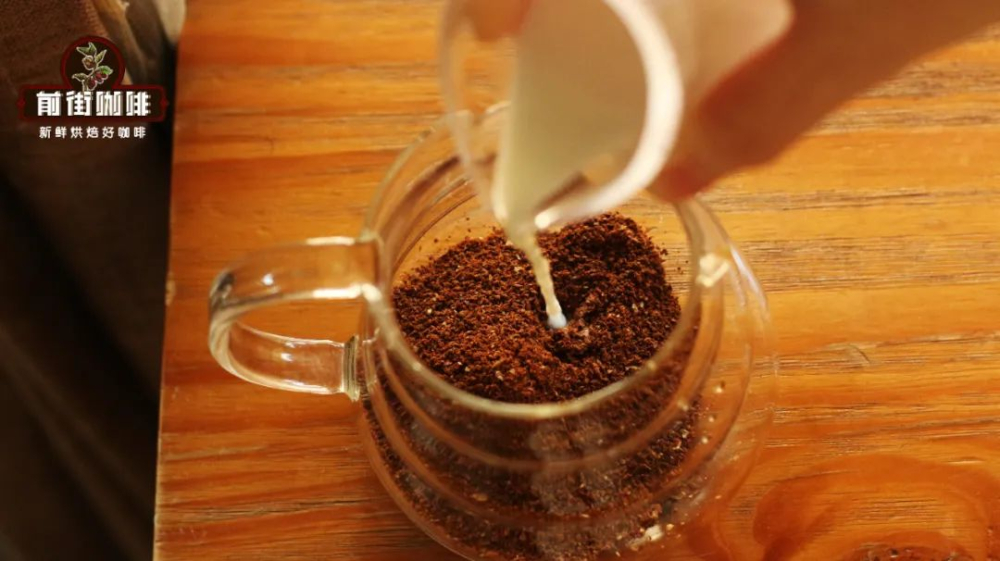
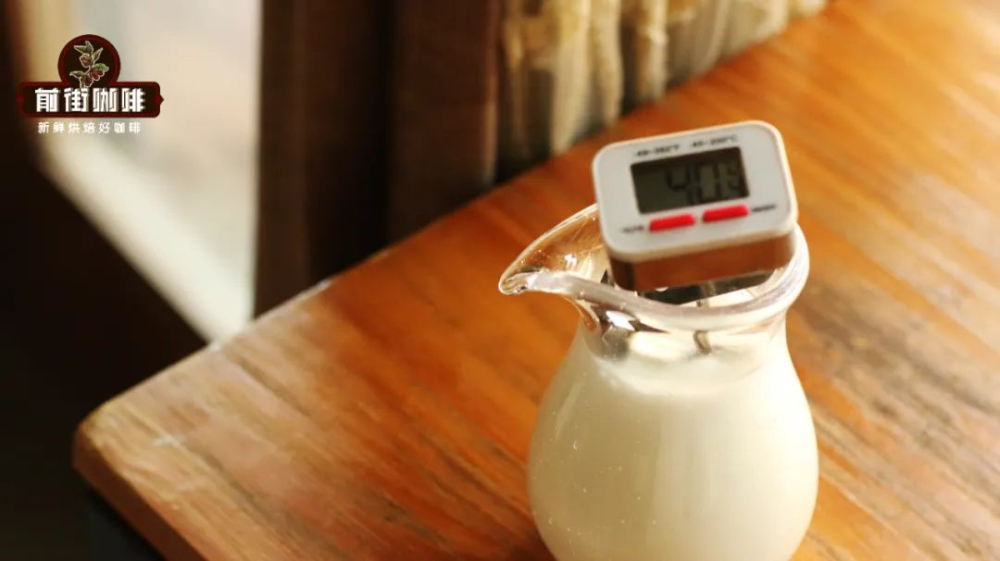
For grind size, Front Street directly applied the grind parameters of hot pour-over to these three beans: based on the passing rate of the Chinese No. 20 standard sieve, Queen's Manor was 75%, Kenya was 80%, and Mozart was 82%, corresponding in turn to settings 10.5, 10, and 9.5 on the Ek43 grinder.
After comparative tasting, Mozart performed most prominently, with raisin-like sweet aroma and the silky feel of chocolate milk pairing just right, though unfortunately a slightly unpleasant astringency remained in the mouth at the finish; the milk coffee made with Queen's Manor had a relatively heavy bitterness, an obvious smoky note, and still carried a bit of astringency after swallowing; the coffee extracted from Kenya Asalia was the lightest in color, with a flavor close to yellow peach-flavored fermented yogurt, and the overall integration was poor, with the aroma also seeming thin.
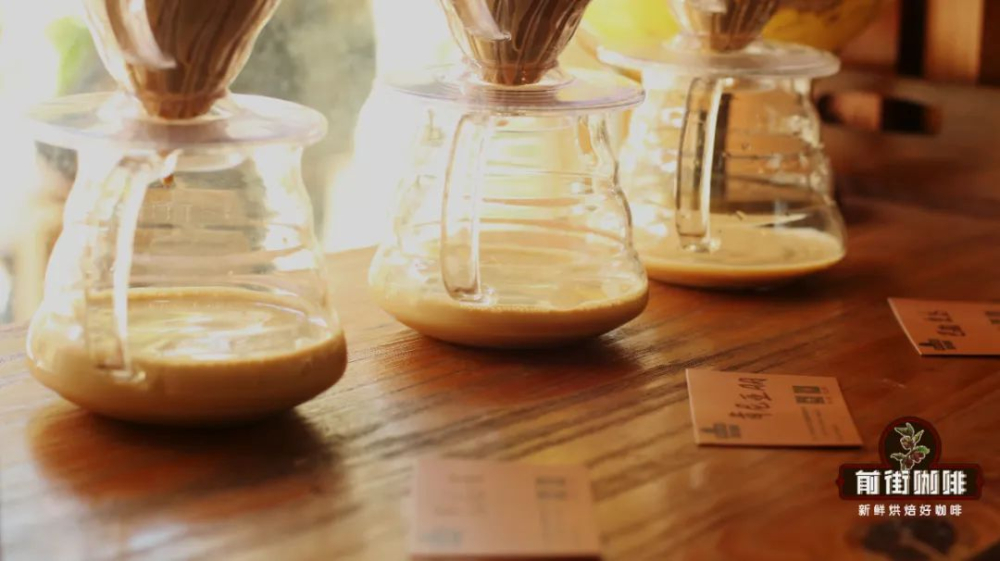
Overall, if you want to make milk-extracted coffee with warm milk, medium-roast beans will be more suitable than dark-roast beans dominated by nutty notes or light-roast beans with prominent acidity, because they possess both rich fruity aromas and cocoa- and chocolate-like flavors. In addition, from the flavor performance of the three pots of coffee, it can also be seen that a milk temperature of 40°C combined with a granulated-sugar grind size and a 3-hour soak makes the coffee very prone to over-extracted off-flavors.
Therefore, in the second round of experiments, Front Street compressed the soaking time to 1.5 hours, kept the other parameters unchanged, and switched the beans to the recently popular Ethiopian Santavigny. During cupping, this bean showed full fruity aromas like pineapple and guava, as well as a long red wine finish, and performed well whether as pour-over or cold brew.
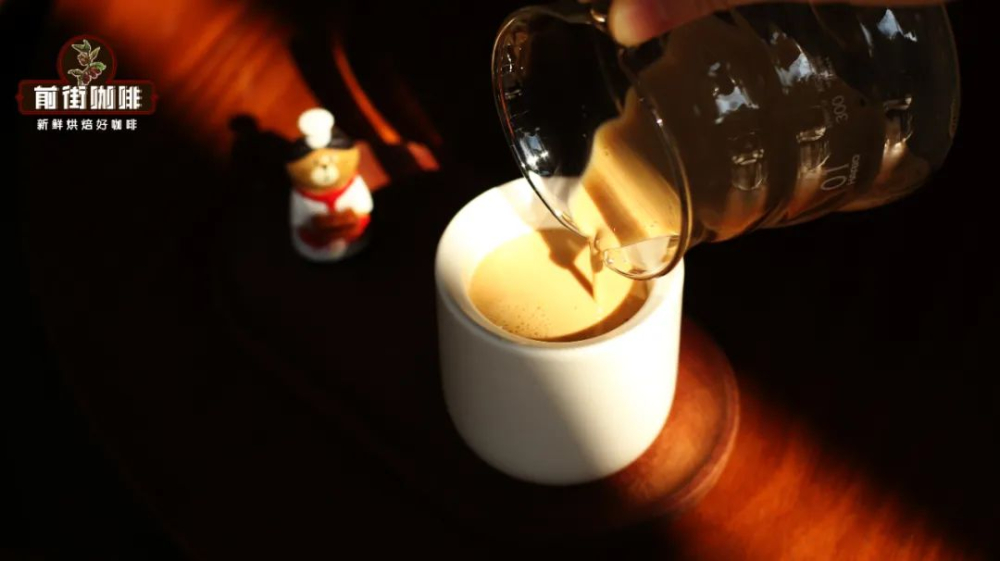
After soaking under refrigeration for one and a half hours, we stirred it evenly and filtered it for tasting. Front Street found that compared with the previous three groups of milk coffee, this round of Santavigny milk extraction had a more palatable coffee concentration, with honey, pineapple, light floral notes, and butter cookie flavors on the palate, rich in layers and reminiscent of liqueur-filled milk chocolate.
If you, like Front Street, are curious about the flavor of coffee soaked in warm milk, you might as well refer to the above experiment, choose a bean you like, and give it a try; you may get unexpected results.
Front Street Coffee (FrontStreet Coffee)
No. 10, Bao'an Qian Street, Yandun Road, Dongshankou, Yuexiu District, Guangzhou, Guangdong Province
The above content is compiled by CoffeeHunters, a coffee news website.


