








Does a longer espresso extraction make the coffee stronger?
Stretching espresso extraction does not produce a stronger cup. The first drops are thick, dark, and intensely flavored with sharp acidity; the flow then turns golden and lighter in concentration; by the end it is yellow, the crema whitens, and the taste is mildly bitter with the weakest aroma. Pulling past the intended yield adds volume that dilutes the drink and flattens the good flavors.
The coffee-to-water ratio depends on the dose of grounds and the weight of liquid in the cup, with 1:1.5 to 1:2.5 as the usual range and 1:2 the common pick, such as 20 grams of grounds yielding 40 grams of espresso. Once liquid passes the maximum threshold of the original ratio, extra time mainly adds watery, later-stage coffee. For a more robust base, use a ristretto instead.
Many coffee enthusiasts pursue a richer taste and often mistakenly believe that extending the extraction time will yield a stronger coffee. By observing the flavor and color changes in the beginning, middle, and end stages of espresso extraction, and combining the relationship between the coffee-to-water ratio and extraction yield, this article reveals that prolonging extraction actually dilutes the concentration and reduces positive flavors. If you want a more robust coffee base, try replacing Espresso with Ristretto (extra-concentrated espresso). Front Street Coffee will also provide you with professional advice.
In daily life, Front Street often encounters friends who prefer a richer coffee taste. They usually request an extra shot, but one customer, when expressing a desire for a stronger coffee, said, "Could you extract my coffee a bit longer?"


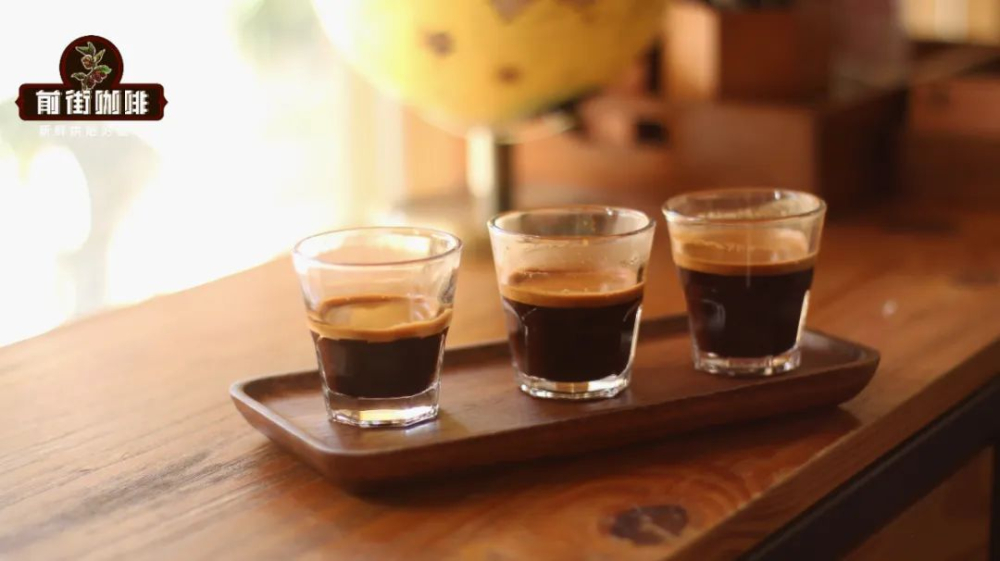
Next, let's carefully observe a complete extraction process again to see how the state of the espresso changes, and use three cups to capture the beginning, middle, and end stages of the coffee respectively.
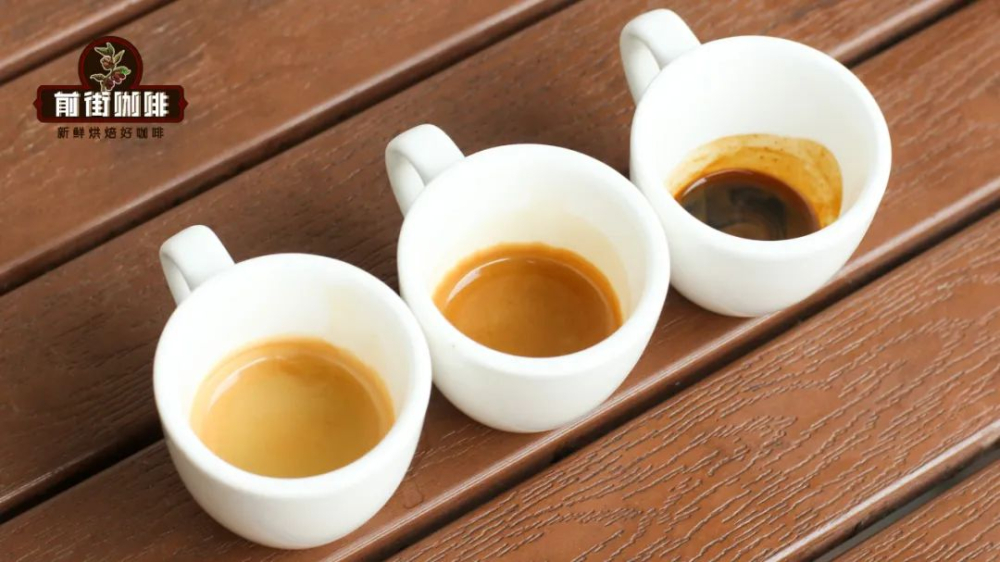
From the first drop of espresso, it is thick like hot chocolate, dark brown, and the most intense in flavor, with a sharp acidity on the palate; then the color gradually lightens toward golden, the flow rate increases, and the concentration is not as high as the first cup, with a more balanced taste. When the electronic scale shows more than 35 grams, the liquid has become completely yellow, and the crema begins to whiten and solidify. The end-stage espresso has a light bitter and slightly sweet coffee taste, with the weakest aroma.
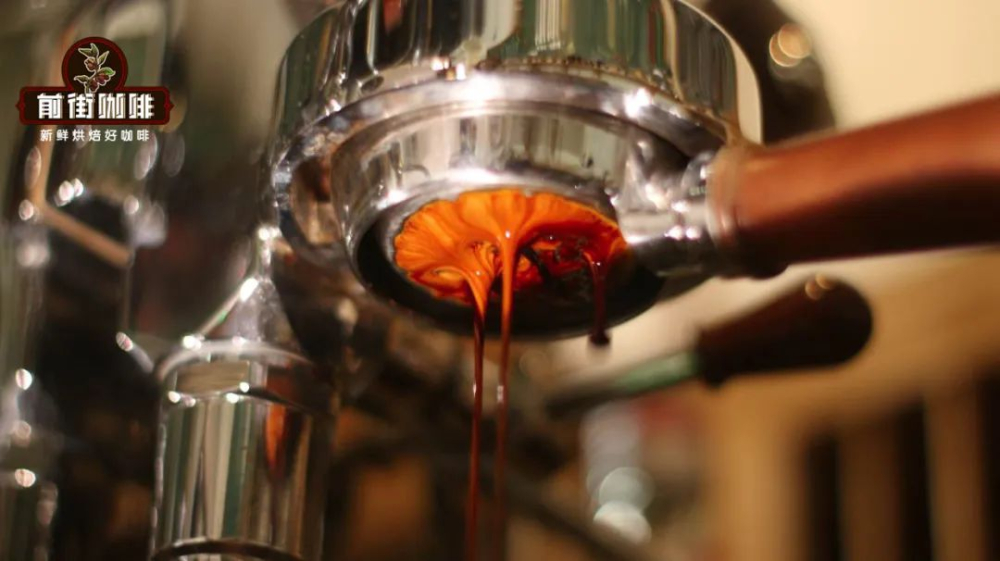
The coffee-to-water ratio is influenced by two factors: the amount of coffee grounds and the weight of the coffee liquid. The generally recommended coffee-to-water ratio for extraction is between 1:1.5 and 1:2.5, with 1:2 being more common. For example, Front Street's original production parameters use 20g of coffee grounds to extract 40g of coffee liquid, while in the experiment, the second and third groups had coffee-to-water ratios of 1:2.3 and 1:2.75 respectively, significantly higher than the initial value.
Combining the previous experimental data, we can conclude that when the grind size and coffee dose remain unchanged, and the liquid weight begins to exceed the maximum threshold of the original coffee-to-water ratio (the tasty one), as the extraction time increases, the more espresso is yielded, meaning more hot water passes through the coffee grounds, extracting more soluble substances, thus a higher extraction yield. At the same time, more water also means the coffee is more diluted, so the concentration is actually lower, and there are fewer positive coffee flavors.
For this reason, if you want a rich, delicious, and more robust espresso base, asking the barista to extract a bit more coffee liquid is clearly unreliable. If you don't want to add more shots of espresso, you might ask if they can replace the Espresso with a Ristretto—yes, just like the Ristretto mentioned by Front Street yesterday.
Front Street Coffee (FrontStreet Coffee)
No. 10, Bao'an Front Street, Yandun Road, Dongshankou, Yuexiu District, Guangzhou, Guangdong Province
The above content is compiled by CoffeeHunters, a coffee news website.


