







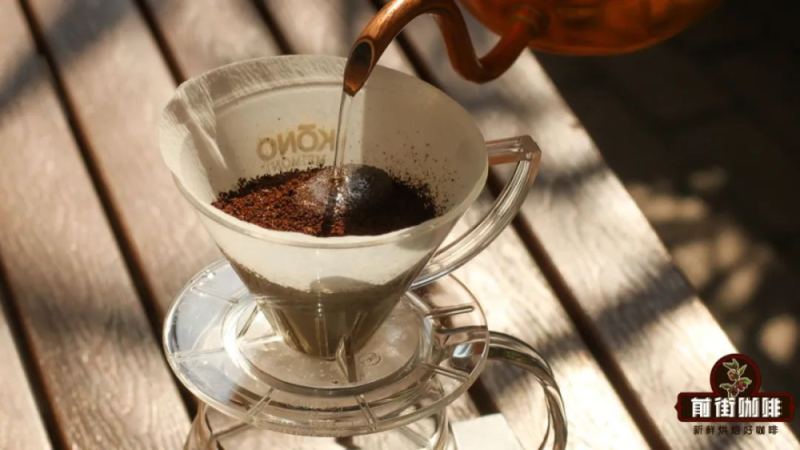
How does blooming release gas from coffee particles in about 30 seconds?
Blooming wets the grounds with a small amount of hot water before the main pour. Roasted coffee holds carbon dioxide, and if those gases are not released first they bubble outward and block water from reaching the coffee particles, which yields a thin body, watery texture, and weak aroma. The familiar formula is water at about twice the grounds weight, 15 grams of coffee with 30 grams of water, then a 30 second wait.
The 30 second figure is a conservative starting point rather than a fixed rule. During blooming, carbon dioxide escapes in an orderly way and soluble material is easier to extract, so the coffee bed should swell evenly into a rounded dome. Skilled brewers watch the bed instead of the clock, adjusting the wait based on how fresh the coffee is. The coffee beans process and roast date both change how long degassing takes.
Before the official pouring of a pour-over coffee, a small amount of hot water is usually used to wet the coffee grounds and let them sit for a moment; this step is called blooming. Many enthusiasts are familiar with the formula of "twice the water amount, wait 30 seconds," but they do not know where this number comes from, nor are they sure whether blooming counts as a stage of extraction. Starting from the gases inside coffee beans after roasting, this article explains why blooming is necessary, how the two parameters of water amount and duration are determined, and what flavor problems under-blooming and over-blooming each bring, helping readers understand that 30 seconds is only a conservative starting point for beginners, and once skilled, one can judge flexibly based on the state of the coffee bed.
Blooming is written as "Bloom" in English, and it is a preliminary step before the official start of pour-over extraction.
Many experienced coffee enthusiasts repeatedly explore water amount, time, pouring technique, and other aspects, gradually summarizing a blooming method with a relatively high tolerance and the widest circulation: use water at twice the weight of the coffee grounds (15 grams of grounds with 30 grams of hot water), pour in circles evenly, let the coffee bed swell into a full "hamburger," and let it sit for 30 seconds.
So, what exactly is this 30 seconds based on? How does the length of blooming time affect the extraction result? To clarify these questions, one must first answer "why bloom?"
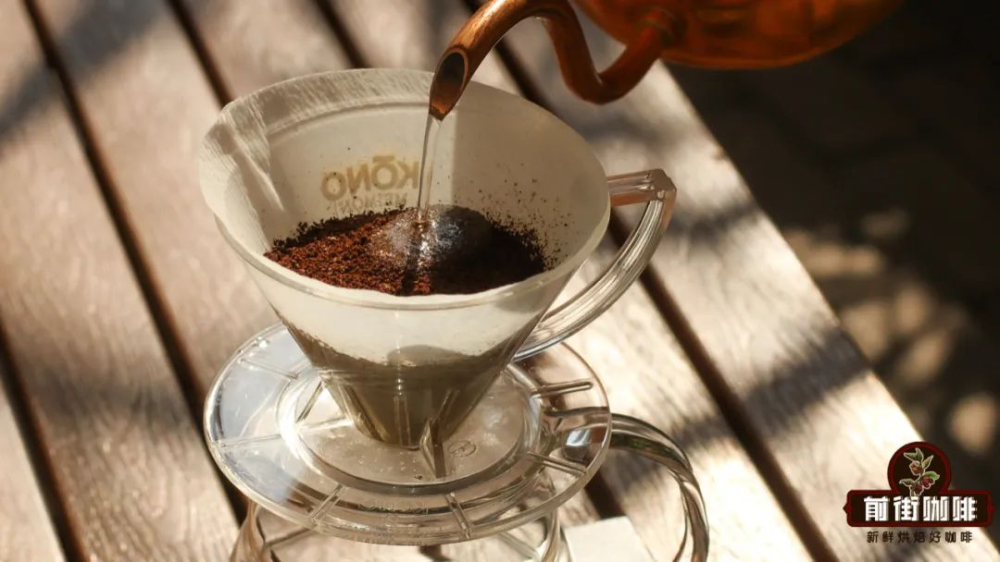
After coffee beans are roasted, a large amount of carbon dioxide accumulates inside them. When hot water contacts the ground coffee, if it is to penetrate deep into the particles and bring out flavor substances, these gases must first be allowed to escape in an orderly way, making room for the water flow. Otherwise, carbon dioxide will continue to form bubbles and rise outward, blocking the path for soluble substances to be released. The resulting coffee is often thin in body, obviously watery, and weak in aroma, which is a sign of under-extraction.
Therefore, the significance of blooming is not only to let carbon dioxide escape first, but also to "awaken" the soluble substances in the coffee, making it easier to control the flavor direction in the subsequent official extraction.
In other words, to obtain a more ideal extraction, you need to give enough water at once, then wait a moment so that the hot water fully penetrates into the coffee particles. This gives rise to two key parameters: blooming water amount and total blooming duration.
Practice has found that coffee grounds can absorb only about twice their own weight in water. The excess cannot directly participate in extraction and will simply fall into the server by gravity; too little water is not enough to wet the entire coffee bed, causing local dryness or inadequate blooming. Thus this easy-to-remember and reliable method has been widely adopted: bloom with twice the water amount.
The timing of blooming starts at the moment the grounds contact the water, usually signaled by pressing the timer button. Coffee beans of different roast levels and freshness contain different amounts of gas and absorb water and release gas at different speeds. Therefore, the blooming duration should depend on the actual degree of gas release, and it broadly leads to three outcomes: under-blooming, moderate blooming, and over-blooming.
Under-blooming means the brewer does not leave enough time for the coffee grounds to degas, and a large amount of gas still bursts out during subsequent pouring, easily causing under-extraction.

Over-blooming goes to the other extreme: the waiting time is too long, the gas has already been fully released, and the water has almost entirely dripped into the server. The swollen "dome" becomes dry, and holes appear between the coffee particles. When water is subsequently poured, such a coffee bed is first punched into a deep pit, and foam only slowly emerges afterward. The resulting coffee often carries bitterness and off-flavors.
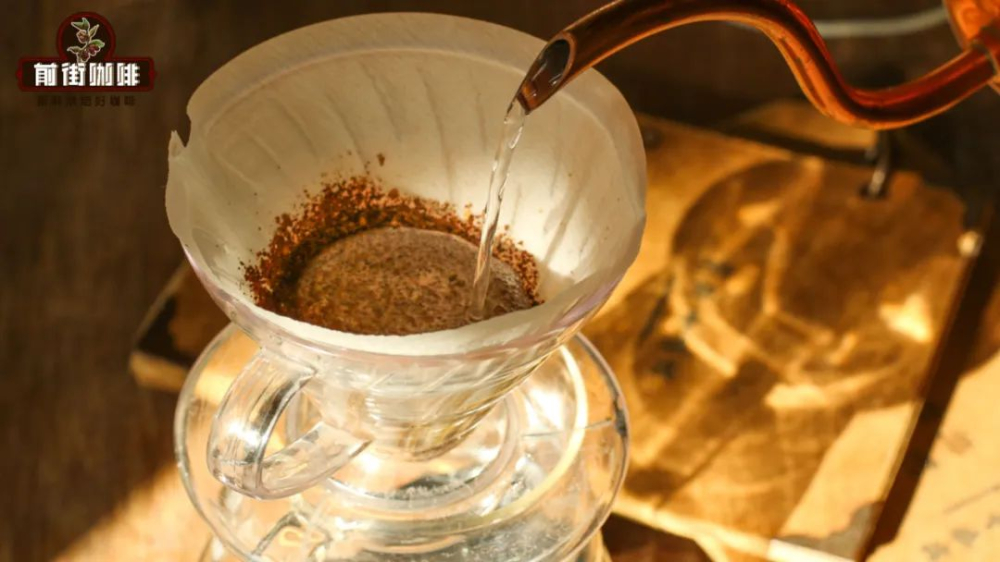
After the blooming water is poured, the puffed "hamburger" should be moist and glossy. When the coffee bed no longer gives off gas, the surface turns dry, and scattered holes appear, it indicates that blooming is nearing its end and you can proceed to the official pouring. It can be seen that moderate blooming is a process lasting several seconds, judged by the naked eye, and not a momentary state.
From observation, most coffee beans have basically finished releasing gas around 30 seconds, and delaying longer easily turns into over-blooming. Therefore, for beginners, or when "blind brewing" a certain bean for the first time, waiting a full 30 seconds is the safest blooming parameter, and it can also give you a cup of good-tasting pour-over. Once you have mastered the extraction principles proficiently, you will be able to judge from the performance during the blooming stage when to stop waiting, and by then you will no longer be boxed in by this concept~
- END - Front Street Coffee
No. 10, Baoqian Street, Yandun Road, Dongshankou, Yuexiu District, Guangzhou, Guangdong Province
The above content is compiled by CoffeeHunters, a coffee news website.


