








How does coffee classification and grading apply to Colombian Supremo and Excelso?
Colombian green coffee grading rests on two measures: the share of defective beans and bean screen size. Jute bags most often carry Supremo or Excelso, and the two are not competing grades. Excelso is the broad export standard set by the Colombian Coffee Growers Federation, so UGQ, EP, and Supremo lots can all ship under the Excelso label once they meet the FNC export requirements.
Supremo generally refers to the largest screen size, while Excelso covers the range that passes export quality checks, which is why nearly all Colombian export bags read Excelso-Cafe de Colombia. Beyond these, buyers may see derivative grades such as Extra, Premium, and Minama, plus Product of Colombia for lots that do not meet export standards. The bag wording shows the coffee specification and supports traceability.
When buying Colombian coffee, what exactly do Supremo and Excelso commonly seen on the jute bags represent? What is the relationship between the two? This article will systematically sort out the grading system for Colombian green coffee, interpreting one by one the specific requirements of grades such as UGQ, EP, and Supremo, from defect rates and screen sizes to FNC export standards. It also introduces derivative grades such as Extra, Premium, and Minama, as well as the use of Product of Colombia for coffee that does not meet export standards. The article also includes a practical naming example of Front Street Coffee Huila daily drinking beans to help readers understand the compositional logic and traceability methods of Colombian green bean names.
The grading of Colombian green coffee mainly depends on two aspects: the proportion of defective beans and the size of the beans. On the jute bags used for export, the two most frequently seen labels are "Supremo" and "Excelso." Many coffee enthusiasts are confused about the difference between these two words and do not understand what grade of beans each corresponds to. Next, let us take a detailed look at Colombia's green bean grading rules.
What exactly does the "Excelso" marked on the jute bags mean?
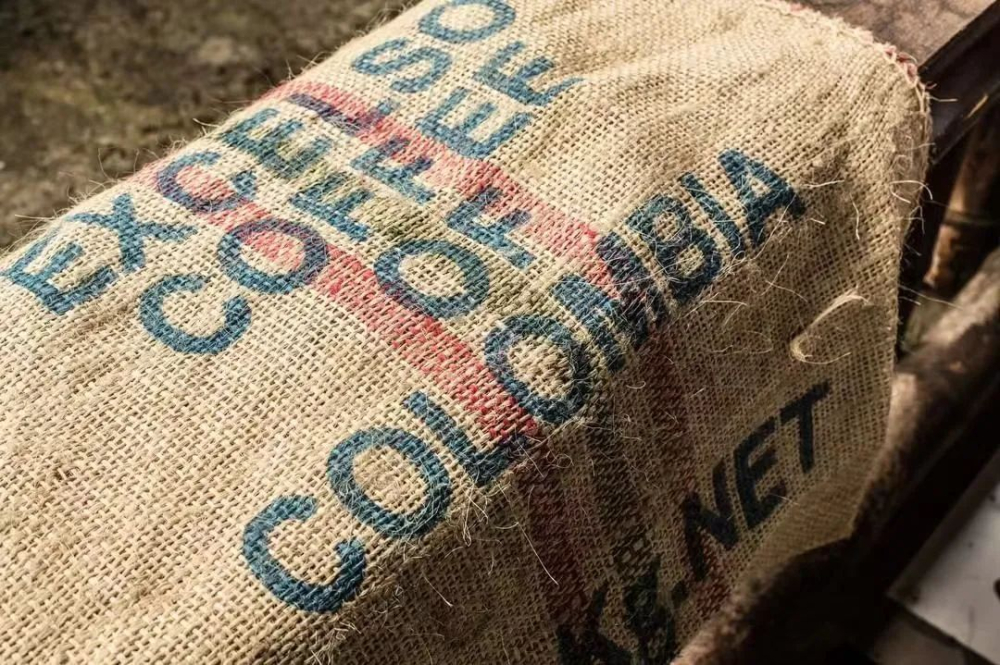
If you carefully observe the jute bags of green beans imported from Colombia into China, you will find that they uniformly bear the words "Excelso-Café de Colombia." In fact, regardless of the screen size of a given batch of green beans, as long as the coffee meets Colombia's export standards, the word "Excelso" will appear on its packaging jute bags. The common grades of these beans include UGQ, EP, and Supremo.
In other words, the vast majority of Colombian green beans currently exported around the world must have the Excelso grade marking on their jute bags. UGQ falls under the Excelso category, EP falls under the Excelso category, and Supremo also falls under the Excelso category.
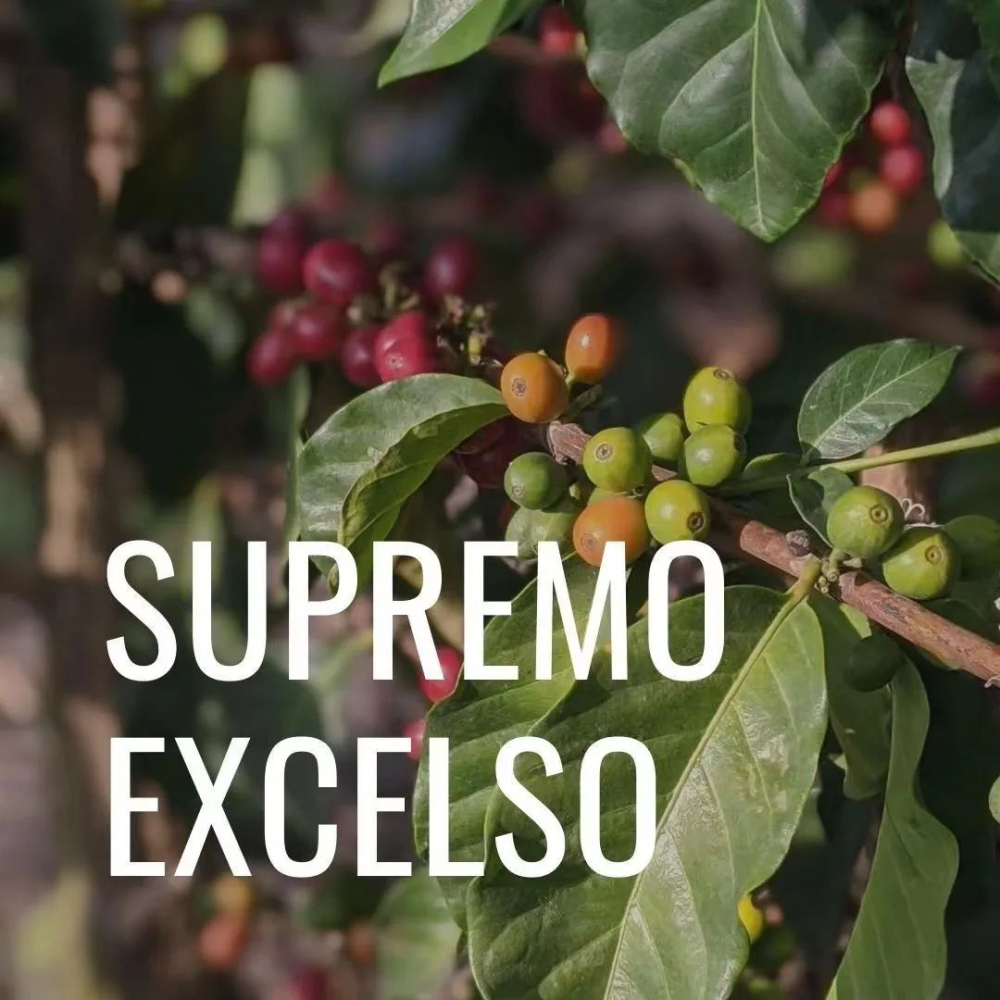
Excelso is the most widely implemented export standard grade promoted by the Colombian Coffee Growers Federation (FNC), and it also represents the highest quality requirement for Colombian green bean exports. Therefore, when the word "Excelso" appears on a jute bag, it indicates that this batch of coffee beans has met Colombia's green bean export standards and holds a quality certificate issued by the FNC.
To reach the Excelso grade, green coffee beans need to meet the following conditions: take a 500-gram sample of green beans, the bean size must be above 14 screen, of which no more than 5% of beans may be between 12 and 14 screen, and overall more than 50% of the green beans must be larger than 15 screen. In addition, there must be no insect damage, the color must be consistent, there must be no off-flavors, and the flavor must be clean. The moisture content must not exceed 12.5%, and the cumulative defect deduction must not exceed 24 points.
Defect classification standards
The National Coffee Committee of Colombia has clear regulations on this. Green bean defects are divided into two types (as shown in the figure below), and the defect grade is assessed by a scoring method. Taking Colombia's most common export specification Supremo 12*60 (5%) as an example, this means that in a 500-gram sample of green beans, a maximum of 12 primary defects and a maximum of 60 secondary defects are allowed.
Screen size classification standards
Although bean size is not the core factor determining coffee quality and flavor, many producing regions believe that plump, uniformly shaped, larger beans indicate that the coffee cherries reached a fully mature state, can develop better aroma, and are also easier to roast evenly, thereby producing a consistent flavor performance.
Colombian green coffee is graded according to screen size, usually using fixed-size screens for sorting, with different specifications corresponding to different hole sizes. For example, if the screen holes are 17 screen, then beans larger than this size cannot pass through the screen, so the larger the screen number, the larger the beans remaining on the screen surface. At present, the three grades most commonly exported by the FNC are Excelso UGQ 12*60 (1.5%), Excelso EP 12*60 (10%), and Excelso Supremo 12*60 (5%).
Excelso UGQ 12*60 (1.5%): UGQ stands for Usual Good Quality. The green bean size is above 14 screen, with 1.5% of green beans allowed to be between 12 and 14 screen, but they must be above 12 screen, and more than 50% of the beans are required to be larger than 15 screen.
Excelso EP 12*60 (10%): EP stands for European Preparation. The green bean size is above 15 screen, with 10% of green beans allowed to be smaller than 15 screen, but they must be above 14 screen.
Excelso Supremo 12*60 (5%): The green bean size is above 17 screen, with 5% of green beans allowed to be smaller than 17 screen, but they must be above 14 screen.
It can thus be seen that what everyone often calls "Supremo" is in fact simply a classification grade based on screen size.
In addition, Colombia has other grading names: beans above 16 screen are called Extra, beans larger than Supremo at above 18 screen are called Premium, and beans whose green bean size is almost entirely uniform at 15 screen are called Minama, and so on. Colombia also has coffee beans that do not reach the Excelso export grade, which are locally called "Product of Colombia" and are usually used to make commercial-grade instant coffee.
In Colombia, every coffee farmer needs to report a number and enter green bean information so that green bean traceability can be carried out later. The naming method for Colombian exported green coffee is generally country + producing region + grade + other information. For example, the green bean name of Front Street Coffee Huila daily drinking beans is Colombia Huila Supremo SC17/18 FNC.
Disclaimer: Some images in this article are from the internet. For some content on the website, such as images, we will respect the original author's copyright and indicate the source. However, due to the large quantity, some images and texts may not have been credited in time. Please understand. If the original author has any dispute, they may contact the website for handling. Once verified, we will correct it immediately. Compiled and edited by "Coffee Review vdailycom." Please indicate the source when reprinting. This article is intended to spread coffee culture. If there is any infringement, please inform us for deletion. Thank you~!
The above content is compiled by CoffeeHunters, a coffee news website.


