







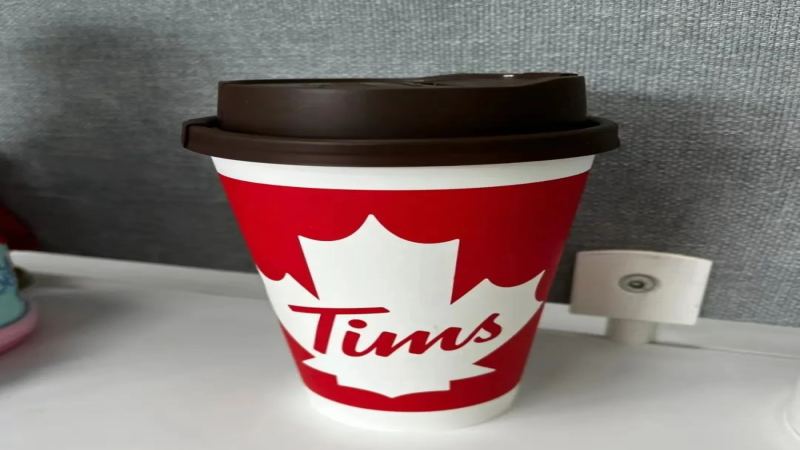
Why Does Tims Fresh Brew Coffee Powder End Up in the Cup?
Customers have reported finding a large amount of coffee grounds at the bottom of Tims China Fresh Brew cups, with photos showing dark particles clinging to the paper cup wall. Customer service called the sediment normal and safe to drink, a response that drew criticism online even though a compensatory coupon was offered.
Fresh Brew is made with a drip coffee machine and resembles pour-over: lower in oil than espresso and clean on the palate. A small amount of fine sediment is common, but grounds visible to the naked eye point to a staff operating error or an equipment fault. Similar complaints date back to November of last year.
Chain coffee brands each have their own memorable signature. Tims China stands out with its bagels and Fresh Brew coffee. Fresh Brew is similar to drip pour-over—low in oils, clean on the palate, and favored by many enthusiasts. But recently, some netizens reported that the Fresh Brew they bought at Tims left a large amount of coffee grounds at the bottom of the cup. Customer service responded that "sediment is normal," sparking controversy. Similar complaints are not new—back in November last year, consumers were already posting photos to complain. A small amount of fine coffee sediment is common, but grounds visible to the naked eye already affect the drinking experience. Was it a staff operating error or an equipment malfunction? Will Tims take steps to standardize its output? This article walks you through the whole story.
▲
Click to follow | Daily specialty coffee culture magazine Coffee Workshop
Every chain coffee brand has its own distinct identity—for example, Luckin's 9.9-yuan coffee, Manner's "anything you ask for" latte art—while Canadian chain Tims China leaves consumers with a deep impression through its bagels and Fresh Brew coffee.
According to Tims' official Weibo, Fresh Brew is equivalent to a pour-over made with a drip coffee machine; it has a lower oil content than espresso and goes down clean and smooth, making it popular among coffee lovers who dislike heavy, oily textures. Many netizens are in the habit of stopping by Tims in the early morning for a bagel with a cup of Fresh Brew as breakfast, using this combo to start a day full of energy.
Recently, a netizen posted on social media saying that they ordered a Fresh Brew at Tims and, when they drank down to the bottom, found a considerable amount of coffee grounds accumulated at the base of the cup. From the photo the netizen shared, you can see black particles clinging to the inner wall of the disposable paper cup, with the coffee grounds at the bottom being the most densely packed.
The netizen then contacted Tims customer service to report the situation, and the reply was that "coffee ground sediment is a normal phenomenon, and it's safe to drink." This response shocked the netizen, who said it was their "first time drinking coffee that was full of grounds in every sip." Although Tims customer service offered a compensatory coupon, the netizen still expressed dissatisfaction.
In the comments, netizens with similar experiences also posted photos and complained, "I spat out my last mouthful—it was like eating a big mouthful of coal cinders." Other netizens speculated that the problem might lie in the Fresh Brew preparation process—for instance, the filter paper not being placed properly when the staff filtered it, which allowed a large amount of coffee grounds to mix into the coffee liquid.
In fact, this situation is not the first of its kind. As early as November last year, a netizen posted photos complaining about drinking coffee grounds in a Fresh Brew ordered at Tims, saying, "By the last sips, there were so many grounds you couldn't even see the white bottom of the cup," and noting that this was not the first time they had encountered it.
Netizens left comments one after another: "I've had this happen—I just gave a bad review on the delivery app," "That's a bit exaggerated," "A tiny bit of coffee particles is normal, but this much is a first," "There were really too many grounds, so I never ordered it again."
After finishing a coffee, a small amount of powder particles sometimes settles at the bottom of the cup. This is because ultra-fine coffee particles fall through with the coffee liquid, similar to the sediment from okara in soy milk or pulp in fruit juice. It is a normal phenomenon that does not change the coffee's taste and is not harmful to the body.
However, when it comes to Tims Fresh Brew, where the coffee grounds left at the bottom of the cup are clearly visible to the naked eye, although it proves the coffee is freshly ground and brewed rather than made from instant coffee powder, it has already affected the customer's drinking experience and brought about a poor consumption experience. This cannot simply be explained away by saying "coffee ground sediment is a normal phenomenon."
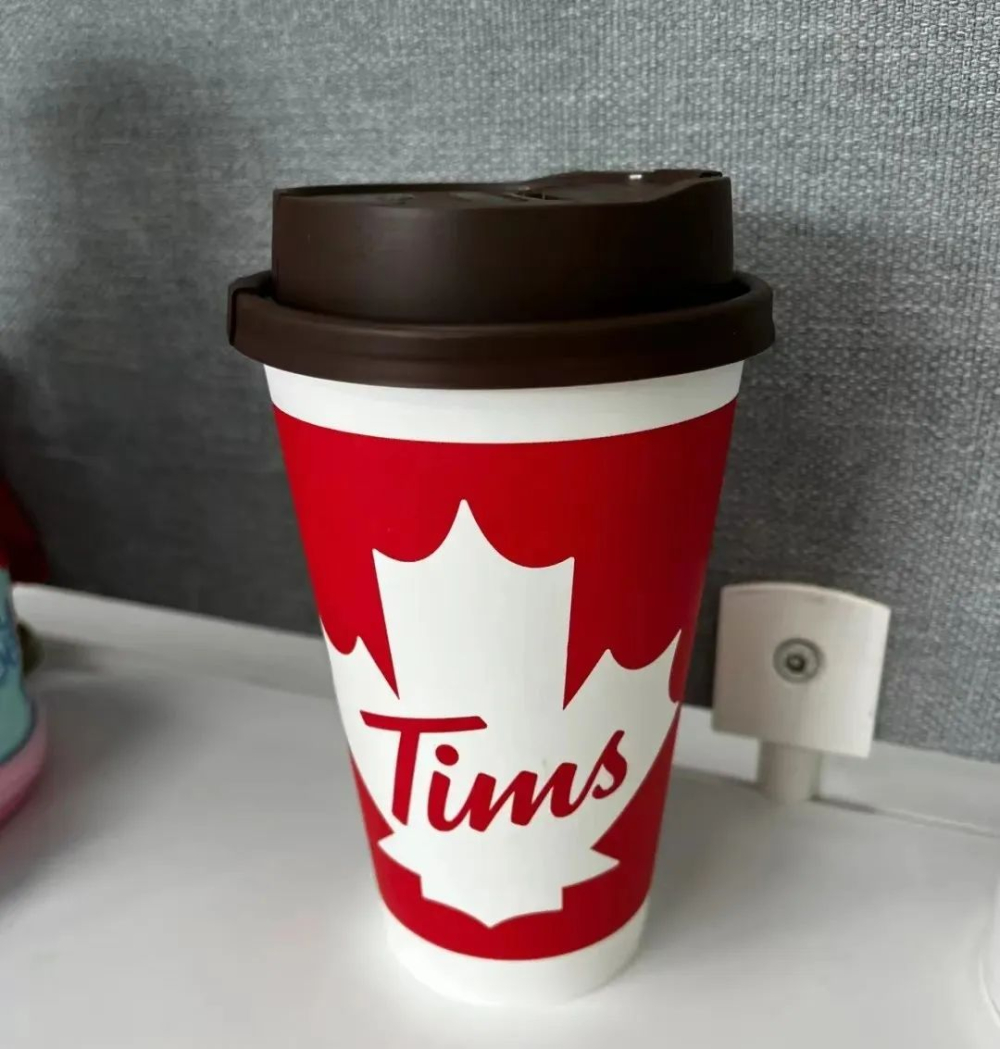
Perhaps the staff handled the coffee improperly, or perhaps the drip coffee machine malfunctioned. But no matter the cause, when consumers make the problem public, their original intention is still to hope that Tims will take it seriously and investigate the cause to prevent similar low-probability incidents from happening again.
As for whether Tims will take measures to standardize its product output in response to this matter, we will just have to wait and see.
Image source: Xiaohongshu
Disclaimer: Some images in this article are from the internet, and for some content on the website, such as images, we will respect the original author's copyright and indicate the source. However, due to the large volume, there may be individual images or texts that have not yet been credited. Please forgive us. If the original author has any disputes, they can contact the website for handling. Once verified, we will correct it immediately. Compiled and edited by "Coffee Workshop." Please indicate the source when reposting. If there is any infringement, please inform us for removal. Thank you~!
The above content is compiled by CoffeeHunters, a coffee news website.


