








How does coffee extracted in small concentrated amounts affect pour-over pouring ratios?
In three-pour extraction, the bloom stays fixed and the question is how to divide the remaining water between the second and third pours. A test used 15 grams of coffee at a 1:15 ratio, so 225 grams total water, with 30 grams for a 30-second bloom and 195 grams split between the two later pours. Three schemes were compared: a larger second pour, two equal pours, and a larger third pour.
Results show that the more water a stage receives, the higher the extraction efficiency of soluble substances at that stage. The height of the coffee bed wall and the speed at which the liquid surface drops serve as practical cues for judging pouring rhythm. The comparison tracked acidity, body and aftertaste using a medium-roast Yunnan Typica, ground at Ek43 setting 10, with 90°C water in a resin V60 dripper.
Three-pour extraction is a common pouring method in pour-over coffee, but many enthusiasts are unclear about how exactly to distribute the two pours of water after the bloom. This article uses 15 grams of coffee with a 1:15 coffee-to-water ratio as the basis, selects Front Street 2013 Yunnan small-bean Typica for a comparative experiment, and sets up three schemes: a larger second pour, two equal pours, and a larger third pour, analyzing flavor differences from dimensions such as acidity, body, and aftertaste. The experiment shows that the more water allocated to a certain pour, the higher the extraction efficiency of soluble substances at that stage, while the height of the coffee bed wall and the speed of the liquid surface dropping are key references for judging the pouring rhythm.

Using three-pour extraction means splitting the total target water amount of the entire pour-over process into three pours: first pour water, pause and wait, then pour water again, wait again, and after the third pour wait for all coffee liquid to finish dripping.
Calculated with the 15 grams of coffee and 1:15 coffee-to-water ratio commonly used by Front Street, the total pouring water amount is 225 grams. Of this, 30 grams is used for the bloom, lasting 30 seconds, which is already the first-stage operation recognized by most people. The remaining 195 grams of water will be divided into two parts and poured one after the other. So, how should these two pours be distributed to be reasonable? And will different distribution methods actually change the coffee's flavor?
With this question in mind, today we specifically discuss: under the three-pour framework, when the bloom parameters remain unchanged, how will the water distribution between the second and third pours influence the coffee's flavor performance?
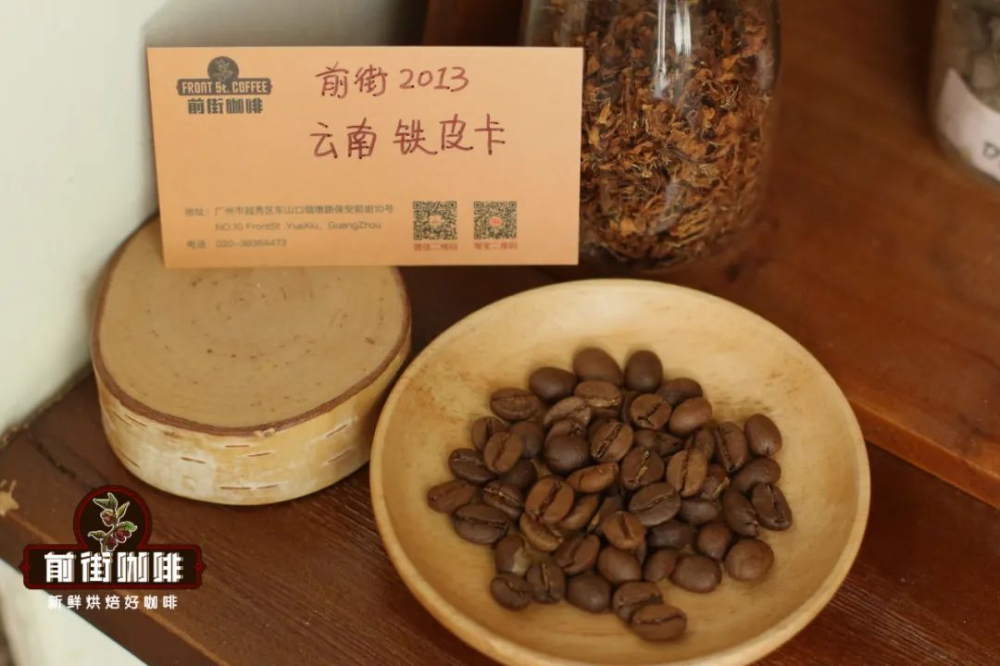
Since the flavor trend is the core basis for judging the results of this water distribution experiment, medium-roasted Front Street 2013 Typica was selected as the brewing subject here. This bean combines chocolate-like sweetness, berry acidity, and brown-sugar-like sweetness, making it easier for us to directly capture the flavor changes brought by water adjustment.
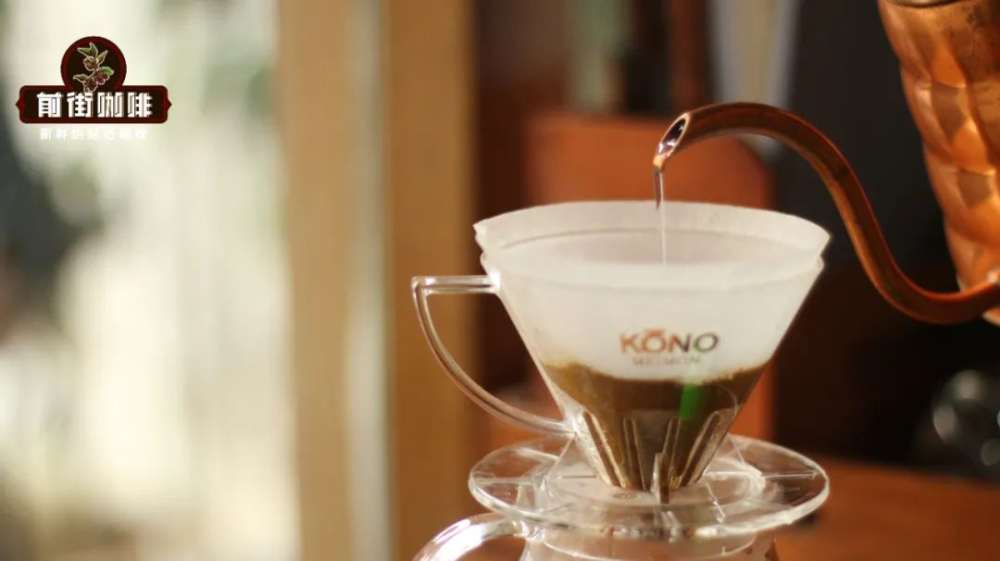
Coffee beans: Front Street 2013 Yunnan small-bean Typica Dose: 15 grams Total water: 225 grams Grind size: Ek43 setting 10 Water temperature: 90℃ Dripper: resin V60
Excluding the 30 grams of water used for the bloom, the remaining 195 grams will be distributed according to the following three groups:
No.1 Second pour (125 grams) > third pour (70 grams) No.2 Second pour (97.5 grams) = third pour (97.5 grams) No.3 Second pour (70 grams)<第三段(125克)
To minimize interference from human factors as much as possible, Front Street unified the starting pouring times for the three groups as 1 second—30 seconds—1 minute 06 seconds. The final drip completion times for the three groups were 2 minutes 10 seconds, 2 minutes 03 seconds, and 2 minutes 05 seconds respectively, with no obvious difference.
Because the three pour-overs were extracted in sequence, there was a certain temperature difference, which in turn affected the perception of acidity, sweetness, and bitterness, but Front Street still discerned subtle differences. In terms of flavor and mouthfeel, all three pots of coffee showed a relatively balanced profile, with acidity, sweetness, and bitterness all present, and all tasted with hazelnut and cocoa aromas as well as a brown sugar aftertaste, but the three pots differed in the details of acidity, body, and aftertaste.
Group one: At the medium-temperature stage, black plum-like acidity was the most prominent, and as the temperature dropped it showed caramel sweetness, but the body was the thinnest;
Group two: The taste was the most balanced, and the aroma was also the most solid, with an overall rounded and full flavor, lacking some of the lively fruit acidity compared with group one;
Group three: The entry had a thick black tea sensation, almost no acidity, and the bitterness was the most obvious of the three pots; after cooling it was slightly astringent, presumably due to slight over-extraction.
In the formal pouring stage after the bloom, the water flow causes the coffee grounds to stir and tumble inside the dripper, thereby improving the extraction efficiency of flavor substances. Improving extraction efficiency at different time periods will bring different flavor effects. Returning to the three-pour framework to understand this, that is, the more water a certain pour receives, the more it can improve the extraction efficiency of soluble flavor substances at that stage.
For example, in group one of the experiment, because the earlier pour was allocated more water, the liquid surface piled the coffee bed wall higher, and acidic substances could be released in large amounts concentrated at this stage, making the coffee show lively, uplifting acidity. At the same time, the later pour had too little water, and after pouring, the liquid surface could not reach the height of the second-stage coffee bed wall; in other words, this portion of particles did not participate in the third-stage extraction, resulting in a relatively thin body.
The situation in group three of the experiment was exactly the opposite. The smaller second pour raised the coffee bed wall to only 1/2 the height of the dripper, and before the acidic substances could be released, the coffee bed was covered by the larger third pour. Not only did part of the hot water slip away directly from the ribs, but fine particles also slid along the edge to the bottom and soaked in the hot water, thereby increasing the release of large molecules (bitter substances).
In summary, Front Street believes that when planning the water distribution for a three-pour method, in addition to considering the flavor trend of the coffee beans, one should also combine it with the water level height of each pour. For example, when brewing light-roasted coffee beans that emphasize floral and fruity acidity, the second pour can be appropriately increased, while observing the speed at which the water level drops to pour the remaining water.
For example, when Front Street brews Panama Boquete Geisha, it uses a staged plan of 30 grams for the first pour (bloom), 120 grams for the second pour, and 75 grams for the third pour, and judges the pouring time point of the last pour according to the liquid surface height, with the reference position being when the water level drops to "1/2 of the coffee bed wall." This gives the coffee both uplifting fruit acidity and a caramel-cream-like mouthfeel and aftertaste.
- END - Front Street Coffee
No. 10 Baoqian Street, Yandun Road, Dongshankou, Yuexiu District, Guangzhou, Guangdong Province
The above content is compiled by CoffeeHunters, a coffee news website.


