







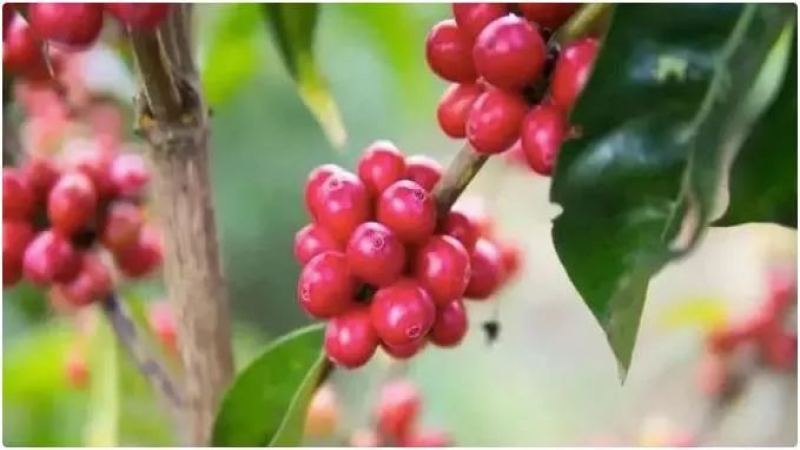
How did Kenya coffee develop its own grading and auction system?
Kenya coffee began in 1893, when French missionaries brought coffee seeds from Réunion Island. British colonial rule then pushed large-estate cultivation, with beans shipped to London until the 1933 Coffee Act created the Kenya Coffee Board. An auction system followed in 1934, and a quality grading plan was drafted in 1935, shifting the industry toward local control and standards based on bean size and quality.
Of the country's 14 producing regions, Nyeri, Kirinyaga, Murang'a, Kiambu and Thika are the most recognized. The SL28 and SL34 varieties came from Scott Laboratories' selection work among 42 coffee trees and still anchor Kenyan specialty coffee. The article also covers AA TOP washed beans from Thika and their pour-over performance.
Kenya is located in East Africa, where the equator and the East African Rift Valley meet, and while it neighbors Ethiopia, it has taken a completely different path in coffee development. From the introduction of coffee seeds by French missionaries in 1893, to large estate cultivation during British colonial rule, to the establishment of a grading system and auction system in the 1930s, Kenyan coffee gradually formed its unique grading standards centered on bean size and quality. Among the country's 14 producing regions, Nyeri, Kirinyaga, Murang'a, Kiambu, and Thika are the most well-known. The two iconic varieties, SL28 and SL34, originated from Scott Laboratories' systematic selection of 42 coffee trees, and to this day remain the soul of Kenyan specialty coffee. This article will also introduce the AA TOP washed beans from the Thika region that Front Street Coffee has obtained and their pour-over performance.
Kenya is located in East Africa, with the equator passing through the middle of the country and the East African Rift Valley running north to south through the entire territory. Its neighboring countries are Somalia, Tanzania, Ethiopia, and South Sudan, and to the southeast it faces the Indian Ocean. The coastal areas within the country are mainly plains, while most other regions are plateaus, with an average elevation of about 1,500 meters. In addition, there are quite a few volcanoes distributed here; Mount Kenya in the central highlands is an extinct volcano reaching a height of 5,199 meters.
Although Kenya is right next to Ethiopia, the birthplace of coffee, its coffee industry started relatively late. In 1893, French missionaries first introduced coffee to Kenya from Réunion Island. Later, during British colonial rule, coffee was grown on large estates, and all the beans produced were shipped to London. In 1933, the Coffee Act was passed, and the Kenya Coffee Board was established, after which coffee sales returned to Kenya itself. In 1934, the auction system was established and has continued to be used to this day. In 1935, the government drafted a plan for a coffee quality grading system. Entering the 1950s, the government implemented an agricultural act called the "Swynnerton Plan," allowing farmers to obtain land ownership, become self-sufficient, and increase their incomes.
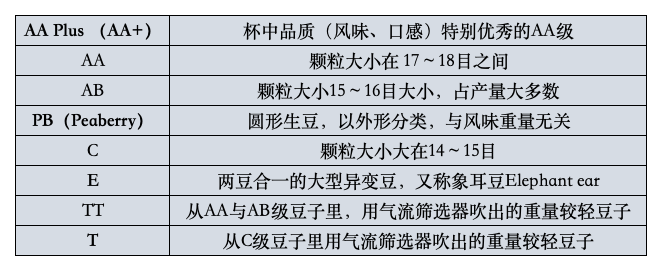
For this reason, Kenya uses the same grading standard for both domestic sales and exports. This standard is based on coffee bean size and quality, with clear regulations on bean size, and the grades include AA+, AA, AB, PB, C, E, TT, and T. The three grades most commonly encountered in the market are AA, AB, and PB.
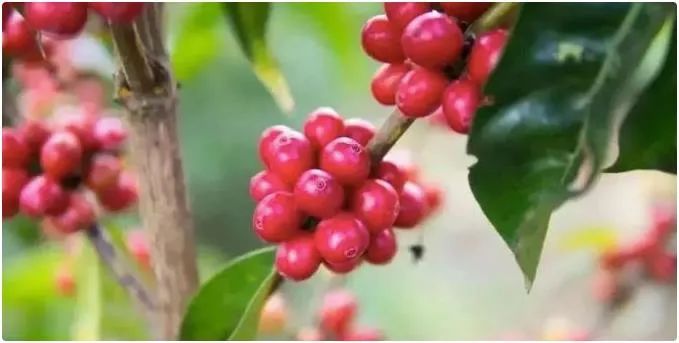
Kenya has quite a few coffee-producing regions, 14 in total, namely Bungoma, Embu, Kiambu, Kirinyaga, Kisii, Machakos, Meru, Mt. Elgon, Murang’a, Nakuru, Nyeri, Thika, Taita Taveta, and Trans-Nzoia. Among them, Nyeri, Kirinyaga, Murang’a, Kiambu, and Thika are the most famous.
When it comes to Kenya's most important and most distinctive coffee varieties, they are undoubtedly SL28 and SL34. These two varieties were first selected in the 1930s, mainly planted in Kenya and other parts of Africa, and later spread to Latin America. They are suited to medium- to high-altitude environments and have decent drought resistance, but are susceptible to coffee diseases. Between 1935 and 1939, Scott Laboratories selected 42 coffee trees from different sources, named with the prefix SL, and studied these 42 trees for yield, quality, drought resistance, and disease resistance. SL28 was selected in 1935 from a single tree in a drought-resistant population called Tanganyika, and genetic testing shows it is related to the Bourbon variety. SL34 came from a tree at the Loresho estate in Kabate, Kenya, and genetic testing indicates it has a genetic connection to the Typica variety.
Scott Laboratories was established in Kenya in 1992 by the British colonial government, with the responsibility of conducting agricultural research for the Ministry of Agriculture and providing technical support and training to Kenyan farmers. The institution was later renamed the Kenya National Agricultural Laboratories (NARL). At present, SL28 trees are planted in many places in Kenya, with tree ages already reaching 60 to 80 years, yet they still remain productive.
Front Street Coffee purchased a lot of Front Street Kenya Asali AA TOP coffee beans from Thika. This Front Street Kenya AA TOP uses the SL28 variety and adopts the Kenyan refined 72-hour washed processing method (K72). Take 15g of Front Street Kenya coffee beans and perform pour-over extraction at a 1:15 coffee-to-water ratio and a water temperature of about 92 degrees. After brewing, when tasted, the aroma of cherry tomatoes and smoked plums can be felt on the entry, the acidity is bright, the mouthfeel is clean, and the finish carries a brown sugar sweetness and a green tea-like texture.
The above content is compiled by CoffeeHunters, a coffee news website.


