








White Coffee Benefits and Side Effects: How Steaming Temperature Changes Your Latte
Milk steamed above 68°C loses sweetness and turns the foam rough and separated from the espresso. Most coffee shops steam milk in the 55°C–65°C range, and a stricter standard of 65±3°C keeps lactose sweetness at its peak. Above 70°C, proteins denature, foam collapses faster, and latte art becomes hard to pour.
Sweetness peaks at roughly 60°C–70°C, according to testing shared by Front Street Coffee. To keep a milk coffee warm longer in winter, preheat ceramic cups instead of pushing steam temperature higher. Coffee for coffee shops should serve milk drinks within this range so texture and flavor hold up from the first sip to the last.
In the cold winter months, a hot latte or flat white is a favorite for many. Quite a few customers ask for the milk to be "steamed a bit hotter," but baristas often insist on the generally accepted steaming range of 55°C–65°C. Why does milk coffee become scalding, less sweet, and rough in texture once the temperature rises? The core reasons lie in protein denaturation and changes in lactose sweetness. Starting from the principles of milk foam formation, this article explains why milk above 70°C leads to difficulty in latte art, separation of foam and coffee, and accelerated foam collapse, and points out that 68°C is already the peak temperature. It also shares the experimental conclusion from Front Street Coffee: 60°C–70°C is the range where lactose sweetness is most pronounced. Finally, it offers practical suggestions, such as using preheated ceramic cups to slow the cooling rate, so that milk coffee maintains its best flavor at a suitable temperature.

In winter, a hot latte is probably the most popular coffee drink—if it had to face a rival, that would likely be the flat white! In the end, they're both milk coffee~ I believe every coffee shop sees a clear rise in milk coffee sales, and as demand for hot milk coffee grows, some extra requests come along with it, such as: Boss!!! This cup cools down too fast, please steam the milk hotter!!!
We all know that whether it's a classic latte or a trendy flat white, most coffee shops follow a customary temperature range for steaming milk—55°C~65°C, a range that is mild and palatable. For beginners just starting out, their teachers usually set a stricter standard: keep the milk steaming temperature at 65±3°C. The reason for such precision is mainly that at this temperature, the milk's sweetness is more pronounced, the overall coffee texture becomes richer, latte art patterns last longer, and it blends better with the coffee—fine and velvety! So generally speaking, the temperature of milk coffee does not exceed 68°C.
But if you use milk foam steamed above 70°C to make milk coffee, you'll find: the foam doesn't make good latte art. Apart from scalding your mouth, this latte also doesn't have much perceptible sweetness. And you can clearly feel that the milk foam and coffee are separated, not blended together, the texture is very rough, and the foam collapses much faster! The overall experience isn't very pleasant, so Front Street generally tells customers that the milk temperature can be a bit higher, but don't scald it~.
(This image is unrelated to 70°C milk; it's just some not-so-pretty latte art by a friend of Front Street.)
Why does the experience get worse when the milk temperature is raised?
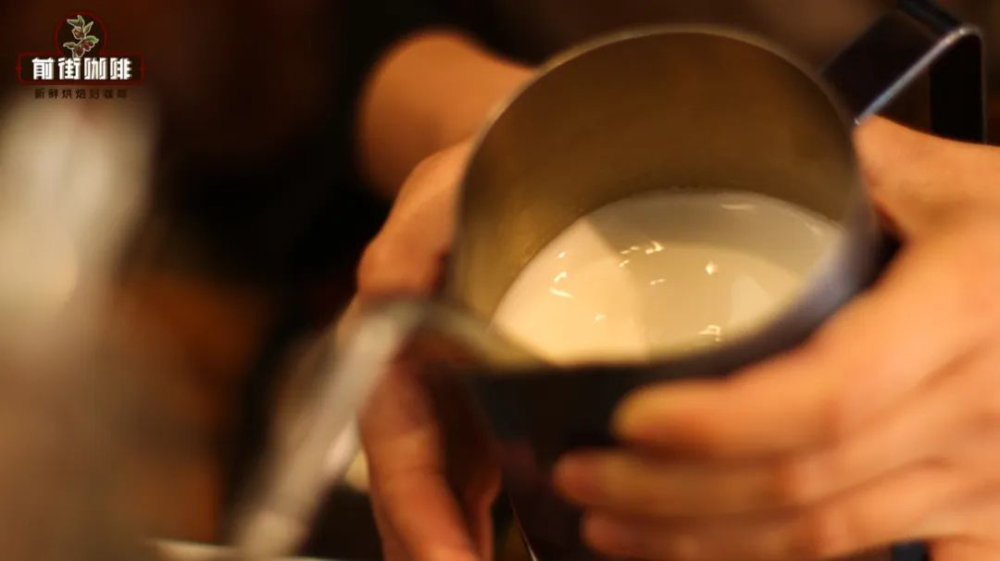
The main reason lies in protein denaturation! Milk foam is mainly composed of proteins in the milk and the air that is injected. When we steam milk, as the temperature gradually rises, the two properties of the proteins that were originally tangled together are gradually released, becoming a form with one end hydrophobic and one end hydrophilic!
And the steam injected during steaming contains a lot of moisture, so the hydrophobic ends of the proteins, in order to avoid this added moisture, wrap around the injected air to form bubbles, while the outer perimeter of the bubbles is a barrier formed by the hydrophilic ends—this is how milk foam is formed.

But this milk foam is not "invincible"; it also has weaknesses. When the milk temperature exceeds 70°C, the proteins will denature or rapidly break down, which directly causes the bubbles formed by the protein wrapping to burst and deteriorate; moreover, after blending, this layer of milk foam will directly separate from the coffee due to the temperature difference between them, resulting in a very rough texture!
(Milk foam steamed to 71°C, collapsing rapidly)
As for sweetness, as Front Street said, it is affected by temperature!
The sweetness of milk comes from the lactose it contains, but lactose does not have as pronounced a sweet taste as fructose. If we quantify the sweetness of sugars, sucrose would score 1.0, while lactose would only be 0.16! Although this seems very low, interestingly, we can perceive different lactose sweetness depending on the temperature of the milk!
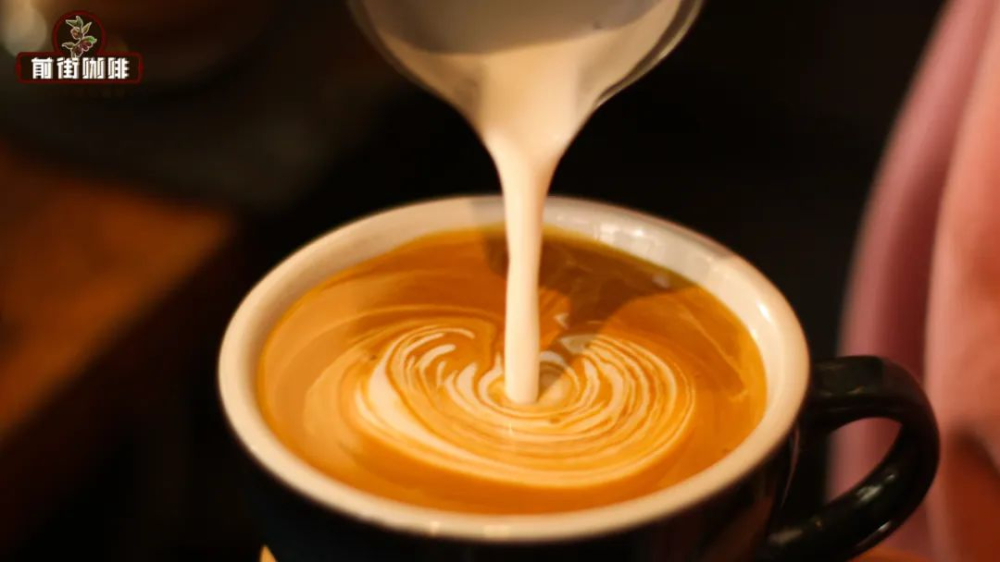
Just like coffee, when a cup of coffee has acidity, at high temperatures we can only perceive a slight sourness, but after the temperature drops, the perception of sourness is amplified, and the coffee will have a more acidic taste experience.
And the 60°C~70°C range is when lactose sweetness is most pronounced! Front Street specially conducted an experiment, testing the sweet taste perception brought by milk at different temperatures, and the facts proved it to be true! Milk in this range makes it easier to perceive sweetness than hot milk at other temperatures.
But once the milk temperature crosses 70°C, our perception of the sweetness of lactose in the milk is greatly reduced, so it doesn't taste as sweet!
Secondly, when the milk temperature is steamed above 70°C, these phenomena become irreversible negative conditions. That is to say, even if you wait for the temperature to drop to a regular level, this cup of coffee will not taste as good as one made directly at that temperature, because the proteins inside have already been damaged and cannot be repaired—although the temperature has come down, it still doesn't taste good!
That's why beginners are given more precise milk temperature requirements, so that they can know where the impassable peak of milk temperature is, thereby avoiding making unattractive and unpalatable milk coffee due to excessive temperature!
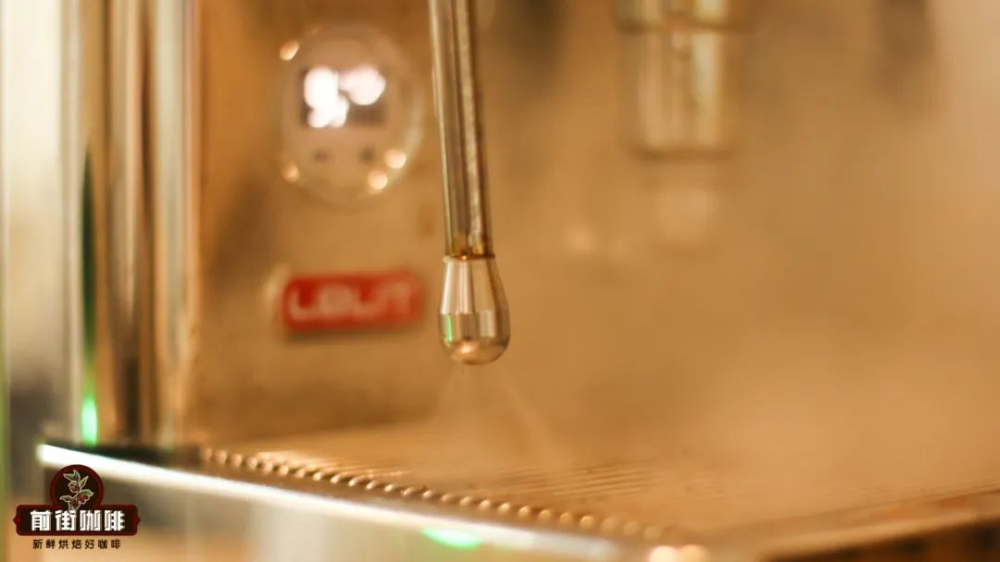
If you're worried that the coffee cools too quickly, we can indeed raise the temperature appropriately, but not too much—68°C is already the peak! In addition, we can also choose ceramic cups as serving cups for milk coffee, because ceramic has certain heat-retention properties. Before use, place them on the coffee machine to heat, or preheat them with hot water in advance—these can effectively slow down the cooling rate of the milk~
- END - Front Street Coffee
No. 10, Bao'an Qian Street, Yandun Road, Dongshankou, Yuexiu District, Guangzhou, Guangdong Province
The above content is compiled by CoffeeHunters, a coffee news website.


