







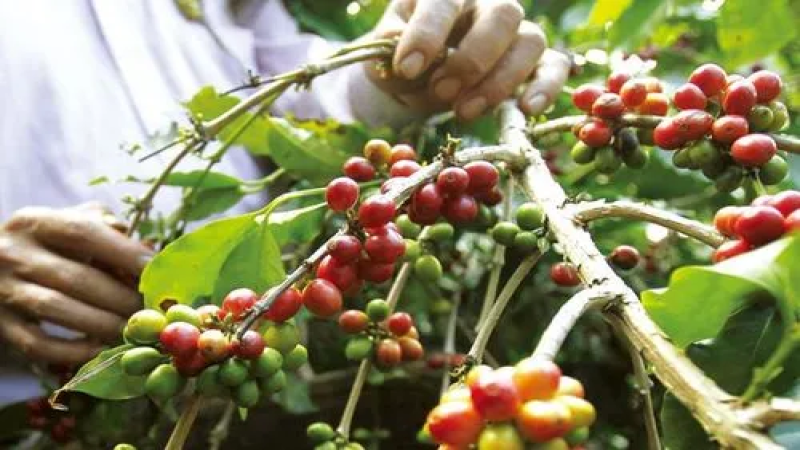
Why Does Bugisu Stand Out Among Uganda's Coffee Regions?
Uganda sits on the equator in East Africa and is one of the few countries with native coffee tree species, namely wild Robusta growing around Lake Victoria. Arabica arrived from Malawi or Ethiopia in the 20th century but struggled against pests and disease, so Robusta became the widely planted crop.
Three main regions define Ugandan coffee today: Bugisu, West Nile and the Rwenzori Mountains, each with its own altitude, harvest season and cultivated varieties. Most of the country lies on the East African Plateau at 1,000 to 1,200 meters, with two rainy seasons and annual rainfall of 1,000 to 1,500 millimeters, conditions that shaped how the crop spread.
Uganda is located on the equator in East Africa, with a unique geographical environment of high altitude and numerous lakes, and is home to one of the few native coffee tree species in the world. This article will start from the historical context, sort out the complete journey of Ugandan coffee from its colonial beginnings, through industry ups and downs, to modern transformation, and introduce one by one the altitude conditions, harvest seasons, and cultivated varieties of the three major producing regions: Bugisu, West Nile, and the Rwenzori Mountains. Whether you are a seasoned enthusiast who loves African beans or a beginner just getting into specialty coffee, you can learn about the unique charm of Ugandan coffee. Front Street Coffee also continuously pays attention to the flavor performance of various African producing regions, bringing more choices to coffee lovers.
Uganda is located in East Africa, with the equator running through it. It borders Kenya to the east, Tanzania and Rwanda to the south, the Democratic Republic of the Congo to the west, and South Sudan to the north. Most of the country lies on the East African Plateau, with numerous lakes and an average altitude of 1,000 to 1,200 meters, so it enjoys the reputation of "Land of Lakes and Plateau".
Uganda has a tropical savanna climate, with an average annual temperature of about 22.3°C, and annual rainfall in most areas ranging from 1,000 to 1,500 millimeters. March to May and September to November each year are the rainy seasons, while the remaining periods are divided into two dry seasons. Thanks to superior natural conditions, fertile soil, and a pleasant climate, coffee has naturally become one of Uganda's main cash crops.
Uganda is one of the few countries in the world with native coffee tree species, and its local variety is wild Robusta growing around Lake Victoria. Arabica was introduced to Uganda from Malawi or Ethiopia in the 20th century. However, because Arabica has relatively weak resistance to pests and diseases, it was not able to be planted on a large scale; in contrast, Robusta, with its stronger disease resistance, gradually came to be widely cultivated.
In 1925, coffee exports accounted for only 1% of Uganda's total export trade. By 1929, the Coffee Industry Board was established, and planting and production organized in the form of cooperatives promoted the growth of the coffee industry. In 1940, coffee rose to become Uganda's most important export product. But in 1990, affected by multiple factors such as drought, a sharp drop in coffee prices, and farmers switching to other crops, coffee production fell by 20%. It was not until the 1990s, when Uganda's coffee industry began to move toward modernization, that the situation gradually improved.
Uganda's coffee-growing areas can be roughly divided into three sections: Bugisu, West Nile, and the Rwenzori Mountains. Producers in these regions are mostly organized in the form of alliances or cooperatives. Wugar (washed Arabica) and Drugar (natural Arabica) are terms unique to Uganda. Uganda's coffee harvest seasons are mainly divided into two.
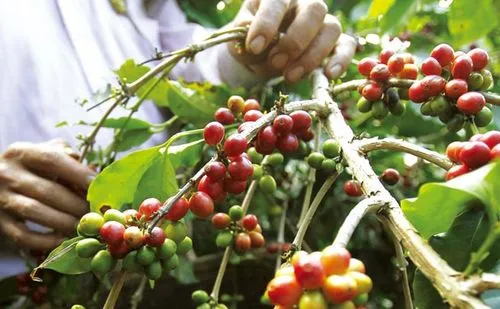
Bugisu
This producing region is located in eastern Uganda, in the area of the Elgon Mountains bordering Kenya, and has excellent soil, a suitable altitude, and a unique microclimate. The altitude range is between 1,500 and 2,300 meters. The main harvest season lasts from October to March of the following year, while the secondary harvest season is from May to July. The main Arabica varieties cultivated include Kent, Typica, SL14, and SL28.
West Nile
The West Nile producing region is located in northwestern Uganda and grows relatively many Arabica varieties. The area near Lake Albert is mainly Arabica, while further north more Robusta is cultivated. The altitude is between 1,450 and 1,800 meters. The main harvest season is from October to January of the following year, and the secondary harvest season is from April to June. The cultivated varieties include Kent, Typica, SL14, SL28, and native Robusta.
Rwenzori Mountains
This producing region is located in western Uganda, in the Rwenzori Mountains near the border with the Democratic Republic of the Congo. Drugar (natural Arabica) is a common processing method in this area. The altitude is between 1,200 and 2,200 meters. April to July is the main harvest season, and October to January of the following year is the secondary harvest season. The main crops grown are Kent, Typica, SL14, SL28, and native Robusta.
The above content is compiled by CoffeeHunters, a coffee news website.


