







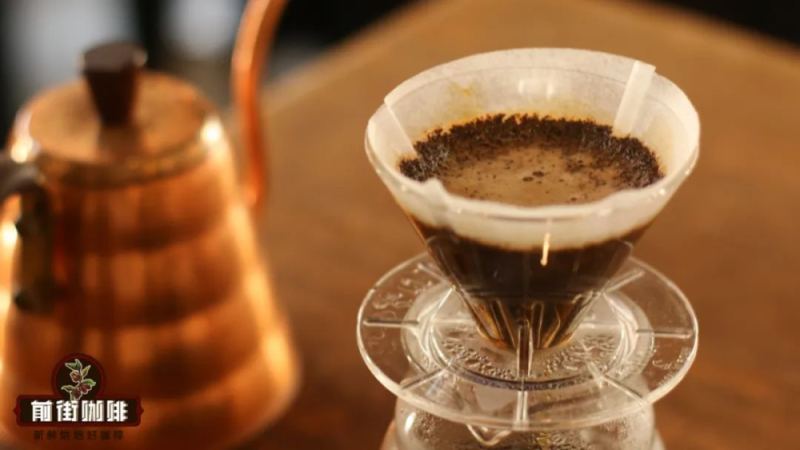
Why does coffee bean roaster quality matter when brewing temperatures drop?
When room temperature falls, hot water loses heat faster during pour-over brewing, so the later pours arrive cooler than intended. At roughly twenty-something degrees Celsius, 500 ml of brewing water drops about 3°C per minute; below 10°C it falls about 5°C per minute. A three-pour brew can end near 89°C, lowering extraction and leaving the cup flat and thin.
Four adjustments counter the loss: preheat the spout, raise the starting water temperature, increase the water volume, and lower the pouring height. The effect traces back to falling temperatures changing heat loss, not to the coffee bean roaster. The same heat-loss mechanism sits behind the coffee grounds adsorption effect discussed recently, so the coffee bean roaster is not the cause here.
When the weather turns cold, many coffee enthusiasts find that the same beans and the same technique produce a cup that tastes flat and less flavorful. This isn't a problem with the bean roasting—it's the low temperature changing the rate at which hot water loses heat, which in turn affects extraction efficiency. Starting from the principle of heat loss, this article explains in detail how cooling leads to under-extraction, and offers four actionable improvements: preheating the spout, raising the water temperature, increasing the water volume, and lowering the pouring height. It ends with Front Street Coffee's store information to help you consistently produce a delicious pour-over even in the cold season.
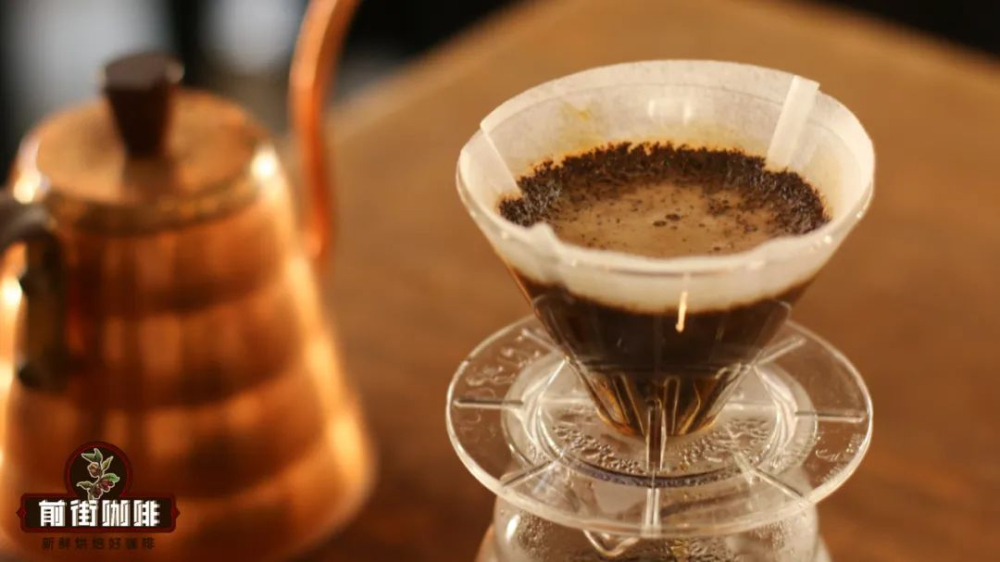
Objectively speaking, the roaster has already shouldered plenty of blame for "Is this bean roasted too dark?"—it's really unfair to make them take the fall for something new.
In fact, this is driven by the same culprit behind the coffee grounds adsorption phenomenon that's often mentioned lately—"falling temperatures." I wonder if you recall that two months ago, Front Street wrote an article about cold-weather precautions, which broadly explained the various effects of lower temperatures. Today we'll take a closer look at why, after the temperature drops, coffee's flavor is so noticeably affected.
Increased rate of heat loss
When the ambient temperature drops, hot water naturally dissipates heat much faster. Which part of the brewing process does the rate of heat loss affect? The answer is the hot water used for brewing. It doesn't stay at a constant temperature; at a room temperature of around twenty-something degrees Celsius, 500 ml of hot water cools by about 3°C per minute. If you brew a pot of coffee with a three-pour method, by the third pour the water temperature has actually dropped to around 89°C.

Now that room temperature has fallen below 10°C, hot water dissipates heat even faster. Compared with before, the same 500 ml of hot water now cools by about 5°C per minute. So if you still brew with the water temperature parameters you used previously, the resulting extraction yield will inevitably be lower than before—and once the extraction yield drops, the flavor naturally won't be as full. So we can tackle the changes brought by falling temperatures in the following ways.
1. Preheat the spout
Surprising, isn't it? The first step isn't raising the temperature directly. Before brewing, the spout itself is at room temperature; it won't heat up on its own just because the kettle holds hot water. So before you officially start brewing, pour out a small amount of hot water to preheat the spout, thereby reducing the drag it places on the water temperature during the blooming phase.
2. Raise the water temperature
Since it cools so quickly, we might as well raise the water temperature directly to offset its effect. On top of your usual brewing temperature, increase it by 1–2°C—enough to compensate for the lost heat and get extraction back on track. For example, if you originally brewed with 92°C water, you can raise it to 93°C when room temperature is low.
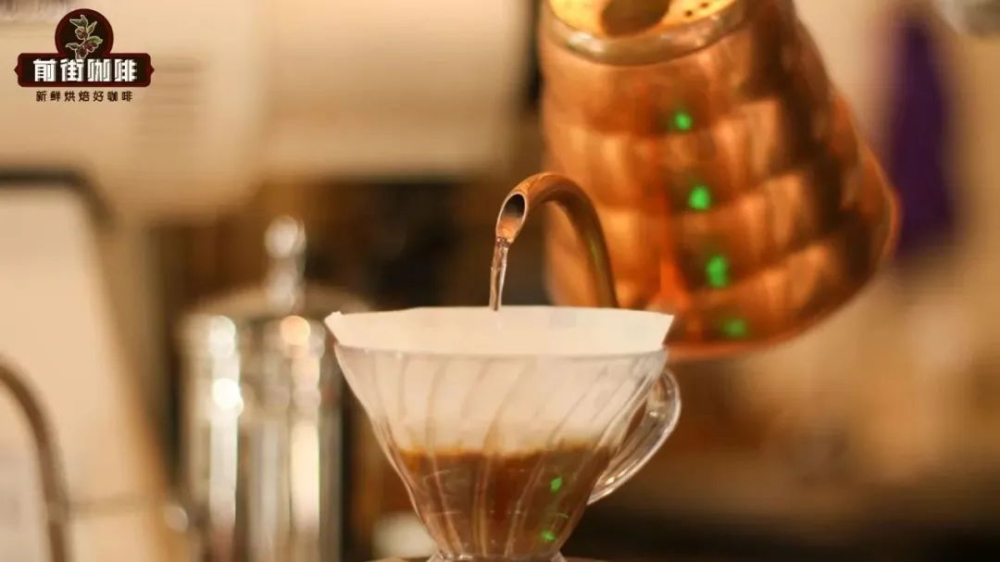
3. Increase the water volume
How quickly hot water cools depends on the volume of water: the larger the volume, the slower the temperature drops. As mentioned earlier, 500 ml of hot water at 10°C room temperature cools by about 5°C per minute; if you increase the volume to 700 ml, the per-minute drop shrinks to about 3°C. Note, however, that the increased volume must stay within what your arm strength can comfortably handle.
4. Lower the brewing height
Remember the Matsuya-style brewing pioneered by Mr. Yoshikazu Matsushita? That's the method that uses a lid for blooming. Besides its unique blooming technique, its pouring height is also impressive—roughly between 20 and 30 cm.
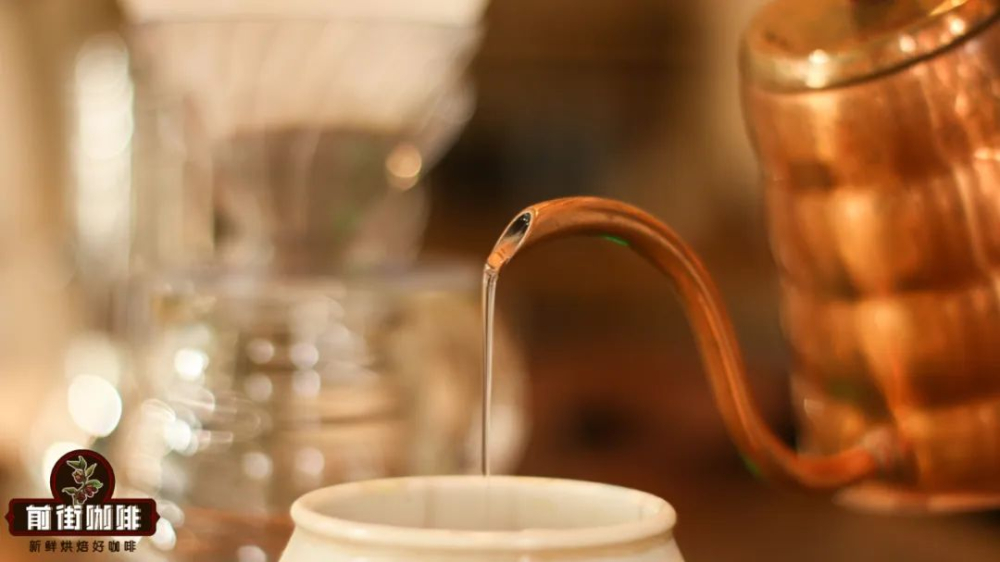
The reason for pulling the pouring height so high is to let the hot water contact more air, thereby cooling it down. Now that we understand this principle, we can do the opposite: lower the pouring height to reduce the hot water's contact with cold air.
The water temperatures mentioned earlier are values measured before brewing. Once the water leaves the spout and contacts the air, cooling begins. The larger the surface area of the stream exposed to the air, the more pronounced the cooling—which is exactly why we need to lower the pouring height.
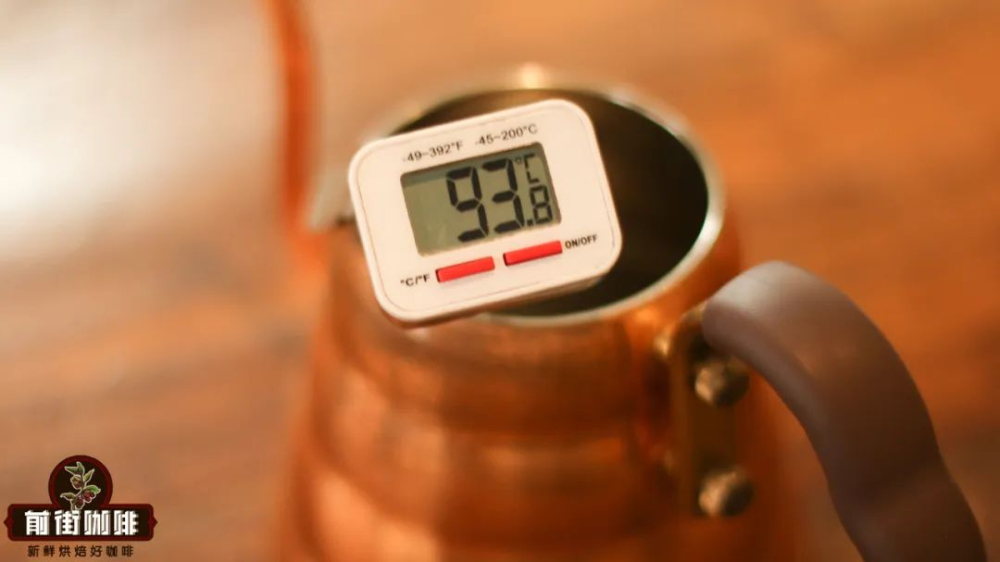
If you're worried that lowering it too much will weaken the impact of the water stream, you can compensate by increasing the tilt angle of the kettle.
Front Street Coffee (FrontStreet Coffee)
No. 10, Bao'an Qian Street, Yandun Road, Dongshankou, Yuexiu District, Guangzhou, Guangdong Province
The above content is compiled by CoffeeHunters, a coffee news website.


