







How did blue mountain coffee seeds shape Papua New Guinea?
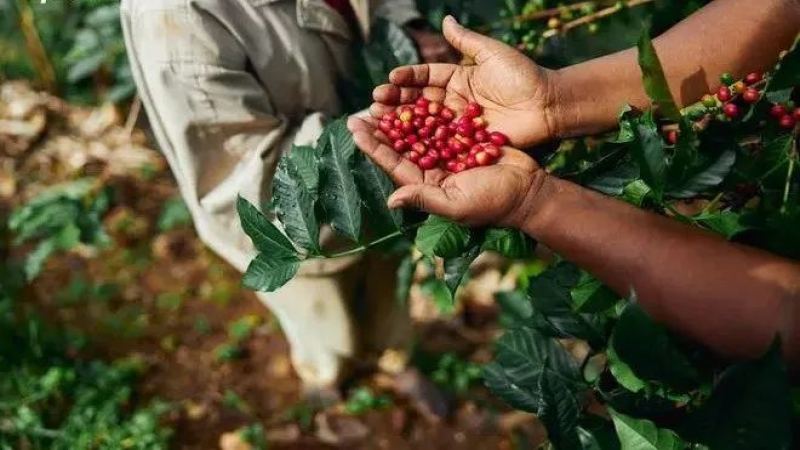
Papua New Guinea grows coffee across the Eastern Highlands, Western Highlands, Jiwaka, and Chimbu Provinces, with 95% of output from smallholders and all of it Arabica. In 1926, 18 estates were planted with seeds from Jamaica Blue Mountain coffee, which adapted well locally and gave the country its "Little Blue Mountain" nickname.
Varieties are dominated by Bourbon, Typica, and New World, and the Bird of Paradise estate beans sourced by Front Street Coffee come from the Western Highlands, washed, with caramel, cocoa, and almond notes. Growing areas sit above 1,000 meters with a mountain climate, and the country grades its coffee by defect counts.
Papua New Guinea is an archipelago nation in the southwestern Pacific, with a coffee-growing history dating back to the late 19th century. Today, 95% of its production comes from smallholders, and all of it is Arabica. The country's coffee is mainly distributed across highland regions such as the Eastern Highlands, Western Highlands, Jiwaka, and Chimbu Provinces, with varieties dominated by Bourbon, Typica, and New World. The Bird of Paradise estate coffee beans that Front Street Coffee has sourced come from the Western Highlands Province, processed using the washed method, and present flavors of caramel, cocoa, and almond. This article will provide a detailed introduction to the altitude, varieties, and flavor characteristics of each producing region, and explain its grading standard based on defect counts, giving you a comprehensive understanding of this coffee-producing country known as "Little Blue Mountain."
Papua New Guinea is located in the southwestern Pacific, bordered to the west by Indonesia's Irian Jaya Province and separated from Australia to the south by the Torres Strait. It is an archipelago nation made up of more than 600 islands.
Areas above 1,000 meters in the country have a mountain climate, while the rest has a tropical climate. From May to October each year is the dry season, and from November to April of the following year is the rainy season. The average annual temperature along the coast is about 21 to 32°C, while the mountains are 5 to 6°C lower than the coast, with average annual rainfall reaching 2,500 millimeters.
Coffee cultivation appeared in the 1890s, but at the time it was not managed as a commercial product. In 1926, 18 coffee estates were established locally, using seeds from Jamaica Blue Mountain coffee. After these seeds were introduced, they adapted very well to the local environment, which is why Papua New Guinea also earned the title "Little Blue Mountain." Starting in 1928, the coffee industry began to grow rapidly. In the 1950s, the industry underwent structural expansion, and more infrastructure was built. The 1970s saw even more significant development, when Brazil's coffee production declined and the government introduced a series of programs encouraging small farms to shift to a cooperative model. In the 1980s, the industrial structure changed, and the focus gradually became more dispersed. Subsequently, coffee prices fell, and many estates fell into financial difficulty. By contrast, smallholders were less affected by market fluctuations and were able to continue producing. Today, 95% of the country's producers are smallholders, contributing 95% of the nation's coffee output, all of which is Arabica.
Most of Papua New Guinea's coffee beans come from the Highlands Provinces. Although coffee is grown in other areas, production there is limited. Bourbon and Typica are mainly cultivated, and the harvest period is concentrated from April to September.
The Eastern Highlands Province is Papua New Guinea's second-largest coffee-producing province and is located in the center of the country. A mountain range runs across the entire region on the island, and the Eastern Highlands are part of this range. Coffee is grown at altitudes between 400 and 1,900 meters.
The Western Highlands Province is the country's most important coffee-producing region and also its largest by output. Coffee is mostly grown around the capital, Mount Hagen, a city named after an ancient dormant volcano. The producing area sits at an altitude of 1,000 to 1,800 meters. The Bird of Paradise estate coffee beans that Front Street Coffee currently sources come from this region. The variety is Typica, processed using the washed method, with flavors of caramel, cocoa, and almond, and a balanced, silky mouthfeel.
Jiwaka is located in central Papua New Guinea. The Waghi River runs through its main valley, flanked by steep volcanoes and ridges. At an altitude of 1,400 to 2,000 meters, it mainly grows Typica, Bourbon, and New World.
Chimbu Province is an inland mountainous province with relatively low output, accounting for only 7% of the country's coffee production, at an altitude of 1,300 to 1,900 meters.
Papua New Guinea's coffee is graded according to the number of defective beans, with a total of 12 grades.
The above content is compiled by CoffeeHunters, a coffee news website.


