







Why are mobile coffee carts moving away from traditional coffee?
Since the street-stall economy took off in 2020, mobile coffee carts have shifted from car trunks packed with espresso machines, grinders, and generators toward lightweight two-wheelers built around pour-over. Pour-over needs no bulky machine and little power, so motorcycles, bicycles, and even camping carts can serve as the platform, lowering the cost of starting up.
Early carts leaned on traditional coffee because espresso was the first association customers made, and a car trunk offered space and power for the equipment. As specialty coffee spread, pour-over became a common choice, and a small countertop on a two-wheeler became a barista's new stage. Brands such as Starbucks and Manner have joined the trend, while licensing and food safety remain open questions.
Since the rise of the street-stall economy, mobile coffee carts have gradually become a unique sight in the city. From initially relying on car trunks to carry espresso equipment, to today's lightweight two-wheelers focused on pour-over coffee, the form of mobile coffee carts is constantly evolving. This transformation has not only lowered the threshold for starting a business, but also allowed coffee carts to appear more flexibly on roadsides, halfway up mountains, and even in the snow, becoming a sought-after photo spot for young people. At the same time, well-known brands such as Starbucks and Manner have also joined this trend. However, the business license and food safety issues faced by mobile coffee carts remain a focus of consumer attention. This article will take you through the transformation of mobile coffee carts from heavy to lightweight and the industry logic behind it.
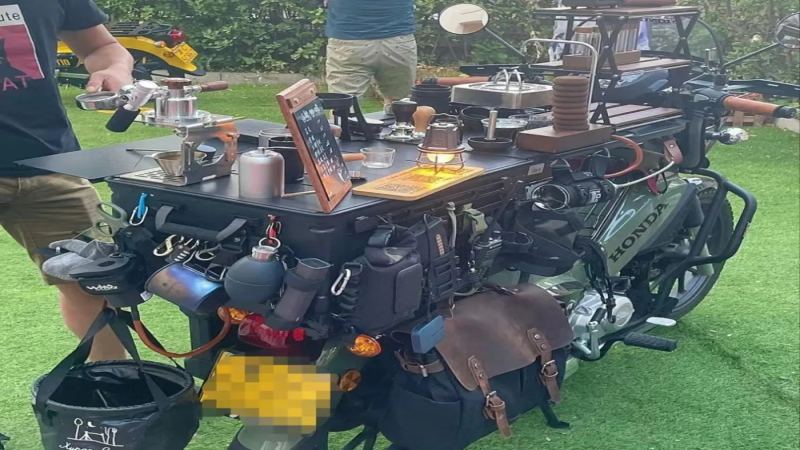
Have you ever seen a mobile coffee cart like this?
Since the street-stall economy became popular in 2020, all kinds of mobile carts and stalls have appeared, and coffee has been moved by trendsetters from exquisitely decorated coffee shops into car trunks, traveling with the car through the streets and alleys of the city.
For a long time, because the first thing consumers associated with coffee was espresso, the menus of mobile coffee carts appearing on street corners were mainly espresso-based. And to fit coffee machines, grinders, generators and other equipment, most people would choose the larger space of a car trunk as the platform for making coffee, which is also partly related to the fact that a car can provide power for the equipment.
With the popularity of specialty coffee, pour-over coffee has gradually become everyone's new choice of coffee drink.
Compared with espresso, pour-over coffee requires no bulky coffee machine and consumes no excessive energy; just a few pieces of equipment and hot water for brewing can produce a delicious pot of coffee.
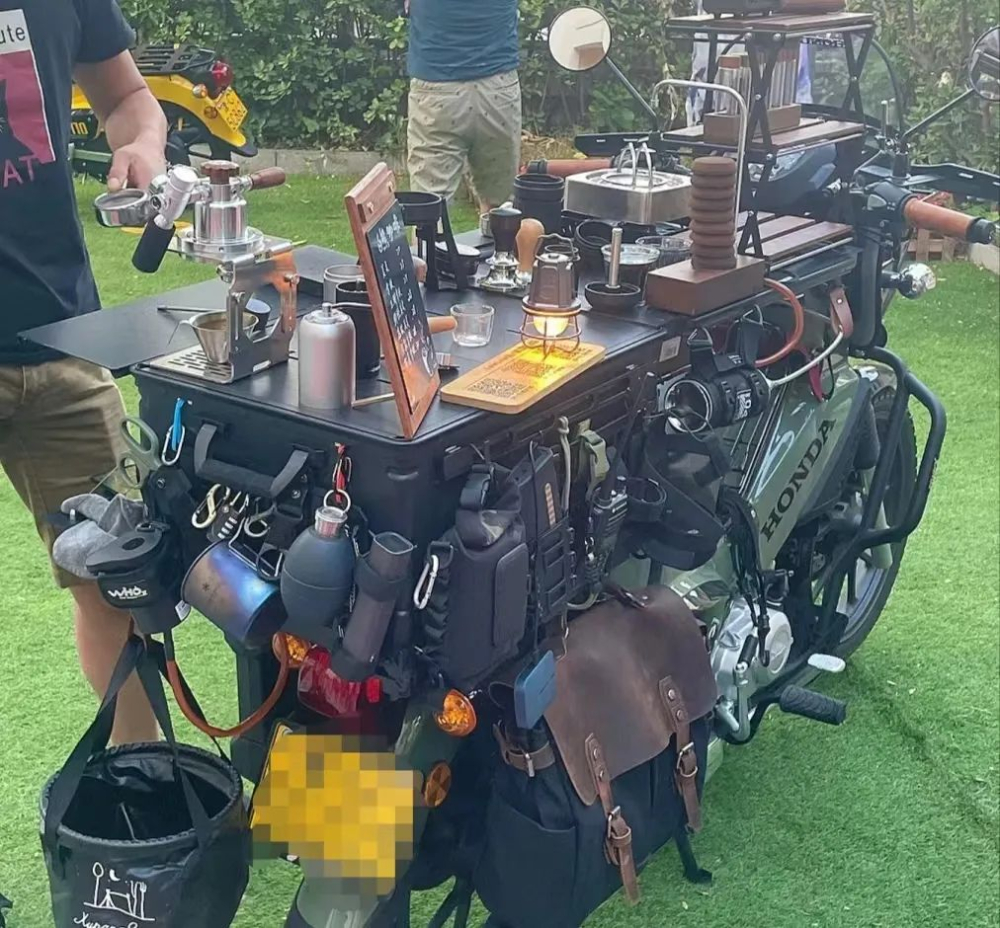
As a result, lightweight mobile coffee carts emerged, and motorcycles, small electric vehicles, bicycles, and even camping carts can all become one of the vehicle choices for mobile coffee carts.
As long as a platform is added to the back seat of a two-wheeler, the small countertop becomes the barista's new stage, and boiling a pot of water can make a cup of warm coffee for passersby. For entrepreneurial folks, the operating cost of a pour-over-focused mobile two-wheel coffee cart is relatively lower than the previous car trunk coffee, while the mobile cof fee cart becomes lighter and simpler, and the difficulty of making coffee is reduced, making it easier for them to achieve their entrepreneurial goals.
Compared with traditional coffee shops, although mobile coffee carts cannot make many kinds of drinks for consumers to choose from due to spatial limitations, because of their mobility, mobile coffee carts can be seen on roadsides, halfway up mountains, beside beaches, and in the snow. As soon as the coffee cart stops, it naturally blends with the scenery behind it, forming a beautiful sight that attracts young people's attention and invisibly becoming a new check-in spot on social platforms.
Therefore, not only do entrepreneurial folks choose mobile coffee carts, but major well-known coffee brands have also joined the ranks of mobile coffee carts. Starbucks, Manner, Peet's, and Blue Bottle have all successively driven coffee carts into cities, attracting coffee lovers to come and spend and check in.
Although various forms of mobile coffee carts have certainly become eye-catching attractions, most mobile coffee carts cannot obtain business licenses and food production permits, and the food safety and product quality issues that more or less exist due to their spatial limitations have always been points of consumer concern and worry.
For most consumers, a fixed place that can shelter them from wind and rain and provide seating is their first choice for spending. A mobile coffee cart parked on the roadside may just be a spur-of-the-moment check-in spot in their minds.
Image source: Xiaohongshu
The above content is compiled by CoffeeHunters, a coffee news website.


