







What makes Jamaican coffee and the Blue Mountain growing region distinct?
Jamaica's coffee industry began in 1728, when Governor Sir Nicholas Lawes received a seedling from Martinique and planted it in St. Andrew. Cultivation spread to the Blue Mountains in the late 18th century, and by 1800 the island had 686 coffee plantations. Blue Mountain coffee is limited to the Typica variety grown at 915 to 1,700 meters.
The designated region covers four parishes: St. Andrew, St. Thomas, Portland, and St. Mary, and the coffee is packed in wooden barrels. Its blue mountain coffee taste is described as balanced and delicate. The Clifton Estate washed lot sold today has balanced acidity, body, and aroma, with a soft entry, gentle fruit acidity, and a cocoa finish.
Jamaica is the third-largest island in the Caribbean. Its coffee industry, which began with the introduction of seedlings in 1728, has gone through rise and fall, ultimately earning global fame through its Blue Mountain designated growing region and strict quality supervision. In the late 18th century, cultivation expanded to the Blue Mountains; the abolition of slavery and the loss of trade preferences caused the industry to decline, and later legislation and institutional reforms improved quality. Jamaica Blue Mountain coffee is restricted to the Typica variety grown at altitudes of 915 to 1,700 meters in four parishes—St. Andrew, St. Thomas, Portland, and St. Mary—and is packaged in wooden barrels; its flavor is renowned for being balanced and delicate. Front Street Coffee currently sells Blue Mountain from Clifton Estate, washed process, with balanced acidity, body, and aroma, and a soft entry with gentle fruit acidity accompanied by a cocoa finish.
Jamaica is located in the Caribbean and is an island nation, separated from Haiti by the Jamaica Channel, and is the third-largest island in the Caribbean. The coastal areas are plains, the east is mountainous, and the central and western parts consist of hills and limestone plateaus, with a tropical rainforest climate. The rainy seasons are from May to June and September to November each year, while the dry season runs from December to March of the following year. The north-central region receives abundant rainfall, with temperatures usually ranging from 22 to 32 degrees Celsius and an average annual temperature of about 27 degrees.
In 1728, the then-Governor Sir Nicholas Lawes received a coffee seedling as a gift from the governor of Martinique (then French), and Jamaica's coffee history began. Sir Lawes had previously tried growing various crops and subsequently planted the seeds in St. Andrew. However, early output was extremely limited, and it was not until 1752 that Jamaica exported 27 tons of coffee.
In the late 18th century, coffee cultivation gradually expanded from St. Andrew to the Blue Mountains. By 1800, the number of coffee plantations on the island reached 686. However, slavery was abolished in 1807 and formally enforced in 1838, leading to a severe labor shortage. Combined with poor management and the cancellation of Britain's preferential trade terms for the colonies, the coffee industry declined, leaving only 180 plantations by the 19th century. The quality of coffee produced at that time was also unsatisfactory. In 1891, the government enacted a decree aimed at teaching producers coffee cultivation knowledge to improve quality, while also improving infrastructure so that coffee could be centrally processed and graded. In 1944, the Central Coffee Clearing House was established, and all coffee had to be approved by this institution before export. In 1950, The Jamaica Coffee Industry Board (CIB) was established; in 2018 it merged with other commodity institutions to form JACRA (Jamaica Agricultural Commodities Regulatory Authority), and today every barrel of Blue Mountain coffee beans must pass JACRA's quality supervision. At its founding, the Coffee Industry Regulation Act was also enacted, defining the world-famous "Blue Mountain Coffee growing region."
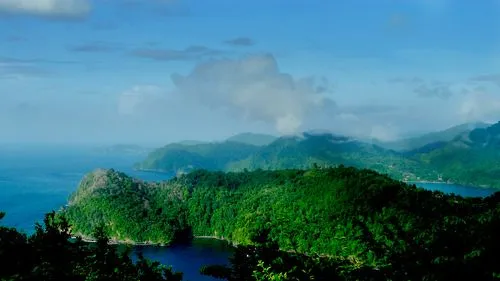
According to the Coffee Industry Regulation Act, the Blue Mountain growing region is distributed across four parishes—St. Andrew, St. Thomas, Portland, and St. Mary—and only Typica coffee grown in this area at altitudes between 915 and 1,700 meters may be named Jamaica Blue Mountain coffee.
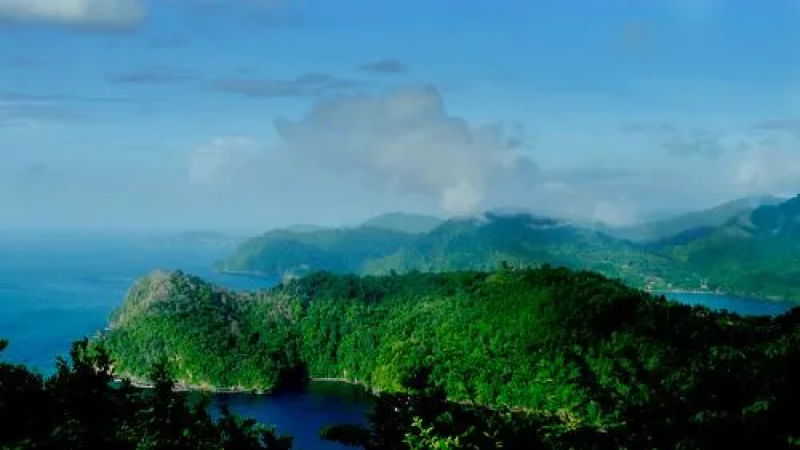
The Blue Mountain Range is located in eastern Jamaica, at altitudes between 1,000 and 1,700 meters. The mountains are surrounded by the Caribbean Sea; on clear days, sunlight strikes the sea surface directly, and the peaks reflect the blue glow of the seawater, hence the name. The coffee-growing belt of the Blue Mountains has fertile volcanic soil, fresh air, and a humid climate, with frequent fog and rain year-round. It is precisely this climate that has created the world-famous Jamaica Blue Mountain coffee. This region also grows Blue Mountain Typica, which after more than 200 years of evolution has better disease resistance than ordinary Typica.
Blue Mountain coffee is the only coffee in the world exported in wooden barrels. The barrel shape resembles a small wine cask, and each barrel holds 70 kg of green beans. The use of wooden barrels is also strictly limited: only Jamaica Blue Mountain (No. 1, No. 2, No. 3, PB) and Jamaica High Mountain (High Mountain Supreme, High Mountain PB) may use them, with specifications of 70 kg, 30 kg, and 15 kg, while all other grades can only be packaged in burlap sacks.
Blue Mountain coffee has a smooth mouthfeel and rich aroma, and its excellent balance is its notable characteristic. The Blue Mountain coffee currently sourced by Front Street comes from Clifton Estate, washed process; when tasted, the acidity, body, and aroma are all well balanced, with a delicate, silky mouthfeel, and after entering the mouth there is a slight, soft fruit acidity and a hint of cocoa in the aftertaste.
The above content is compiled by CoffeeHunters, a coffee news website.


