








Is a deep pit in the coffee bed a sign of coffee quality?
A deep pit in the coffee bed after brewing does not by itself prove that the cup tastes better. The sunken center with a thick, even wall of grounds around the edge is a shape many beginners and baristas chase, but it forms mainly from roast level and bean density rather than from brewing skill or flavor quality.
Dark-roasted beans are the factor most likely to produce a deep pit. The darker the roast, the more the beans expand, the lower their density and the looser their texture, so the bed collapses into a crater more easily. Light roasts rarely behave this way. Treating the pit as a quality standard confuses appearance with what is actually in the cup.
Many friends who are just getting into pour-over coffee are always drawn in by the swelling dome during the bloom and the "deep pit" left in the coffee bed after brewing. It seems as though only when these two phenomena appear can a pour-over be considered up to standard. Yet in practice, people often find that the deep pit isn't something you can create just by wanting to. Today, Front Street Coffee is here to talk about how the deep pit actually forms, and whether it can really serve as a standard for judging coffee quality.

Many friends just starting out with pour-over have a particular fixation on how much the coffee grounds expand during the bloom, and on the sunken deep pit the coffee bed shows after brewing is finished. It's as if a pour-over without these two phenomena must surely taste worse.
But once you actually try it, many people realize these phenomena aren't nearly as easy to produce as imagined. So today, Front Street Coffee is here to talk with you about how the "deep pit" actually comes about, and whether it truly represents the quality of a cup of coffee. How the deep pit forms
Let's first take a look at what this so-called "deep pit" coffee bed actually looks like.

The center of the coffee bed is noticeably sunken, with an even, thick wall of grounds around the edge. A coffee bed like this isn't just what beginners aspire to—many baristas chase after it too. A friend of Front Street Coffee, when he first entered the industry, had a senior colleague who, every time he brewed a deep-pit coffee bed, would make a point of calling him over to "admire" it (in plain terms, to show off).
Perhaps that's exactly why the deep pit fascinates so many beginners. But to brew a coffee bed like this, you actually don't need much technical skill—as long as a few specific conditions are met, you can get a deep, even pit. Conditions for brewing a deep pit 1. The beans used are dark-roasted
This is the factor most likely to produce a deep pit in the coffee bed. If you're using dark-roasted coffee beans, the odds of brewing a deep pit are far higher than with light-roasted beans.
The principle behind this mainly has to do with coffee density. The darker the roast, the more the beans expand in volume, the lower their density becomes, and the looser their texture.
In other words, two coffee beans with the same density and volume before roasting will end up with completely different volumes and densities after being roasted to different degrees. Light-roasted beans, having gone through less development, are smaller in volume and harder in texture; dark-roasted beans, having developed longer, are larger in volume and looser in structure.
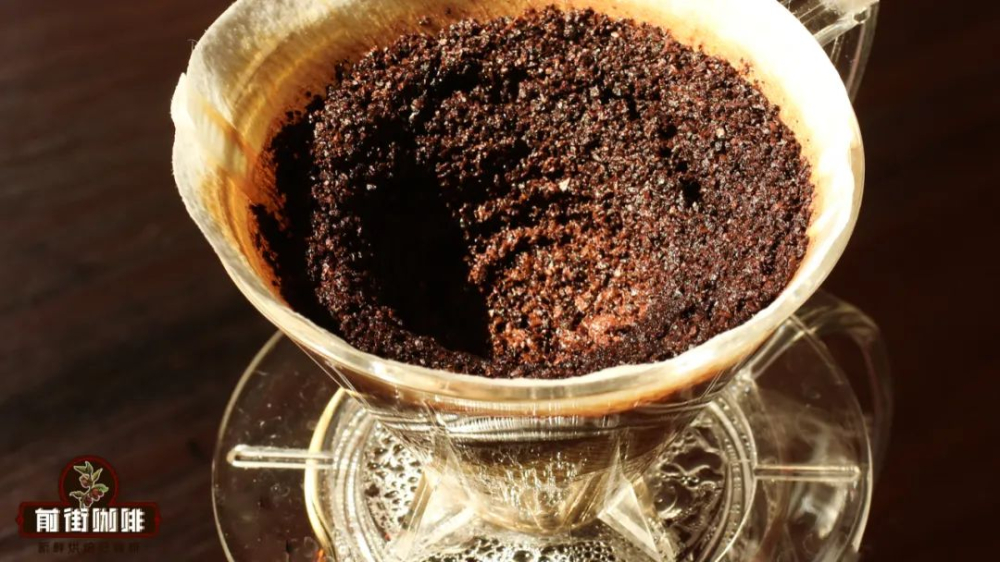
So dark-roasted beans expand more during brewing. And because their weight is spread evenly across a larger volume, the ground particles are also lighter. Light-roasted bean particles tend to sink and pile up at the bottom of the dripper, while dark-roasted beans tend to float on the surface of the liquid, leaving relatively less grounds accumulated at the bottom.
These floating particles gradually spread outward as the water level drops, rather than sinking and piling up. As a result, the pit that forms is relatively deep, and the wall of grounds is thick—and that's how the deep pit appears. 2. A larger dose of grounds
Of course, the amount of grounds also affects the size of the coffee bed pit. If the dose is too small, it's hard to meet the conditions for forming a pit—after all, if the "building materials" aren't enough, where would the supplies come from to build high walls?
So we can compensate for this problem by increasing the dose. With more grounds, it's naturally easier to create a deep pit. 3. Pouring water around the center
What we've discussed above are material-level conditions; this one is a technical-level operation. Having the material foundation alone isn't enough—if you pour too carelessly, you may wash against the wall of the dripper and "shave off" some of the coffee grounds clinging to it. These washed-down grounds will fill in and pile up in the central area, and in the end the coffee bed will show not a deep pit, but a flat surface.
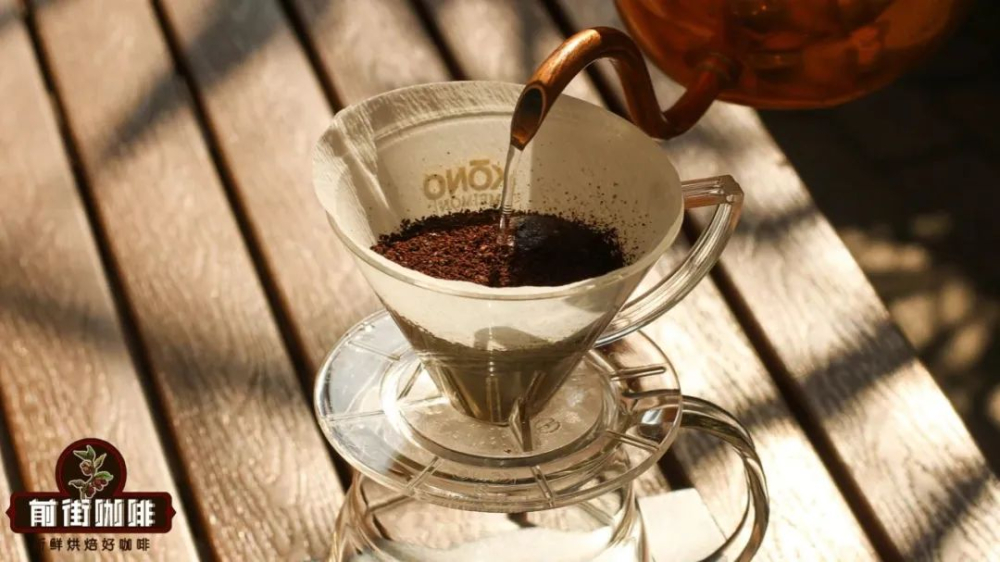
Therefore, to form a coffee bed pit, it's best to use the center point of the dripper as the core of your pouring. This is where the most coffee grounds accumulate, and as long as you wash the grounds here apart, you can get a beautiful coffee bed pit. 4. The freshness of the beans
This point follows the same logic as the first one. The fresher the beans, the more carbon dioxide they contain, and the greater their expansion. So the fresher the beans, the deeper the pit tends to be.
Pretty simple, isn't it? Even beans that haven't finished resting can brew a deep pit. What does that tell us? It tells us that brewing a deep pit doesn't prove your cup of coffee will necessarily taste good.
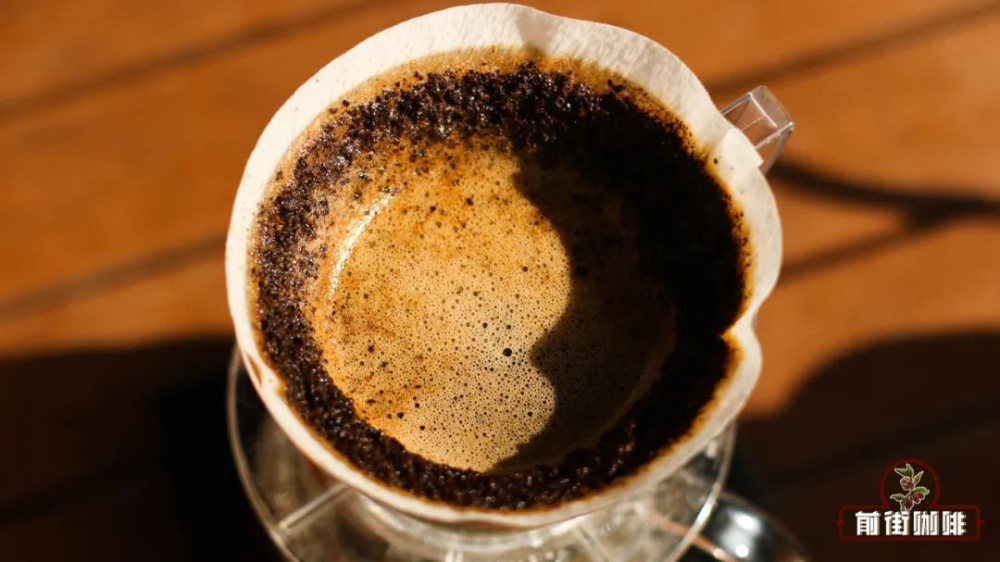
No matter what shape the coffee bed pit takes, it can only reflect whether your pouring method was appropriate—not whether the taste is good or bad. If you pour improperly, for example washing against the dripper wall, and the coffee bed pit takes on a "flat pit" or "fault line" shape, then you need to adjust your pouring technique.
Front Street Coffee (FrontStreet Coffee)
No. 10, Bao'an Qian Street, Yandun Road, Dongshankou, Yuexiu District, Guangzhou, Guangdong Province
The above content is compiled by CoffeeHunters, a coffee news website.


