








How pour timing changes Yirgacheffe and darker roasts
The third pour of a three-pour method can be added before the water fully drains or after it drains. In tests with a light-roast Yirgacheffe Geddid, the two cups finished about 10 seconds apart and showed only slight differences in aroma and acidity. The effect was small, so the timing choice matters less with light roasts.
The same test on a medium-dark roast Papua New Guinea Bird of Paradise gave a clearly bitterer cup when the pour was interrupted. Medium-dark beans are looser in texture and have less margin for error, so a longer contact time releases bitter compounds more easily. Interrupted pouring still works if parameters are adjusted, for example with a coarse grind and a 46 brewing method.
When using a three-pour method for pour-over coffee, should the third pour wait until the water has fully drained, or should it be added before the water level reaches the bottom? Front Street answers this through two sets of comparative experiments. First, a light-roast Yirgacheffe Geddid was brewed with continuous pouring and interrupted pouring. The total time differed by 10 seconds, and the aroma and acidity were slightly different, but the overall difference was not significant. Then the test was repeated with a medium-dark roast Papua New Guinea Bird of Paradise, and the interrupted-pour cup showed a noticeable bitterness. The reason is that medium-dark roasted beans are loose in texture and have a low margin for error; when the time is extended, bitter compounds are more likely to be released in excess. The article ultimately points out that interrupted pouring is not unworkable; the key is to pair it with corresponding parameters, such as the coarse-grind 46 brewing method.

This question is quite on point! To give the most convincing answer, the direct approach is to run a controlled experiment, and the test begins right below.
Experimental comparison
Front Street will use a light-roast bean for two rounds of brewing, both using the three-pour method, with the only difference in the third pour: one carafe gets the third pour of hot water before the water has fully drained, while the other waits until the water has drained before adding the third pour, so as to observe how this small change affects the final cup.
Bean used: Yirgacheffe Geddid Dose: 15g Coffee-to-water ratio: 1:15 (225ml) Grind: Ek43 setting 10 Water temperature: 92°C Dripper: V60
The first pour is kept the same for both carafes, using twice the coffee dose in water (30ml) for a 30-second bloom. Then the second pour (120ml) is added in a slow, large circular motion, with both pours completed by 46 seconds.
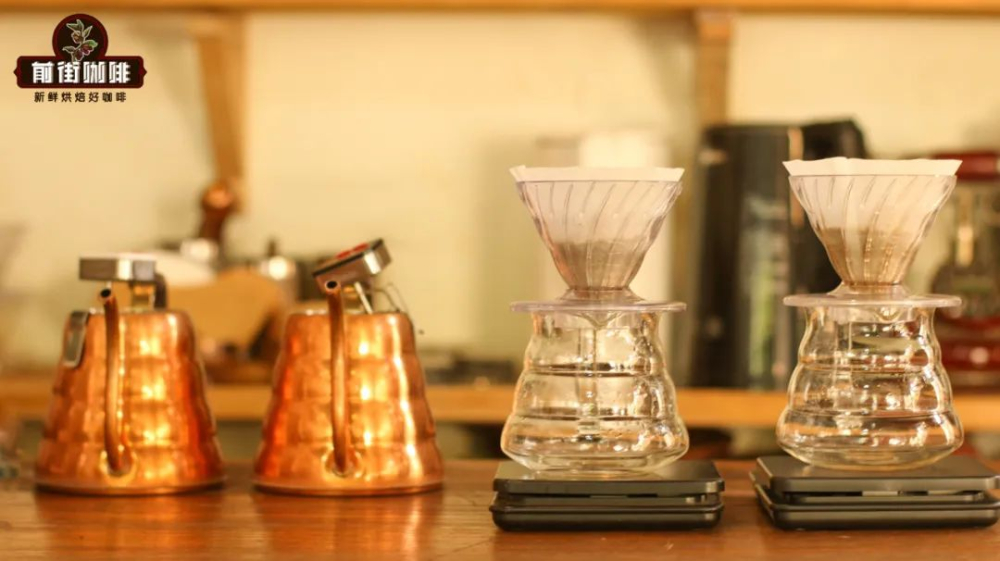
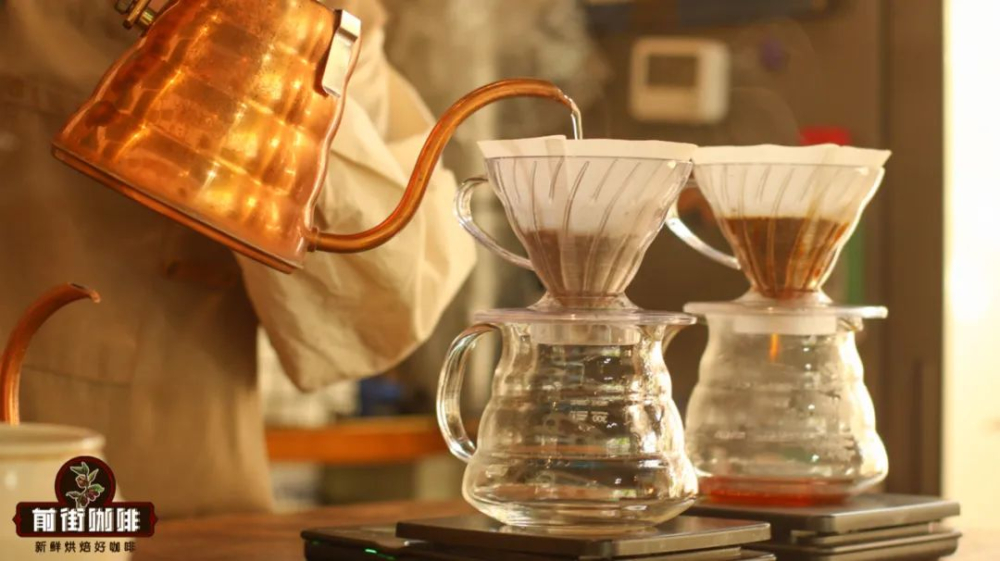
For the first carafe, at around 1 minute 15 seconds the water level is nearly at the bottom, and at this point the remaining 75ml of hot water for the third pour is added in a slow, small circular motion. For the second carafe, wait until 1 minute 25 seconds, when the flow changes from a stream to slow droplets, indicating that very little water remains in the dripper; then add the third pour of hot water, also in a slow, small circular motion, for the remaining 75ml.
Brewing complete! The total time for the first carafe is 2 minutes 15 seconds, and for the second carafe 2 minutes 26 seconds. In terms of aroma, the first carafe is a bit more pronounced than the second. In terms of taste, the second carafe has fuller acidity than the first, with little difference in the remaining flavors.
From this comparison, continuous pouring and pouring after the water has drained do not seem very different. Some may ask: the aroma and acidity are clearly different, so how can you say there is no difference?
The main reason for the difference is that the second carafe needs to wait for the water to finish dripping, taking 10 extra seconds, and during this time the temperature in the lower carafe drops somewhat, so the acidity tastes more obvious than in the first carafe.
At the same time, the hot water in the kettle is also affected by cooling, dropping by about 1°C, and the extraction yield decreases accordingly, so the aroma is less pronounced. But both carafes are within an acceptable range, with no under-extraction or over-extraction, and the flavors are well displayed, which is why the difference is said to be small.
However, this time Yirgacheffe Geddid was used, which is a light-roast bean and fairly resistant to extraction. Next, switch to a medium-dark roast bean that is less resistant to extraction—"Papua New Guinea Bird of Paradise"—and run another comparison experiment. The extraction parameters are as follows: Dose: 15g Coffee-to-water ratio: 1:15 (225ml) Grind: Ek43 setting 10.5 Water temperature: 90°C Dripper: Kono
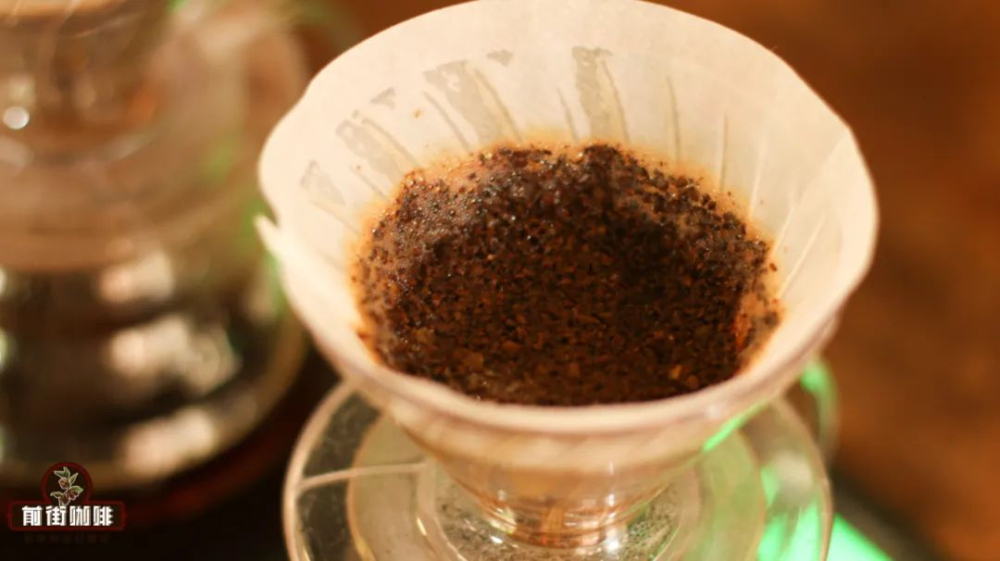
Similarly, the second pour of hot water (75ml) is completed at 46 seconds, and then one carafe gets the third pour before the water has drained, while the other gets the third pour after the water has drained.
The continuous-pour Bird of Paradise carafe gets the third pour at 1 minute 16 seconds, while the interrupted-pour Bird of Paradise carafe waits until 1 minute 30 seconds for the hot water to finish dripping, then adds the third pour. Brewing complete! The total time for the first carafe is 2 minutes 14 seconds, and for the second carafe 2 minutes 30 seconds. In terms of aroma, both have obvious nutty and creamy notes, with little difference! But the taste is different: besides the almond and caramel aromas of Bird of Paradise itself, the second carafe has a noticeably slight bitterness.
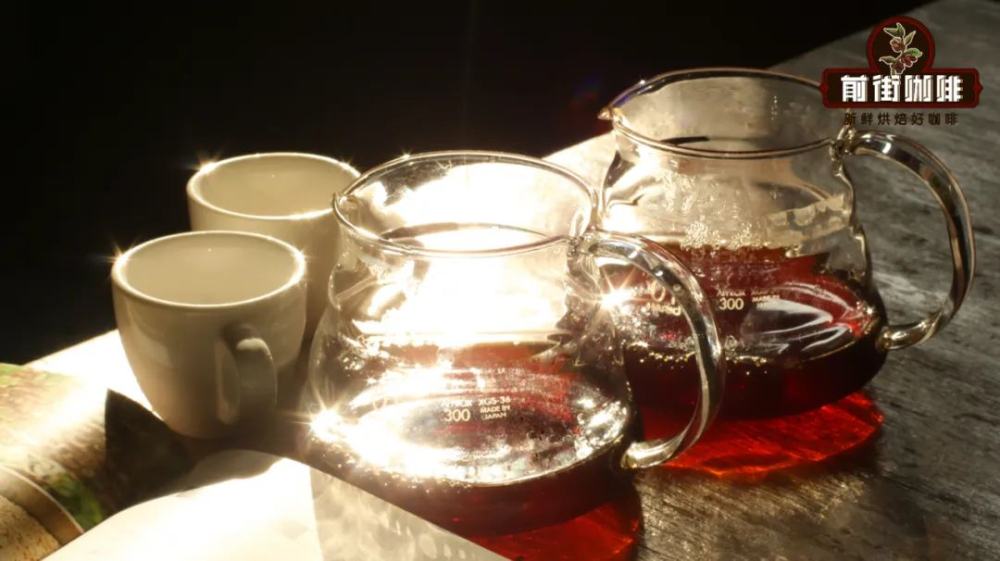
The reason is that medium-dark roasted coffee beans are loose in texture and have little margin for error; once the time is extended, it is easy to reach the point where bitter compounds are released in large amounts, so the second carafe, with increased bitter compounds, loses its balance of acidity, sweetness, and bitterness, ultimately producing a slightly over-extracted cup.
Besides loose-textured beans, light-roast beans with too many fines can also show a similar situation during brewing. Too many fines not only make over-extraction easy, but also tend to cause clogging, causing other normal-sized particles to over-extract along with them and producing obvious bitterness.
Therefore, Front Street has always used a brewing method with a higher margin for error, adding the third pour when the water level is about to reach the bottom.
But this does not mean interrupted pouring is bad; it just needs to be matched with corresponding extraction parameters. The extraction parameters used by Front Street in this article are all experiments built around the original fast-brew parameters. Therefore, as long as they are changed to parameters suitable for interrupted pouring (for example, the coarse-grind 46 brewing method invented by Tetsu Kasuya), interrupted pouring can also make delicious coffee.
Front Street Coffee
No. 10, Baoqian Street, Yandun Road, Dongshankou, Yuexiu District, Guangzhou, Guangdong Province
The above content is compiled by CoffeeHunters, a coffee news website.


